



Vitiligo
Latest News
Advertisement
Video Series


Latest Videos





Shorts

0:36
The Psychological Toll of Vitiligo on Teens
2 months ago
by
Nanette Silverberg, MD

Advertisement
More News
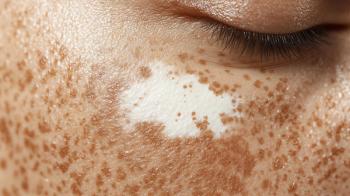
New JCI research identifies succinate/SUCNR1 signaling as a potential mechanistic link between hyperglycemia and worsening vitiligo.

Clinicians at a Dermatology Times Case-Based Roundtable event worked through 3 vitiligo cases spanning new-onset, widespread, and pediatric disease, weighing treatment sequencing against real-world access barriers.
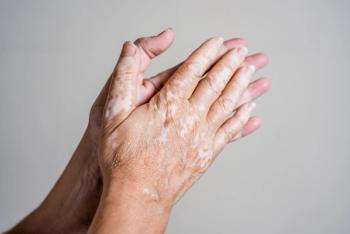
Forte Biosciences' FB102 shows significant facial repigmentation in a phase 1b vitiligo trial, with gains continuing 12 weeks post-treatment and mild adverse effects.
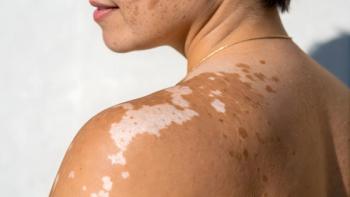
Lynk Pharmaceuticals has dosed the first patient in a phase 2 trial evaluating investigational topical pan-JAK inhibitor LNK01004 for vitiligo.

Teva Pharmaceuticals will advance TEV-'408 into phase 2b after encouraging phase 1b vitiligo data showed repigmentation, favorable safety, and quarterly dosing potential.
A recent JAAD case report describes congenital depigmentation and progressive posttransplant repigmentation in a child with NHEJ1-related radiosensitive SCID—a pairing not previously documented.

This review of the latest dermatological studies includes insights into vitiligo, including emerging surgical techniques, the impact of social media, camouflage agents, and more.

Visible Vitiligo Linked to Significant Stigma and Behavioral Adaptations, According to Global Survey
An international survey shows vitiligo drives stigma, sun avoidance, and daily limits, urging better treatment guidance and mental health support.

Put your dermatology expertise to the test with Dermatology Times’ interactive quiz series.

Mendelian randomization links specific T‑cell traits to vitiligo risk, spotlighting protective terminal CD4+ cells and harmful CD8+ memory targets.

Dermatology Times' editor in chief highlights essential late-breaker data from AAD 2026, including upadacitinib, rezpegaldesleukin, icotrokinra, zasocitinib, envudeucitinib, sonelokimab, and more.

Elevated rates of herpes simplex, herpes zoster, and opportunistic infections in the vitiligo cohort underscore infection risk considerations

Spatial transcriptomics reveals how UVB phototherapy calms vitiligo skin, silencing IFN-γ pathways and memory T cells to drive repigmentation.

A new systematic review shows vitiligo’s stigma-driven mental health and quality-of-life burden varies by culture, urging culturally tailored, multidisciplinary care and education.

Oral therapies may provide more widespread and effective repigmentation, especially in extensive nonsegmental vitiligo.
A retrospective claims analysis found that nearly half of patients newly diagnosed with vitiligo by a dermatologist did not initiate therapy, and those who did showed low persistence across treatment categories.
Late-breaking data presented at AAD 2026 showed that upadacitinib 15 mg produced statistically significant, progressively improving repigmentation in adults and adolescents with non-segmental vitiligo through 48 weeks.
This review of the latest dermatological studies includes insights on vitiligo cultural beliefs, home-based phototherapy, digital search behavior in NSV patients, and more.
Misconceptions about vitiligo, including contagion and supernatural causation, remain prevalent in many regions and are linked to increased stigma.

In a striking finding, 97% of patients who had experienced no facial repigmentation whatsoever at week 24 demonstrated measurable F-VASI improvement after 104 weeks of continuous ruxolitinib cream use.

Susan C. Taylor, MD, moderated a recent Case-Based Roundtable discussion on topical treatment options for vitiligo.
Put your dermatology expertise to the test with Dermatology Times’ interactive quiz series!
Real-world data from Saudi Arabia show vitiligo combination therapy with narrowband UVB or Janus kinase inhibitors drives steeper VASI improvement than monotherapy.
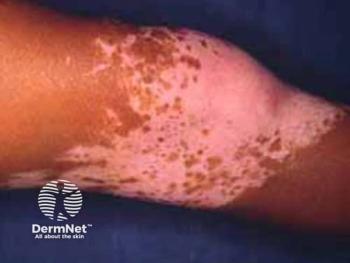
AbbVie seeks FDA and EMA approval for upadacitinib, a potential breakthrough systemic treatment for non-segmental vitiligo in adults and adolescents.
Advertisement
Advertisement
Trending on Dermatology Times
1
From Mechanism to Management: Navigating Male Pattern Hair Loss and New Topical Therapies
2
FDA Approves Baricitinib for Adolescents With Severe Alopecia Areata
3
Tremfya Meets Primary, Major Secondary Endpoints in Phase 4 STAR Study of Axial PsA
4
Dr. Charrow Highlights Earlier Biologic Use and Deroofing in Hidradenitis Suppurativa
5