Faculty from the Cutaneous Oncology Workshop answer practical questions spanning skin cancer prevention, diagnosis, treatment, and follow-up.
David Rosmarin, MD, reviewed the heterogeneous nature of chronic hand eczema, areas of unmet need in atopic dermatitis treatment, and emerging systemic options in the vitiligo pipeline at RAD 2026.
“Having multiple treatments and trying to figure out which treatments would be best in which [chronic hand eczema] phenotype is something I'm hoping will evolve with further research,” said David Rosmarin, MD, in an interview at the
Rosmarin, a dermatologist and chair of the department of dermatology at Indiana University School of Medicine, presented his insights into chronic hand eczema (CHE) care during the session, “Late-Stage AD Pipeline Review, Clinical Updates in CHE,” alongside Killian Eyerich, MD, PhD; Andrea Bauer, MD; and Jeff Yu, MD, MS.1 In his
Next, Rosmarin addressed the phenotypic diversity of CHE, areas of continuing unmet need in AD, and what he is watching in the vitiligo pipeline.
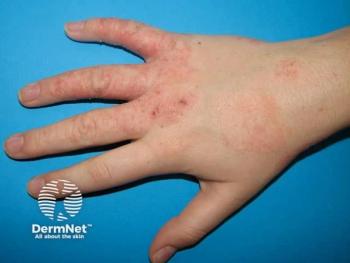
Rosmarin described patients with CHE as a particularly varied population, encompassing atopic, allergic contact, irritant contact, and mixed etiologies. This heterogeneity complicates treatment selection and underscores the need for more options matched to specific phenotypes.
"They're not all the same phenotype, they're a pretty heterogeneous group," Rosmarin said. "Some people have hand eczema due to atopic disease, some have it due to allergic disease, some irritant, and many are a combination of those factors."
He noted patients with CHE can be highly recalcitrant to treatment, reinforcing the need for continued research into which therapies are best suited to which patient presentations.
Rosmarin outlined 3 primary areas of unmet need he is watching in AD. The first is an oral agent with a clean label—territory he believes
"Even though we have 3 treatments in IL-4 and IL-13, JAK inhibitors, and anti-IL-31s, we're always looking for new mechanisms when those options fail," Rosmarin said.
He also highlighted
Rosmarin noted ruxolitinib cream (Opzelura; Incyte),
3 JAK inhibitors are currently in late-stage development for vitiligo: upadacitinib (Rinvoq; AbbVie), povorcitinib (Incyte), and ritlecitinib (Litfulo; Pfizer), and Rosmarin expressed confidence in the prospects for all 3. "I'm optimistic all 3 will ultimately get approved," he said.
References