



Artificial Intelligence
Latest News

Advertisement
Latest Videos




Shorts

0:52
How AI Could Boost Diversity in Dermatology
10 months ago
by
Harvey Castro, MD, MBA(+1 more)
Advertisement
More News
Every week, we cut through the noise to bring clinicians the trial results, approvals, and emerging therapies that are actually moving the needle.
Every week, we cut through the noise to bring clinicians the trial results, approvals, and emerging therapies that are actually moving the needle.
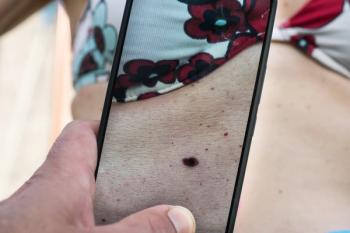
European task force review finds dermatology and AI skin cancer apps booming in Europe, but clinical proof, CE marking, and GDPR transparency lag.
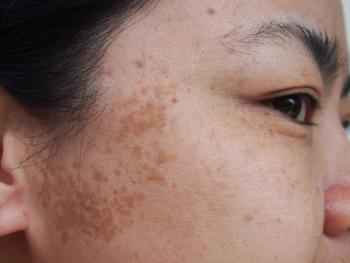
In a recent study, low-fluence fractional 694‑nm ruby laser safely lightened stubborn melasma, while AI imaging tracked subtle pigment and texture improvements missed clinically.

A JAMA Dermatology study found expert dermatologists achieved the highest multiclass diagnostic accuracy when tested against AI across a realistic spectrum of skin lesions.

Dermatologists are increasingly integrating AI into clinical workflows, though many still use it primarily as a search tool rather than a true care-support system.
Around 80% of clinical trials face enrollment delays, and for rare genodermatoses with small patient pools, AI-generated synthetic control arms may offer a practical path to adequately powered studies.
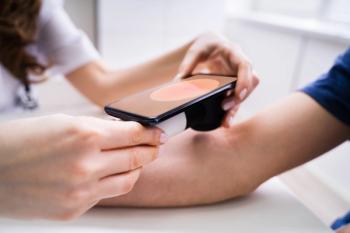
Trainees identified legal, ethical, and reliability concerns as key barriers to integrating AI into dermatology practice.
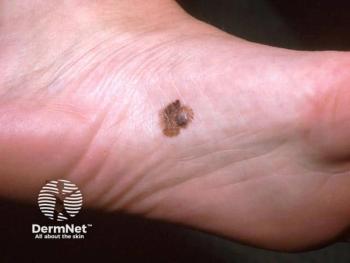
A newly defined Nodularity Index, measuring tumor depth relative to width, independently predicted melanoma-specific survival.
At SBS 2026, Karan Lal, MD, and Mohammad Goldust, MD, reveal how social media and AI reshape dermatology trust and care.

AI could revolutionize vitiligo management with enhanced diagnostics, automated tracking, and personalized treatment forecasting, improving patient care and outcomes.

Experts explore the integration of AI in atopic dermatitis management, highlighting benefits, risks, and the need for cautious implementation in patient care.
Renata Block, DMSc, MMS, PA-C, explores how AI could enhance dermatology, improving skin cancer diagnosis while emphasizing the vital role of human clinicians in patient care.

An AI-powered handheld spectroscopy device is showing promise in improving melanoma detection accuracy among primary care physicians, addressing critical gaps in early diagnosis and timely referral.

Explore how dermatology PAs and NPs are transforming patient care through technology, advocacy, and peer education with Andrew Baker, MBA, MPAS, PA-C.
Advertisement
Advertisement
Trending on Dermatology Times
1
FDA Implements Updated iPLEDGE REMS Requirements for Isotretinoin
2
Aclaris' Bosakitug Misses Phase 2 Endpoints in Atopic Dermatitis
3
Phase 3 Trial Supports Risankizumab for Pediatric Psoriasis
4
Social Media Mythbusters: Do Post-Workout Sprays Prevent Acne?
5