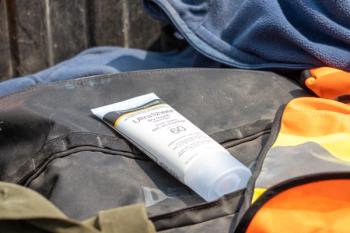
Two new Neutrogena facial sunscreens incorporate bemotrizinol, the first new sunscreen active ingredient added to the US OTC monograph in decades.
When used thoughtfully, Faranak Kamangar, MD, says AI can transform generic processes into innovative, time-saving clinical tools.
In a recent discussion with Dermatology Times, Faranak Kamangar, MD, explored the evolving role of artificial intelligence (AI) in dermatology, emphasizing both its potential and current limitations. Kamangar, founder of DermGPT and president of the San Francisco Dermatology Society, highlighted how AI is being integrated into clinical workflows to improve efficiency, patient education, and decision-making.
Kamangar observed that most dermatologists aren’t utilizing AI in the most efficient ways. “The large majority are still using it like a search bot,” she noted, suggesting that the full capabilities of AI—such as automating documentation, generating patient-specific handouts, and facilitating prior authorizations—remain underutilized. However, she has seen firsthand the ways this tool can change how clinicians practice, including creating tailored patient materials, streamlining complex case management, and improving triage workflows for ancillary staff.
Patient-facing AI tools have been a particularly promising area. Kamangar explained that generic handouts often fail to engage patients or improve compliance, often ending up in the trash. AI enables clinicians to generate individualized materials, adjusting for language, reading level, and treatment specifics. For instance, handouts for acne therapy can detail the sequence and timing of multiple topical agents, guidance for managing adverse effects, and appropriate moisturizers, providing clarity that reduces unnecessary follow-up inquiries. These tailored resources not only support patient understanding but also optimize clinicians’ time by reducing repetitive messaging.
In clinical practice, AI can also assist in complex diagnostic cases. By summarizing key patient information and suggesting potential differential diagnoses or additional workup, AI tools can help clinicians finalize decisions more efficiently. Kamangar emphasized the benefit of “closing out” cases at the point of care, ensuring that notes, prescriptions, and prior authorizations are completed accurately, thereby avoiding workflow bottlenecks and insurance delays.
Despite the advantages, Kamangar cautioned about the risks associated with AI, particularly regarding patient privacy. Even on platforms labeled HIPAA-compliant, she recommended avoiding the inclusion of identifiable patient information, due to the inherent uncertainty in how large language models process and transmit data.
As dermatology increasingly incorporates AI, Kamangar’s insights underscore the need for thoughtful implementation. When used beyond basic searches, AI has the potential to enhance diagnostic accuracy, streamline administrative tasks, and improve patient engagement—but only when paired with clinician oversight and care.