
SYX-5219 improved disease severity and itch in a Phase 1b trial of adults with moderate to severe atopic dermatitis.

Shannon Heaning is a content associate for Dermatology Times® and joined the MJH Life Sciences team in June 2026. She graduated summa cum laude from Loyola University Maryland with a Bachelor of Arts in sociology and earned the top GPA in her major. Before joining Dermatology Times®, Shannon gained experience in clinical research, patient advocacy, and health communications. She is particularly passionate about rare disease awareness and patient-centered storytelling. Outside of work, she enjoys reading, drawing, and spending time with her dogs.
You can reach her at: sheaning@mjhlifesciences.com
SYX-5219 improved disease severity and itch in a Phase 1b trial of adults with moderate to severe atopic dermatitis.

An analysis of 633 skincare brands found gaps in evidence, safety information, and claim support, raising questions about what patients can verify online.

Can “Botox in a bottle” really rival injectable neuromodulators? We examine the evidence behind topical peptide serums and Argireline.

Dermatology clinicians at a Case-Based Roundtable in Austin, Texas, discussed real-world strategies for sequencing topical therapy, phototherapy, and ruxolitinib cream across pediatric and adult vitiligo cases.
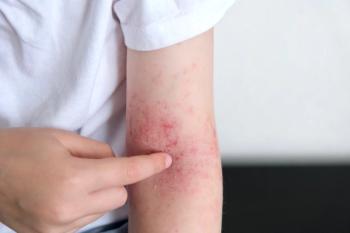
Christophe Piketty discusses 3-year ARCADIA data demonstrating sustained efficacy and long-term safety of nemolizumab in atopic dermatitis.

Stay ahead with a weekly roundup of the biggest practice management, AI, policy, business, and professional development updates in dermatology.

Symptomatic dermographism has its first on-label treatment. Here’s what APPs should know about recognition, treatment, and remibrutinib.

Whitney Tolpinrud, MD, discusses how personalized skin care can evolve from acne treatment toward prevention and skin longevity.

Three-year ARCADIA LTE data show sustained skin clearance and itch control with nemolizumab in moderate-to-severe atopic dermatitis.

Upadacitinib showed broader inflammatory effects and earlier skin barrier restoration than dupilumab in atopic dermatitis.
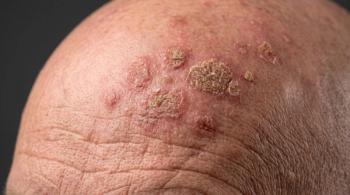
The supplemental New Drug Application seeks to expand the use of Ameluz with red light photodynamic therapy beyond the face and scalp to actinic keratoses on the extremities, neck, and trunk.

Whitney Tolpinrud, MD, discusses the evolution of personalized prescription skin care, patient expectations in the digital age, and clinical trends.

A biopsy-based analysis from the JADE MOA trial presented at EADV 2026 found reductions in pathogenic skin-resident memory T cells alongside restoration of epidermal barrier integrity.

This week’s review highlights pediatric oral minoxidil guidance, alopecia areata imaging, inherited skin disorder growth patterns, total-body photography, and radiofrequency microneedling for rosacea.

Celltrion’s US launch of omalizumab-igec adds an interchangeable biosimilar option for eligible patients with chronic spontaneous urticaria.

Andrew Blauvelt, MD, MBA, discusses how to interpret head-to-head, indirect, and long-term efficacy data for emerging oral psoriasis therapies.

Put your dermatology expertise to the test with Dermatology Times’ interactive quiz series.

New exploratory findings on disease duration and tunnel outcomes offer a starting point for conversations about comprehensive hidradenitis suppurativa care.

Explore dermatology conferences and meetings taking place this October, including clinical updates, skin of color education, and pediatric dermatology research.

New indications for superficial basal cell carcinoma and adolescent alopecia areata expanded treatment options, while psoriasis and rare disease candidates advanced through FDA review.

From next-generation oral therapies and long-term disease control to precision medicine, EADV 2026 highlighted a dermatology landscape increasingly focused on deeper, durable, and individualized outcomes.

The final day of EADV 2026 explored precision medicine, molecular profiling, atopic dermatitis research, real-world evidence, and emerging approaches to individualized dermatologic care.

New EADV 2026 data highlighted real-world outcomes in adults with chronic hand eczema and improvements in itch, pain, and quality of life among adolescents treated with delgocitinib cream.
Adam Friedman, MD, discusses PsA screening, comorbidities, early systemic intervention, and individualized oral therapy selection in psoriasis.

Day 3 of EADV 2026 featured long-term psoriasis data, advances in hidradenitis suppurativa, evolving approaches to atopic dermatitis, and late-breaking research.

Seven presentations will highlight phase 3 maintenance and induction findings, 3-year phase 2 data, and preclinical research evaluating obefazimod in ulcerative colitis.
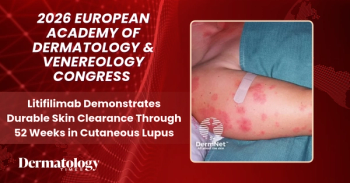
Updated phase 2 results from the AMETHYST study showed continued improvements in skin disease activity through 52 weeks, with more than one-quarter of patients achieving clear or almost clear skin.
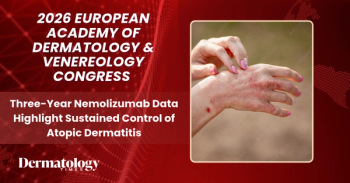
Christophe Piketty, MD, PhD, discussed 3-year findings from the ARCADIA long-term extension study and the implications of targeting IL-31 in atopic dermatitis.
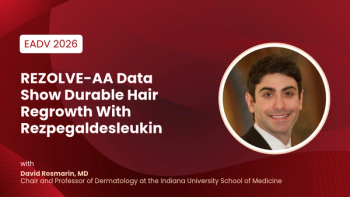
Phase 2b REZOLVE-AA data presented at EADV 2026 showed sustained and deepening hair regrowth following treatment cessation.

Michael Payette, MD, discusses systemic psoriasis treatment, patient selection, special-site disease, and shared decision-making.
August 25th 2026

September 19th 2026

August 23rd 2026