Phase 2 AMETHYST findings show continued improvements in skin redness and clinician- and patient-reported outcomes with litifilimab.
Phase 2 BEACON findings published in JAMA Dermatology demonstrate rapid improvements in disease activity and skin-related quality of life with oral brepocitinib.
Oral
The findings represent an important development for a chronic inflammatory skin disease with no FDA-approved therapies and support the ongoing phase 3 evaluation of brepocitinib, an oral selective tyrosine kinase 2 (TYK2) and Janus kinase 1 (JAK1) inhibitor.
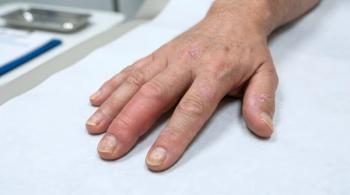
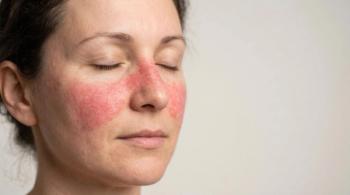
Cutaneous sarcoidosis is a granulomatous inflammatory disease that can cause permanent scarring, dyspigmentation, cicatricial alopecia, and facial disfigurement. Particularly severe manifestations, including lupus pernio and chronic plaque-type disease, can be difficult to manage with existing therapies.
Current treatment approaches largely rely on off-label medications, including antimalarials, immunosuppressants, tumor necrosis factor inhibitors, and systemic or topical glucocorticoids. However, sustained disease control remains challenging, and prolonged treatment may be associated with cumulative adverse effects.
“Cutaneous sarcoidosis is often on the face and severely impacts patients, and there are no approved treatments,” said Misha Rosenbach, MD, professor of dermatology and rheumatology and director of the Cutaneous Sarcoidosis Program at the Hospital of the University of Pennsylvania, in a company news release.2
The randomized, double-blind, placebo-controlled phase 2 portion of BEACON enrolled 31 adults with biopsy-confirmed active cutaneous sarcoidosis across 18 US clinical sites.
Participants were randomized to receive brepocitinib 45 mg once daily (n = 13), brepocitinib 15 mg once daily (n = 11), or placebo (n = 7) for 16 weeks.
The primary endpoint was change from baseline in the Cutaneous Sarcoidosis Activity and Morphology Instrument–Activity (CSAMI-A) score at week 16, a validated measure of inflammatory skin disease activity.
Participants had longstanding disease, with a mean disease duration of 8.1 years and a mean baseline CSAMI-A score of 33.6. Approximately 74% of participants were Black, and 58% had extracutaneous organ involvement.
Patients receiving oral glucocorticoids at baseline underwent a mandatory taper, with complete discontinuation required by week 8.
Both brepocitinib doses met the primary efficacy endpoint, demonstrating significant reductions in CSAMI-A scores compared with placebo.
At week 16, mean CSAMI-A scores decreased by 22.3 points in the 45-mg group and 22.2 points in the 15-mg group, compared with a 0.7-point reduction in the placebo group (P < .001 for both comparisons).
Treatment-associated improvements were evident by week 4 and continued through week 16.
Among participants receiving brepocitinib 45 mg, 69.2% achieved clear or almost clear skin with at least a 2-category improvement on the Cutaneous Sarcoidosis Activity–Investigator Global Assessment (CSA-IGA), compared with 0% receiving placebo.
Additional week 16 outcomes favored the 45-mg dose:
Although both doses produced similar mean improvements in the primary endpoint, the 45-mg dose demonstrated more consistent benefits across stringent responder-based and remission-oriented measures.
Clinical improvements also extended to participants with lupus pernio, a particularly treatment-resistant manifestation of cutaneous sarcoidosis frequently affecting the face.
Among participants with lupus pernio receiving brepocitinib 45 mg, all achieved a CSAMI-A reduction of at least 10 points by week 16, compared with 25% of placebo recipients.
The findings were notable given the potential for lupus pernio to cause irreversible tissue damage and disfigurement.
Participants receiving brepocitinib also experienced improvements despite the protocol-mandated discontinuation of systemic glucocorticoids, suggesting that disease control was maintained without continued oral steroid therapy during the study period.
The clinical benefits were accompanied by meaningful improvements in skin-related quality of life.
At week 16, participants receiving brepocitinib 45 mg demonstrated a mean 23.5-point improvement in Skindex-16 scores, compared with an 8.9-point worsening among placebo recipients (P = .003).
Similarly, improvements in the King's Sarcoidosis Questionnaire–Skin Domain were significantly greater with brepocitinib 45 mg than placebo (34.6 vs 1.8 points; P = .005).
All participants receiving the 45-mg dose reported improvement on the Patient Global Impression of Change, compared with 29% receiving placebo (P = .001).
Rosenbach described the findings as an encouraging development for a historically underserved patient population.
“These published findings bring rigorous clinical evidence to a historically neglected disease and patient population,” — Misha Rosenbach, MD, professor of dermatology and rheumatology and director of the Cutaneous Sarcoidosis Program at the Hospital of the University of Pennsylvania
Brepocitinib demonstrated a generally manageable safety profile during the 16-week treatment period.
Adverse events occurred in 92% of participants receiving brepocitinib 45 mg, 82% receiving brepocitinib 15 mg, and 86% receiving placebo. Most events were mild.
No deaths or serious adverse events were reported, and there were no cases of malignancy, viral reactivation, major adverse cardiovascular events, venous thromboembolism, or liver enzyme elevation.
Two nonserious adverse events of special interest occurred in the 45-mg group: elevated creatine kinase and worsening of preexisting anemia. The creatine kinase elevation improved during continued treatment, while the anemia resolved following treatment discontinuation.
One participant in each treatment group permanently discontinued study treatment because of an adverse event.
The investigators emphasized that longer-term safety data will be necessary to further characterize brepocitinib's benefit-risk profile in patients with cutaneous sarcoidosis.
Based on the phase 2 findings, Priovant Therapeutics is advancing brepocitinib 45 mg once daily in the phase 3 BEACON+ portion of the development program.
The ongoing trial is expected to enroll approximately 140 patients across 70 global sites, with participants randomized to receive brepocitinib 45 mg or placebo.
The primary endpoint will evaluate the proportion of patients achieving at least a 50% reduction in CSAMI-A scores at week 16. Topline findings are anticipated in 2028.
Although brepocitinib has received FDA approval for adults with dermatomyositis under the brand name Lisraya, it remains investigational for cutaneous sarcoidosis.
The investigators acknowledged several limitations, including the small phase 2 sample size and the study's inability to adequately evaluate treatment effects on extracutaneous manifestations.
Nevertheless, the findings provide randomized clinical evidence supporting targeted TYK2/JAK1 inhibition as a potential treatment strategy for cutaneous sarcoidosis.
For dermatologists managing patients with persistent or treatment-resistant disease, the results suggest a possible future approach to achieving substantial reductions in inflammatory skin activity and improving quality of life.
References