Atopic dermatitis care is evolving with flexible biologic dosing, expanded pediatric options, and novel oral, topical, and systemic therapies.
Pediatric dermatologists outline how to evaluate suspected topical steroid withdrawal, exclude mimics, and preserve family trust in eczema care.
Parental fear of topical steroid withdrawal (TSW), amplified by social media, is reshaping conversations about
In this episode of
Published reports describe TSW mostly in women, typically on the face and genital area, after long-term inappropriate use of potent topical corticosteroids (TCS).1 Neither expert has diagnosed the condition in a child, and the only cases recalled involved adults applying ultrapotent TCS to the face for rosacea over many years.
An analysis of steroid phobia content on social media platforms found much of it consisted of patients describing negative personal experiences with TCS and discouraging their use.2 Fear may also originate in primary care, where instructions to apply TCS only for 7 days or only during severe flares imply harm from longer use.
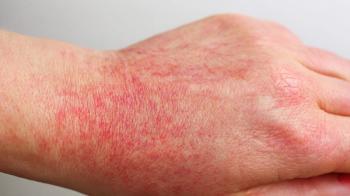
For a child presenting with erythroderma and shedding skin, the differential favors an undertreated flare with persistent triggers, staphylococcal superinfection with crusting and oozing, or eczema herpeticum. Herpes simplex virus superinfection often appears as monomorphic, punched-out circular crusts within eczematous sites, with erythema extending beyond the usual borders. Allergic contact dermatitis to a treatment product also belongs on the list; in one recent case, patch testing confirmed a perioral lanolin allergy.
Dismissing TSW outright risks eroding trust, so effective counseling begins by validating concerns and asking families to name their specific fear. Clinicians can then explain how appropriately supervised TCS use carries minimal risk, with frequent follow-up visits to monitor treated sites for atrophy, acne, and striae.
Nonsteroidal options now support a steroid-sparing strategy. Ruxolitinib cream (Opzelura), roflumilast cream (Zoryve), and tapinarof cream (Vtama) can serve as first-line therapy in mild to moderate disease or as active maintenance after a short TCS course achieves clearance. These agents also help manage flares in patients receiving systemic therapy such as dupilumab (Dupixent).
The discussion frames pediatric TSW as a communication challenge more than a diagnostic one. Careful exclusion of mimics, empathetic counseling, and a widening nonsteroidal armamentarium may help clinicians achieve clearance while keeping families engaged in care.