Houston dermatology clinicians compared severity scoring, JAK inhibitor safety data, and psychosocial counseling strategies across 3 alopecia areata patient cases.
At a Dermatology Times Case-Based Roundtable event, Carolyn Goh, MD, led clinicians through a discussion of severity scoring, patient-reported outcomes, CYP2C9 testing, and long-term monitoring across 3 alopecia areata cases.
Carolyn Goh, MD, a dermatologist and clinical professor of dermatology at UCLA, recently led a
Discussion centered on 3 FDA-approved Janus kinase (JAK) inhibitors: deuruxolitinib (Leqselvi; Sun Pharma), ritlecitinib (Litfulo; Pfizer), and baricitinib (Olumiant; Eli Lilly).1
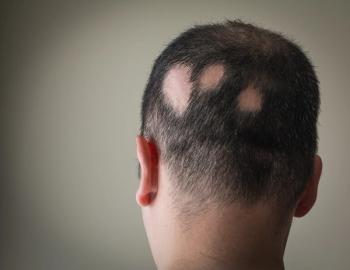
Case 1 featured a 33-year-old man with 45% scalp hair loss and minimal improvement after 4 months of topical corticosteroid. He wanted maximal regrowth before a wedding in 6 months. Attendees described limited benefit from topical therapy.
“In my experience, nobody responds to local treatment,” an attendee said. Another reported success with intralesional injections for localized mild disease.
In an opening poll, 9 of 11 attendees named extent of scalp involvement as the top trigger for systemic escalation. Goh reviewed the Severity of Alopecia Tool (SALT) and the Alopecia Areata Scale, noting the scale is not validated.2 Because indications specify severe disease without a percentage, she said secondary criteria can support a severe classification in the note.
Limited involvement does not always justify a JAK inhibitor. “It’s kind of like a sledgehammer hitting a nail on the wall,” Goh said, adding treatment is often lifelong because alopecia areata tends to flare.
Eight of 10 attendees rated speed of response moderately influential. Goh cited deck data showing a significant difference with deuruxolitinib 8 mg twice daily versus placebo in achieving a SALT score of 20 or less by week 8.3,4 She starts baricitinib at 4 mg in truly severe disease and at 2 mg in moderate disease or when side effects are a concern.
Case 2 involved a 29-year-old woman whose scalp hair loss progressed from 21% to 36% over 3 months. She reported anxiety about progression, avoided social events, and wore head coverings at work. Rosemary oil and a topical corticosteroid had produced minimal regrowth.
One attendee placed her in the moderate category, but Goh centered the discussion on quality of life. “We’re treating patients to be well,” Goh said.
Attendees split on sex differences. Several said the burden falls harder on women, while Goh noted men may struggle because they feel they are not supposed to be bothered by the hair loss. Wigs and makeup are more socially accepted for women, she added.
Goh presented patient-reported outcomes from the deck. Observational data showed Skindex-16 scores falling from 48.4 to 30.9 at week 24 with ritlecitinib 50 mg5 and from 57.1 to 30 at week 48 with baricitinib 4 mg.6 Asked what success looks like beyond SALT reduction, an attendee answered, “Self-confidence, patients feeling better.”
Attendees would wait at least 3 to 6 months before calling a JAK inhibitor a failure, with some saying a year. “I think if there’s absolutely nothing, six months is reasonable to wait,” Goh said. In a poll, 7 of 9 attendees would switch to another JAK inhibitor.
Case 3 presented a 42-year-old man with 85% scalp hair loss and new eyebrow and beard involvement after 6 months of clobetasol and topical minoxidil. Baseline CBC was unremarkable, hepatitis and TB screening were negative, and CYP2C9 genotyping showed a normal metabolizer. Attendees suggested repeat labs 1 to 2 months after initiation, then every 6 to 12 months.
Goh said zoster vaccination is recommended for all comers. JAK inhibitors generally need not be held for vaccines, with live vaccines for travel the exception.
Four of 9 attendees said CYP2C9 results only rule a patient in or out for deuruxolitinib. Goh agreed, noting results take about 1 week and the pharmacist cannot dispense until they return. “The rep says it’s very easy to order, but I haven’t ordered it,” an attendee said.
Boxed warning counseling also came up. “It’s sometimes hard to have that conversation about the previous studies with the MACE and malignancy concerns,” an attendee said. Goh said she outlines cardiovascular, thromboembolic, malignancy, and infection risks with every patient, tailoring emphasis to individual risk factors.
On tapering, Goh tells most patients flares are likely. “Most patients do respond again if they stop and then get back on,” Goh said. In a closing poll, 6 of 13 selections favored best practices for monitoring and safety, while 5 reflected existing comfort with JAK inhibitors.
Goh closed by noting open questions on whether oral minoxidil or systemic steroids belong at initiation or as rescue. “JAKs by themselves, relatively speaking, they work pretty quickly for alopecia areata,” Goh said.
References