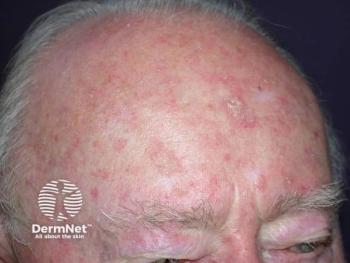
At the Dermatology Times NP/PA Cutaneous Oncology Workshop in Tampa, Florida, Amit Om, MD, outlined why field-directed therapy is increasingly favored over lesion-directed treatment for actinic keratosis.

Kaitlyn Bader is the assistant managing editor of Dermatology Times® and joined the MJH Life Sciences team in June 2022. She oversees the content production of Dermatology Times, from digital and print to videos and podcasts, as well as live coverage of dermatology conferences. Prior to health care news, Kaitlyn worked in digital marketing. She enjoys cooking, reading, and tending to her houseplants.
You can reach her at [email protected].
At the Dermatology Times NP/PA Cutaneous Oncology Workshop in Tampa, Florida, Amit Om, MD, outlined why field-directed therapy is increasingly favored over lesion-directed treatment for actinic keratosis.
At the Dermatology Times NP/PA Connect Cutaneous Oncology Workshop in Tampa, Florida, Angad Chadha, MD, discussed his upcoming presentations on gene expression profiling and cutaneous side effects of immunotherapy.
As chair of the new Dermatology Times NP/PA Connect Cutaneous Oncology Workshop, Tristan Hasbargen, PA-C, discusses the program's curriculum and goals live in Tampa, Florida.

Victoria Werth, MD, reviews brepocitinib's boxed warning and expanded treatment options for dermatomyositis.
Victoria Werth, MD, discusses the FDA approval of brepocitinib for dermatomyositis and its supporting VALOR trial data.

Physicians' Education Resource and Dermatology Times debut a dedicated NP/PA education platform and a new congress series, opening with DermNexus this November in Scottsdale, Arizona.

Lisa Swanson, MD, joins Don't Be Rash host Andrew C. Krakowski, MD, for Psoriasis Awareness Month to discuss how pediatric psoriasis is often misdiagnosed and when it signals a heightened risk of psoriatic arthritis in kids.

In this episode, Renata Block, DMSc, MMS, PA-C, welcomed Obehi Oriaifo, DNP, FNP-BC, DCNP, founder of DermaNP Solutions, to discuss expanding teledermatology access for rural and underserved patients.

Derm Dispatch host Renata Block, DMSc, MMS, PA-C, and Obehi Oriaifo, DNP, FNP-BC, DCNP, founder of DermaNP Solutions, discuss barriers driving demand for teledermatology in rural and underserved communities.

The FDA approval, based on phase 3 VALOR trial data, makes brepocitinib the first targeted therapy specifically indicated for dermatomyositis.

A secondary analysis of the phase 3 VALOR trial found brepocitinib 30 mg nearly doubled remission-level skin responses and improved itch as early as week 4 compared with placebo.

Heather Woolery-Lloyd, MD, discusses how new linear hair growth rate data translates into real-world results for patients.

Heather Woolery-Lloyd, MD, reviews a new clinical study quantifying linear hair growth rate across 4 Nutrafol formulations.
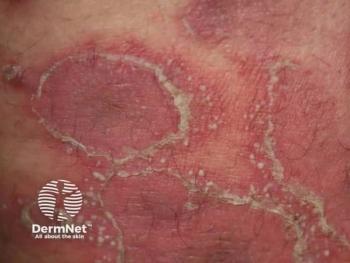
Review 10 evidence-based answers on GPP pathophysiology, diagnosis, and IL-36-targeted management, drawn from National Psoriasis Foundation consensus and emergency medicine literature.
Aaron Farberg, MD, outlines common triggers of generalized pustular psoriasis flares and the role of IL-36 targeted therapy.

Aaron Farberg, MD, reviews the diagnostic challenges of generalized pustular psoriasis and its common mimics across care settings.
Aaron Farberg, MD, discusses why generalized pustular psoriasis warrants its own awareness day and how it differs immunologically from plaque psoriasis.

Jerry Shapiro, MD, explains VDPHL01's cardiac safety profile and patient-reported outcomes in a phase 2 trial for female pattern hair loss.
Karen McGuire, PhD, CEO and co-founder of BioMendics, discusses TAMES-02 phase 2 trial enrollment and a new blister burden end point in EBS.

Leon Kircik, MD, discusses the allosteric binding mechanism and safety profile data of zasocitinib in hard-to-treat psoriasis presented at the 2026 American Academy of Dermatology (AAD) Innovation Academy.

Jerry Shapiro, MD, discusses rapid hair growth and safety findings for oral minoxidil, VDPHL01, in female pattern hair loss.

The accelerated FDA approval, based on Replimune's phase 2 IGNYTE trial data, gives clinicians a new second-line option for adults with advanced melanoma progressing after anti-PD-1 therapy.

Leon Kircik, MD, outlines phase 3 zasocitinib data on palmoplantar psoriasis skin clearance presented at the 2026 American Academy of Dermatology (AAD) Innovation Academy.

Karen McGuire, PhD, CEO and co-founder of BioMendics, explains what fast track status means for the investigational treatment and details the drug's mechanism of action in EBS.

Leon Kircik, MD, discusses zasocitinib scalp psoriasis clearance rates from the LATITUDE 1 and 2 trials presented at the 2026 American Academy of Dermatology (AAD) Innovation Academy.
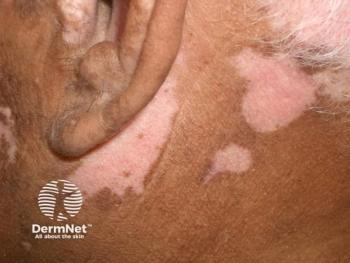
Two phase 3 trials of Pfizer's ritlecitinib met co-primary end points for facial and total repigmentation in nonsegmental vitiligo at week 52, prompting plans for global regulatory filings.

RAD 2026 experts unpacked new IL-13, JAK, STAT6 and OX40 options, CHE and pediatric gaps, plus overlooked comorbidities shaping AD care.

Karen McGuire, PhD, CEO and co-founder of BioMendics, discusses why epidermolysis bullosa simplex remains a difficult gene therapy target.

In the latest episode of Don't Be Rash, host Andrew Krakowski, MD, is joined by Raegan D. Hunt, MD, PhD, to discuss newborn skin barrier development, umbilical cord care, and evidence-based product selection.

Linda Stein Gold, MD, presents tapinarof cream as a long-term, nonsteroidal option for pediatric atopic dermatitis based on data presented at the 2026 Society for Pediatric Dermatology Annual Meeting.

November 20th 2025

October 23rd 2024