


Linda Stein Gold, MD, discusses pooled phase 3 tapinarof cream data across pediatric atopic dermatitis age groups presented at the 2026 Society for Pediatric Dermatology meeting.

Kaitlyn Bader is the assistant managing editor of Dermatology Times® and joined the MJH Life Sciences team in June 2022. She oversees the content production of Dermatology Times, from digital and print to videos and podcasts, as well as live coverage of dermatology conferences. Prior to health care news, Kaitlyn worked in digital marketing. She enjoys cooking, reading, and tending to her houseplants.
You can reach her at [email protected].
Linda Stein Gold, MD, discusses pooled phase 3 tapinarof cream data across pediatric atopic dermatitis age groups presented at the 2026 Society for Pediatric Dermatology meeting.

Sanofi will not submit the OX40-ligand antibody for regulatory review, citing efficacy and safety data insufficient to improve upon current standard-of-care treatments for moderate to severe AD.
In this episode, Renata Block, DMSCc, MMS, PA-C, discusses the new ICD-10 code for topical steroid withdrawal with Kelly Barta, the president and executive director of the International Topical Steroid Awareness Network.

Dermatologists and oncologists at a Dermatology Times Evolving Paradigms event in Boston compared immunotherapy selection, referral practices and surveillance strategies in advanced cutaneous squamous cell carcinoma.

Derm Dispatch host Renata Block, DMSCc, MMS, PA-C, and Kelly Barta, president and executive director of the International Topical Steroid Awareness Network, discuss the new ICD-10 code for topical steroid withdrawal and ITSAN's international patient registry.
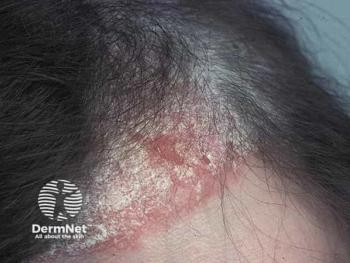
New phase 3 data presented at the AAD Innovation Academy show zasocitinib achieved high rates of clear or almost clear skin at the scalp, palms, soles, and nails at week 16.

Clinicians at a Dermatology Times Case-Based Roundtable event worked through 3 vitiligo cases spanning new-onset, widespread, and pediatric disease, weighing treatment sequencing against real-world access barriers.
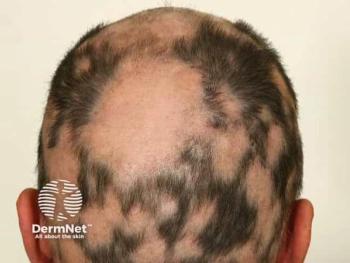
Q32 Bio reported bempikibart reduced SALT scores by 35.3% and produced a SALT-20 response in 40.0% of patients at week 36 in the SIGNAL-AA phase 2a trial.

Philip J. Mease, MD, reviews guselkumab's mechanism of action and its expanded FDA-approved indication for psoriatic arthritis joint damage inhibition.
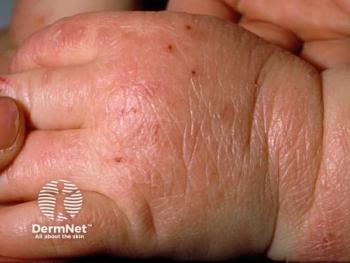
TRAPEDS-1 met its primary pharmacokinetic objective in children aged 6 to 11 years with moderate to severe atopic dermatitis, with no new safety signals over up to 172 weeks of tralokinumab treatment.
Bradley Burnam, founder and CEO of Turn Therapeutics, explains the statistical rationale behind GX-03's phase 2 end point strategy and patient stratification.
Philip J. Mease, MD, explains the rationale for early biologic treatment in psoriatic arthritis following guselkumab's FDA label expansion to address structural joint damage.
Bradley Burnam, founder and CEO of Turn Therapeutics, discussed interim phase 2 trial findings showing GX-03 efficacy across a broader range of EASI severity scores in atopic dermatitis.
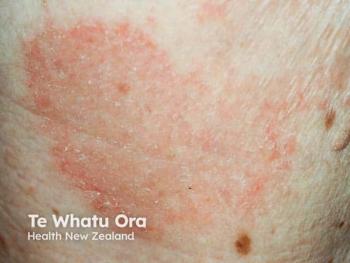
Turn Therapeutics finalized its stage 2 trial design after interim data showed clinically meaningful GX-03 efficacy in patients with baseline EASI scores as low as 1.1.

Philip Mease, MD, reviews the APEX trial data supporting guselkumab's expanded FDA label for inhibition of structural joint damage in psoriatic arthritis.
At a recent Dermatology Times Evolving Paradigms event, Nikhil Khushalani, MD, led dermatologists, Mohs surgeons, and oncologists in comparing systemic immunotherapy selection, referral practices, and adverse event management in advanced cutaneous squamous cell carcinoma.

Linda Stein Gold, MD, discusses zasocitinib's safety and efficacy as an oral treatment for plaque psoriasis.

Kord Honda, MD, provides his first-line and adjunct treatment strategies for acne in recognition of Acne Awareness Month.
Linda Stein Gold, MD, reviews the recent LATITUDE Atlas head-to-head trial results showing zasocitinib's superiority over deucravacitinib for plaque psoriasis.
Christopher Bunick, MD, PhD, discusses the FDA's expanded approval of roflumilast cream 0.3% for plaque psoriasis in children as young as 2 years of age.

The approval expands the existing indication for adults and children down to age 6, includes intertriginous areas, and removes restrictions on duration of use.

Philip Mease, MD, discusses the FDA's label expansion for guselkumab's inhibition of structural joint damage in psoriatic arthritis.
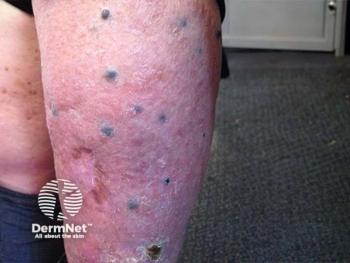
The FDA has accepted Replimune's third resubmitted BLA for RP1 plus nivolumab in advanced melanoma, setting an August 2 PDUFA date.

Kord Honda, MD, reviews the hormonal drivers of acne, prevention-focused treatment, and common skin care misconceptions.
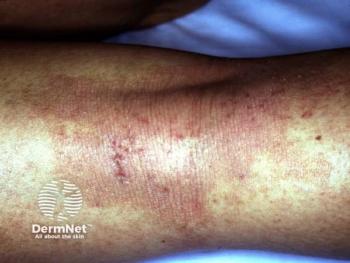
Kymera Therapeutics finished enrollment in its phase 2b BROADEN2 trial of KT-621 nearly six months early, moving up topline AD data to year-end 2026.

A recent JAAD case report describes congenital depigmentation and progressive posttransplant repigmentation in a child with NHEJ1-related radiosensitive SCID—a pairing not previously documented.
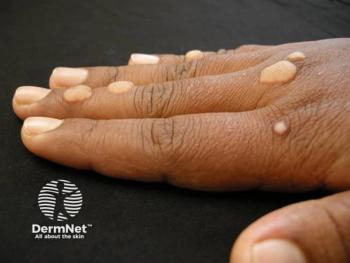
Verrica Pharmaceuticals and Japanese partner Torii Pharmaceutical have each dosed a first patient in COVE-3, the second pivotal phase 3 trial testing Ycanth for common warts.
Neal Bhatia, MD, led an Evolving Paradigms event on advancing multidisciplinary care in cutaneous squamous cell carcinoma to compare systemic immunotherapy data and referral practices.
At RAD 2026, Peter Lio, MD, discussed shared decision-making strategies and emerging microbiome-targeted therapies for atopic dermatitis.
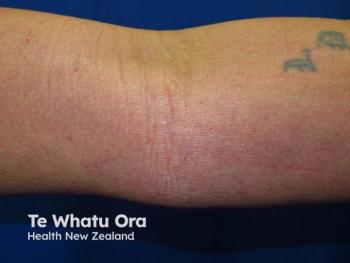
Derm-Biome Pharmaceuticals reported positive preclinical results for DB-006, a small molecule reducing itch, inflammation, and IgE levels in a model of atopic dermatitis.