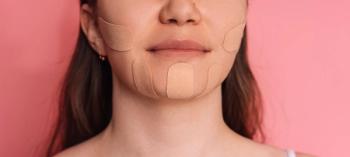
Face taping promises smoother skin and fewer wrinkles without injectables, but evidence suggests any visible benefits are largely temporary.
Tina Alster, MD; Daniel Schlessinger, MD; and Mary Lupo, MD, shared their insights on upcoming aesthetic innovations at the American Society for Dermatologic Surgery Annual Meeting in Chicago, Illinois.
The leading theme at the recent American Society for Dermatologic Surgery Annual Meeting in Chicago, Illinois, was momentum. Dermatology clinicians were consistently discussing smarter resurfacing, tighter skin, regenerative treatments, and a noticeable shift toward aesthetic work that looks completely undetectable.
To understand what is truly resonating with clinicians and patients, Dermatology Times' sister brand, NewBeauty, interviewed 3 leading experts: Tina Alster, MD, a dermatologist and founding director of the Washington Institute of Dermatologic Laser Surgery and a clinical professor of dermatology at Georgetown University Medical Center in Washington, DC; Daniel Schlessinger, MD, a dermatologist at Schlessinger MD Dermatology & Cosmetic Surgery in Omaha, Nebraska; and Mary Lupo, MD, a dermatologist at the Lupo Center for Aesthetic & General Dermatology and a clinical professor of dermatology at Tulane University School of Medicine in New Orleans, Louisiana. Each clinician shared a clear outlook on aesthetic innovations in 2026.
One of the most prominent themes across all 3 interviews was the leap in resurfacing technology and how these devices are remodeling collagen with more depth and control. “I’ve long been doing fractionated laser technology with microneedling, and I still do that every day,” Alster said. “But now there’s a new device from a company called Acclaro that will bore down a little deeper into the skin and cause a little bit more collagen remodeling. It’s really good for wrinkles around the mouth and large pores, and gives a fast and easy recovery.”
Laser coring with the UltraClear laser was highlighted as one of the true emerging techniques to watch next year. Lupo has already integrated the technology into her practice and says its versatility is one of its biggest advantages. She explains that the UltraClear platform allows for everything from no-downtime laser peels—such as the 3D Miracle—to deeper resurfacing treatments.
“I do think that’s something to keep an eye on,” Alster said. “I’m still a little bit concerned about the recovery from laser coring, no matter what the device, but I think that is something we’ll be hearing more about as the safety improves.”
If there’s one unique aspect of devices in 2026, it is versatility. Dermatology clinicians want systems that can work on multiple tones, depths, and concerns without having to switch platforms. Lupo said this is what makes certain devices stand out in her practice. “I live in a place that has a very diverse ethnic population, and the ability to tailor…1 device for all skin types is really, from a business standpoint and from a patient care perspective, a game changer for me.”
Artificial intelligence (AI) is beginning to influence treatment delivery and patient guidance. Schlessinger says we have already seen it incorporated, as with the AVAVA laser, which involves AI-driven pulse spacing. “It uses AI to see where the laser is in space and time and adjust the treatment end points so that you get evenly spaced-out pulses of light as you go along,” he said. “And it’s made it a lot more predictable and a lot easier to use.”
As aesthetic patients become more data-driven, imaging tools that define and measure skin quality are becoming increasingly sophisticated. Schlessinger said dermatology is moving toward more objective criteria for evaluating the skin. “What skin quality entails” is becoming better defined, he noted. “Being able to assess pores at the level of detail to know not just how fine or coarse they are but the shape of the pore can be beneficial.”
Across the panel, the biggest aesthetic trend for 2026 is ultranatural work that does not read as “treatment.” Schlessinger offered a direct take on the current push away from filler and toward anything marketed as natural. “Just because it’s not hyaluronic acid doesn’t necessarily mean that it’s natural, [and] doesn’t necessarily mean that it’s good,” he said. “In the end, it comes down to who is injecting it, their training, and how they’re injecting it to get a natural and undetectable look.”
On the topic of filler migration, Lupo shared her insight: “We need to start calling filler migration what it really is, which is over- and improperly injected,” she said. “When you put too much in a space, it’s going to move to another space.” Undetectability, the doctors agreed, is a technique conversation more than a product conversation.
The most forward-looking trend discussed was the merging of dermatology with regenerative and longevity science. “The area I think is really going to explode is this regenerative type of antiaging,” Alster said. She expects greater crossover between in-office treatments and systemic longevity practices as patients seek prevention across multiple channels.
Lupo believes advances in reversing cellular senescence will push the field even further. “If we understand how rapamycin receptors in the epidermis accumulate DNA damage, then we can reverse that,” she said. She also sees genetic testing eventually guiding earlier, tailored care. “We could exponentially take everything we currently have to the next level.”
[This article was originally published by NewBeauty.]
9 months ago
Dermatology Times January 2026 Print Recap