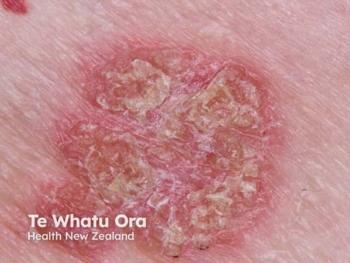
Tina Bhutani-Jacques, MD, explored how disease location, prior treatment response, and patient preference shape topical treatment decisions across 3 plaque psoriasis cases.
Discover insights from the Horizons in Advanced Practice meeting on type 2 inflammation and psoriasis management.
At the recent Dermatology Times Horizons in Advanced Practice meeting in Tampa, Florida, multidisciplinary discussions centered on complex inflammatory dermatoses and real-world treatment decision-making. Conference chairs Omar Noor, MD; Lakshi Aldredge, MSN, ANP-BC, DCNP; and Douglas DiRuggiero, DMSc, MHS, PA-C, led 6 interactive breakout groups where dermatology nurse practitioners and physician assistants worked through challenging cases in atopic dermatitis, type 2 inflammation, psoriasis, and more.
In 2 of the focused sessions, Noor guided attendees through case-based reviews of type 2 inflammation and personalized psoriasis management, emphasizing practical communication strategies, comorbidity evaluation, and the evolving landscape of biologic access.
In the first breakout session, Noor presented cases of moderate to severe atopic dermatitis, prurigo nodularis, and chronic spontaneous urticaria to explore overlapping pathways of IL-4– and IL-13–driven disease. He noted that the session intentionally avoided a disease-siloed approach.
“We looked at what’s happening below the skin and how we’re really looking at patients through a different lens and perspective,” he said. The discussion centered on assessing inflammatory drivers rather than focusing narrowly on rash patterns. Attendees weighed how often patients present with atopic dermatitis while carrying poorly explored histories of asthma, allergic rhinitis, or other comorbidities reflective of type 2 inflammation.
Noor emphasized the importance of asking targeted questions about respiratory symptoms, allergen triggers, or chronic pruritus patterns to uncover the broader inflammatory context. He also highlighted the role of communication when initiating immunomodulatory therapies. “We’re treating the rash on their skin, but we’re really treating the inflammation in the body,” he said.
Clinicians in the room shared diverging practice experiences. Some reported hesitating to probe beyond the dermatologic concern during a time-limited visit, whereas others routinely use concomitant medications such as inhalers or nebulizers as cues to explore systemic inflammation. Overall, the group discussion highlighted the value of holistic assessment to guide therapy more effectively.
Noor’s second breakout session focused on optimizing systemic therapies for psoriasis using clinical data, real-world access considerations, and patient-specific characteristics. “As we talk more about psoriasis treatments, we get smarter, more detailed, more unique, and more clinically relevant,” he said.
The session compared agents based on phenotype, body surface distribution, comorbidities, metabolic syndrome considerations, and emerging head-to-head or regional data, including scalp-specific findings for tildrakizumab (Ilumya; Sun Pharma). Access realities also played a significant role. Noor noted that Medicare beneficiaries often face a biologic coverage gap of approximately $2000 annually, making certain agents more viable than others. In some cases, he explained, tildrakizumab may offer a cost-effective systemic option that avoids prohibitive out-of-pocket expenses.
One attendee’s story had a significant impact on the group. A physician assistant described an older patient whose adult children had been struggling to manage at-home biologic injections. Clinic-administered dosing transformed adherence and relieved caregiver burden. “We’re always looking at the medication and its positives for the patient,” Noor said, “but we also have to keep in mind that it affects the entire family unit.”
As chair of Horizons in Advanced Practice, Noor highlighted the meeting’s strength in uniting clinicians across disciplines to compare approaches, review complex cases, and identify unmet needs in daily practice. “It’s a wonderful opportunity for everyone to talk, bring minds together, and see where we are clinically from so many different perspectives,” he said.
He also emphasized the role of speaking and writing opportunities in advancing dermatologic care. “We’re blessed to be in such a wonderful field where we can affect so many patients’ lives,” he said. He encouraged clinicians to contribute cases, insights, and commentary: “If there’s something you feel might be positive to dermatology, come to Dermatology Times and find an avenue that works for you.”
According to Noor, the Horizons in Advanced Practice meeting demonstrated that when clinicians share data, experiences, and real-world barriers, they collectively improve patient care while helping shape the direction of dermatology practice.
Stay tuned to Dermatology Times for the special February supplement detailing all 6 sessions and insights from Omar Noor, MD; Lakshi Aldredge, MSN, ANP-BC, DCNP; and Douglas DiRuggiero, DMSc, MHS, PA-C.
9 months ago
Dermatology Times January 2026 Print Recap