Face taping promises smoother skin and fewer wrinkles without injectables, but evidence suggests any visible benefits are largely temporary.
Explore the latest dermatology trends for 2026, including innovative therapies for psoriasis, atopic dermatitis, and hair-loss advancements.
In honor of Dictionary.com’s 2025 Word of the Year1—“6-7”—it felt appropriate to ring in the new year by considering 6-7 storylines we may hear more about over the coming 12 months. I do not claim to understand why kids made 6-7 into a funny joke that became a mainstream part of American culture; however, it does reflect how fast a culture can change and adapt to trends, a process akin to the rapid changes in dermatologic practice that can arise with new innovations and therapeutics for our patients.
Psoriasis. The excitement for the coming year is new advanced oral therapies for plaque psoriasis, including icotrokinra, a cyclic peptide that targets the IL-23 receptor to block IL-23 signaling, and zasocitinib, an artificial intelligence–guided next-generation tyrosine kinase 2 (TYK2) inhibitor that blocks IL-23, IL-12, and type I interferon signaling. The phase 3 clinical trials of these novel oral therapies showed very comparable rates of 90% and 100% improvement in the Psoriasis Area and Severity Index (PASI 90 and PASI 100) at week 16, with both substantially better than either deucravacitinib (first-generation TYK2 inhibitor) or apremilast (PDE4 inhibitor). How these orals will fit into the psoriasis treatment landscape will be hotly discussed, along with what lessons can be learned from deucravacitinib’s challenges. Additionally, expect to hear about the application of half-life extension technology to p19-targeted IL-23 biologics (eg, ORKA-001).
Atopic dermatitis (AD). Despite underwhelming phase 3 clinical trial data over the first 6 months of therapy, the OX40/OX40L biologics rocatinlimab and amlitelimab will continue to drive scientific discussion around the role of activated T cells, T-cell depletion, regulatory and memory T cells, and long-term disease modification in managing AD. Next-generation, optimized OX40-targeting biologics (eg, STAR-0310) seek to overcome existing challenges in the OX40/OX40L signaling pathway. Meanwhile, new technologies utilizing targeted protein degradation of STAT6 will gain visibility. The FDA-approved AD therapies will not sit quietly but continue to push forward on the impact of early intervention on pediatric growth, head and neck involvement, special site involvement, chronic atopic hand eczema, reduced dosing frequency, and real-world safety data.
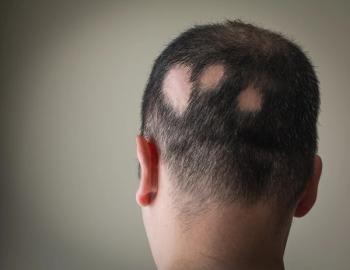
Hair loss. Deuruxolitinib, a Janus kinase (JAK) inhibitor, was a late 2025 entry into the alopecia areata toolbox, and its impact on patients and real-world experience will grow in the new year. Patients with alopecia areata will continue to hear good news, with the looming indication expansion of the stalwart JAK1-selective inhibitor upadacitinib, which demonstrated strong phase 3 trial data in alopecia areata in 2025. Not to be forgotten, androgenetic alopecia is a massive unmet need in dermatology for both men and women. Notably, 5% topical clascoterone solution demonstrated anywhere from 168% to 539% relative improvement in target area hair count in parallel phase 3 trials (SCALP 1 [NCT05910450] and SCALP 2 [NCT05914805]), positioning it to be a new therapy and mechanism of action (androgen receptor blocker) for men with androgenetic alopecia. Extended-release oral minoxidil has shown promise for regrowing more hair due to pharmacokinetic optimization, and new data from ongoing phase 3 clinical trials in men and women will be highly anticipated.
Hidradenitis suppurativa (HS). The pathogenesis of HS is multifactorial, evident by the difficulty in treating moderate to severe cases even with approved biologic therapies (ie, tumor necrosis factor α inhibitor adalimumab, IL-17A inhibitor secukinumab, and IL-17A/F inhibitor bimekizumab). There remains a significant opportunity to improve therapeutics and regimens (including combinations) to help patients with HS. Although the HS field experienced a setback when sonelokimab (IL-17A/F nanobody) failed to meet its primary end point in the VELA-2 phase 3 trial (NCT06411379), it can look forward to the highly JAK1-selective inhibitor povorcitinib, as it aims to bring a multicytokine, multipathway approach to HS treatment.
Cardiovascular impact of systemic skin disease. Increasingly, research studies point toward moderate to severe inflammatory skin diseases being associated with higher rates of cardiovascular disease,2 including underlying atherosclerosis.3 Atherosclerosis had a significant impact on data interpretation in the ORAL Surveillance study (NCT02092467).4,5 Dissecting the physiologic mechanisms linking inflammatory skin diseases such as psoriasis, AD, and HS to increased atherosclerosis and cardiovascular disease is important and an emerging focus in dermatology. Understanding these connections is necessary to properly contextualize the risk of myocardial infarction, stroke, and venous thromboembolism in patients with inflammatory skin disease at baseline and on advanced systemic therapies.
Elevating patient standards of care. The ultimate goal of all innovation and research in dermatology is to improve patient care outcomes. Therefore, much of the discussion centers on elevating the standard of care for patients. Wouldn’t you want the best outcomes for your family member or loved ones? To frame this in a useful way for clinicians, treat-to-target approaches have been developed as a guide, emphasizing what constitutes optimal vs moderate treatment targets for clinician-reported outcomes (CROs; eg, PASI 100 or Eczema Area and Severity Index 100) and patient-reported outcomes (PROs; eg, Itch Numerical Rating Scale 0/1). Achieving minimal disease activity (MDA) means hitting optimal treatment targets for CROs and PROs simultaneously; data demonstrate that patients achieve higher quality-of-life measures when reaching MDA.
2026 will undoubtedly be an exciting year for dermatology providers across the United States and globally. Although I highlighted topics you are likely to hear about throughout the year, there will be many others, spanning medical, aesthetic, and procedural dermatology, that are worthy of attention. Thank you for your continued readership of Dermatology Times, and we look forward to bringing you all the latest dermatology news throughout 2026.
Christopher G. Bunick, MD, PhD, is editor in chief of Dermatology Times and an associate professor of dermatology at Yale School of Medicine in New Haven, Connecticut.
References
9 months ago
Dermatology Times January 2026 Print Recap