
An 83-year-old patient's three-decade psoriasis journey, shaped by a comorbid MGUS diagnosis and a hospitalization that upended his treatment plan, reveals how much medical history can redirect a therapy path.

Christopher G. Bunick, MD, PhD, is editor in chief of Dermatology Times and an associate professor of dermatology at Yale School of Medicine in New Haven, Connecticut.
An 83-year-old patient's three-decade psoriasis journey, shaped by a comorbid MGUS diagnosis and a hospitalization that upended his treatment plan, reveals how much medical history can redirect a therapy path.
Scalp and nail involvement remain among psoriasis's most difficult-to-treat presentations. The panel reviews site-specific efficacy data and outlines a practical approach to monitoring safety and managing breakthrough symptoms.
Deciding whether to retrain self-injection technique or transition to office-based administration hinges on identifying the true barrier, while high-impact sites like the scalp and nails raise the stakes considerably.
A biologic-experienced night-shift worker with limited response to her current therapy raises a critical diagnostic question: is this true treatment failure, or an adherence problem hiding behind a demanding schedule?

Dermatology’s growing focus on skin longevity demands clear definitions, validated outcomes, and rigorous evidence beyond anti-aging claims.
Persistence and adherence, not efficacy claims alone, distinguish IL-23 biologics in practice. Real-world claims data reveal how administration setting and dosing interval shape whether older patients stay on therapy.
Injection anxiety, transportation barriers, and Medicare Part B eligibility converge in this case to make office-administered biologic therapy not a fallback, but often the most realistic path to sustained treatment.
Christopher Bunick, MD, PhD, reviews data on investigational atopic dermatitis agents presented at EADV 2026 and biomarker findings for upadacitinib.
Age alone should not dictate biologic hesitancy. The panel challenges the assumption that systemic therapies are inherently riskier in older adults, pointing to safety data and the realities of polypharmacy.
An independence-minded 72-year-old with hand arthritis and missed oral doses forces a reassessment of what a workable psoriasis regimen looks like once dexterity and daily routine become limiting factors.

At Fall Clinical 2026, Christopher Bunick, MD, PhD, discussed topical and oral acne management, including tetracycline selection and micronized isotretinoin.

Christopher Bunick, MD, PhD, presented long-term safety data for JAK inhibitors upadacitinib and abrocitinib in atopic dermatitis at Fall Clinical 2026.
Speed of onset and long-term durability are often treated as competing priorities. Dr. Armstrong argues they are not mutually exclusive, and details how cardiometabolic comorbidities and how emerging incretin-therapy data may extend treatment options beyond skin clearance alone.
With more biologic classes available than ever, selecting a first-line agent for a treatment-naive patient increasingly depends on comorbidity screening, lifestyle fit, and realistic expectations rather than efficacy data alone.
A systemic-naive roofer with extensive plaque psoriasis and cardiometabolic risk illustrates why compliance history, not just disease severity, should shape the first conversation about moving beyond topical therapy.
As biologics multiply, the boundary between topical failure and systemic eligibility remains contested. Dr. Armstrong outlines the severity thresholds, comorbidities, and quality-of-life factors that most reliably justify escalating plaque psoriasis therapy.

Goran Mićević, MD, PhD, joined Christopher Bunick, MD, PhD, to discuss phase 3 findings showing an individualized mRNA neoantigen therapy improved outcomes with checkpoint blockade in resected melanoma.

In the August letter from the editor in chief, Christopher Bunick, MD, PhD, explains bemotrizinol’s broad-spectrum UVA/UVB benefits and simple UV safety habits for sunscreen, pools, and wounds.

In July's letter from the editor in chief, Christopher Bunick, MD, PhD, breaks down why dermatology clinicians should be skilled in wound care.
Christopher Bunick, MD, PhD, discussed new data suggesting emergency departments continue to rely on outdated therapies for pediatric atopic dermatitis flares despite evolving dermatology guidelines.
Christopher Bunick, MD, PhD, discussed the scientific advances still needed before precision medicine can guide individualized therapy selection in atopic dermatitis during a recent Dermatology Times interview.
Christopher Bunick, MD, PhD, shared practical guidance on sun protection, swimming, and preserving the skin barrier in patients with atopic dermatitis.
Christopher Bunick, MD, PhD, discusses the FDA's expanded approval of roflumilast cream 0.3% for plaque psoriasis in children as young as 2 years of age.

Christopher Bunick, MD, PhD, shares his insights on the FDA approval of bemotrizinol and what the ingredient's properties mean for sun protection and cosmetic elegance.

In clinical medicine and science, robust often fails because it lacks quantifiable meaning.

Dermatology Times' editor in chief highlights essential late-breaker data from AAD 2026, including upadacitinib, rezpegaldesleukin, icotrokinra, zasocitinib, envudeucitinib, sonelokimab, and more.

Dermatology Times' editor in chief highlights essential late-breakers from AAD 2026, including rademikibart, KT-621, nemolizumab, and delgocitinib.

New studies suggest tattoo pigments migrate to lymph nodes, complicate skin exams, and may raise lymphoma risk—what dermatologists now watch for.
Christopher Bunick, MD, PhD, and Kristian Reich, MD, PhD, discuss phase 3 data presented at AAD showing patients moving from very severe disease at baseline to absent or mild disease by week 40.
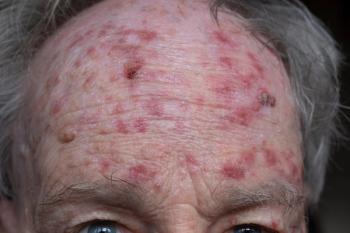
Christopher Bunick, MD, PhD, and Almirall's Johnny Im discuss new data showing that tirbanibulin 1% ointment provides consistent efficacy, while expanded coverage is poised to improve patient access in the US.

Published: September 19th 2024 | Updated: September 26th 2024

October 23rd 2024

February 9th 2025