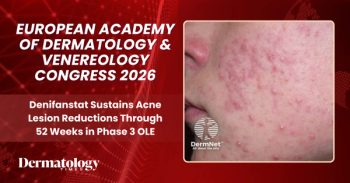
Treatment success reached 56.7% and total lesions fell 71.8% with up to 52 weeks of oral denifanstat, with no adverse event-related discontinuations.
At Fall Clinical 2026, Christopher Bunick, MD, PhD, discussed topical and oral acne management, including tetracycline selection and micronized isotretinoin.
“One area my research laboratory has been very involved in is acne research, understanding oral antibiotics and other molecules that we use to treat acne. It was therefore a great privilege at
Bunick, associate professor of dermatology at the Yale School of Medicine and editor in chief of Dermatology Times, previewed the research his laboratory has been heavily involved in related to acne, including oral antibiotics and other molecules used in treatment. His acne session covered topical management, oral antibiotic selection, retinoids, and micronized isotretinoin.
Bunick reviewed the latest guidelines on topical management, including how to combine retinoids, benzoyl peroxide, and topical antibiotics. He explained how antibiotics such as clindamycin exert anti-inflammatory effects in topical combinations.
Turning to oral antibiotics, Bunick dissected the anti-inflammatory mechanisms of tetracyclines. He explained the molecular differences among sarecycline, doxycycline, and minocycline. These differences inform oral antibiotic choice, especially to minimize gut microbiome disruption and antibiotic resistance risk.
Bunick noted advantages of sarecycline over doxycycline and minocycline, including a reduced risk of phototoxicity.
Topical retinoids remain foundational in acne care according to Bunick. They are vitamin A derivatives with widespread use beyond acne, including anti-aging and longevity applications. Bunick emphasized the importance of continuing to understand how they work.
“These are bread and butter,” Bunick said of topical retinoids.
He discussed trifarotene, which targets retinoic acid receptor gamma specifically. Through images and case studies, he showed retinoids affecting inflammatory and comedonal papules, post-inflammatory hyperpigmentation, post-inflammatory erythema, and scarring.
“In today’s world, when we treat acne, it’s not just about one or the other. We have to hit all of these components to elevate the quality of life of our patients,” Bunick said.
Bunick shared a case from his clinic involving generic isotretinoin. For patients who keep relapsing despite what seems an adequate course, he suggested considering micronized isotretinoin. He has seen improved success with the micronized formulation in patients who failed regular generic isotretinoin.
“Think about the micronized isotretinoin because there really are variabilities in gut absorption we just can’t account for yet scientifically,” Bunick said.
He framed the micronized formulation as a practical tip for use in clinic.