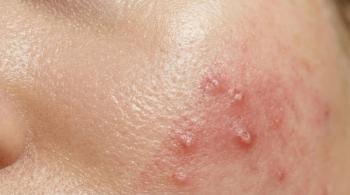
The ASC40-304 OLE enrolled 240 patients from ASC40-303, including 116 originally randomized to denifanstat and 124 originally randomized to placebo. All patients received denifanstat 50 mg once daily for up to 40 additional weeks, for up to 52 weeks of total exposure in the denifanstat/denifanstat group.Safety was the primary endpoint, and efficacy outcomes were secondary endpoints measured against the ASC40-303 baseline.1,2
Treatment success, defined as an Investigator's Global Assessment (IGA) score of 0 or 1 with at least a 2-point reduction from baseline, reached 57.8% in the denifanstat/denifanstat group and 55.6% in the placebo/denifanstat group. Mean total lesion count fell by 73.0% and 70.7%, respectively. Mean inflammatory lesion count fell by 78.1% and 75.8%, and mean noninflammatory lesion count fell by 68.3% and 65.5%.1
Across the full cohort, inflammatory lesions declined by a mean of 76.9% and noninflammatory lesions by 66.9%. Among patients completing the OLE, total and inflammatory lesion counts fell by approximately 75% and 80%, respectively, according to Sagimet. The release did not report denominators for responders or the number of patients completing the extension.1
Denifanstat safety and tolerability through 52 weeks
Baseline characteristics of the 2 OLE cohorts were consistent with the overall ASC40-303 population. Mean age was 22.5 years in the denifanstat/denifanstat group and 22.3 years in the placebo/denifanstat group, and 85.5% to 87.1% of patients had moderate (IGA 3) disease at baseline. Mean total lesion counts at baseline were 102.8 and 103.2, respectively.1
Denifanstat was generally well tolerated with up to 52 weeks of exposure, according to the company. No patients permanently discontinued study drug because of adverse events, and no drug-related serious adverse events occurred among denifanstat-treated patients. Only 2 categories of treatment-related adverse events exceeded 5% incidence over 52 weeks: dry skin (7.1%) and dry eye (5.9%).1
In an earlier phase 2 dose-escalation trial, the 50 mg dose produced the largest median reduction in total lesion count at week 12, and dry eye and dry skin were among the most common treatment-emergent adverse events, all grade 1 or 2.3 No serious drug-related adverse events occurred in the phase 2 trial. Of note, because the OLE lacked a control arm, the long-term data do not permit placebo-adjusted comparisons.
Sagimet expects patient screening for the US phase 3 AURORA trial to begin in October 2026. AURORA will enroll approximately 800 patients aged 12 years and older, including about 450 adolescents, randomized 2:1 to denifanstat 50 mg or placebo for 12 weeks, with co-primary endpoints of IGA treatment success and absolute changes in inflammatory and noninflammatory lesion counts. Approximately 530 patients completing the double-blind period will be eligible for a 40-week OLE.1
References
An open, multicenter, phase III extension clinical trial to evaluate the long-term safety of ASC40 (denifanstat) tablets in patients with moderate to severe acne vulgaris. ClinicalTrials.gov identifier: NCT06248008. Accessed September 30, 2026. https://clinicaltrials.gov/study/NCT06248008
Chen Q, Chen R, Wu L, et al. Denifanstat for moderate-to-severe acne: a phase 2, randomized, double-blind, placebo-controlled trial. J Eur Acad Dermatol Venereol. 2026;40(7):1238-1246. doi:10.1111/jdv.70119. https://doi.org/10.1111/jdv.70119