


Opinion|Videos|October 5, 2026
Balancing Speed of Onset, Durability, and Comorbidities in Psoriasis Therapy
Speed of onset and long-term durability are often treated as competing priorities. Dr. Armstrong argues they are not mutually exclusive, and details how cardiometabolic comorbidities and how emerging incretin-therapy data may extend treatment options beyond skin clearance alone.
Advertisement
In "Balancing Speed of Onset, Durability, and Comorbidities in Psoriasis Therapy," our experts turn to how quickly a therapy should work versus how long its benefit should last.
Dr. Bunick asks how clinicians weigh speed of onset against long-term durability when selecting a biologic. Dr. Armstrong breaks efficacy into three components: speed of onset, depth of response, and durability of that response over time. She notes that many current therapies can deliver on all three, and clarifies that fast initial improvement and lasting clearance are not mutually exclusive, though drug accessibility remains a separate barrier. Bunick observes that most clinical trial endpoints fall between 12 and 24 weeks, yet many medications continue improving through week 52, with the response plateau often not appearing until after the fourth month.
Armstrong confirms this pattern in her own practice. She tells patients to expect at least six months before judging a therapy's full effect, since some patients are "later bloomers," and she typically avoids switching therapies before three months unless there is no response at all. She acknowledges that comparing long-term trial data is complicated by inconsistent statistical handling of missing data across studies. When patients do need to switch, she is transparent that outcomes vary: some switches are more predictable based on population data, while others remain something of a guessing game.
The discussion turns to cardiometabolic comorbidities, one of the case's defining features. Armstrong notes that evidence for cardiovascular benefit from psoriasis therapies remains largely limited to observational and small controlled studies, so she ensures patients stay connected to primary care. She highlights emerging data showing that adding an incretin-based therapy, a GLP-1 or GLP/GIP agonist, to a biologic produces an independent benefit on both psoriasis and psoriatic arthritis severity using stringent outcome measures. In practice, she uses early visits to build trust before introducing this newer literature to patients.
The next episode in this series, "Case 2: Treating Late-Onset Plaque Psoriasis in an Older Adult," moves to the panel's second case, a 72-year-old whose osteoarthritis and missed medication doses call for a simpler treatment approach.
Advertisement
Related to this article
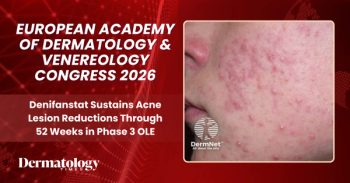
Treatment success reached 56.7% and total lesions fell 71.8% with up to 52 weeks of oral denifanstat, with no adverse event-related discontinuations.
Advertisement
Advertisement
Trending on Dermatology Times
1
EADV 2026 Day 4: Precision Medicine, Real-World Evidence, and the Future of Dermatologic Care
2
EADV 2026 Day 3: Long-Term Psoriasis Data and Emerging Therapeutic Targets Take Focus
3
Icotrokinra Sustains Skin Clearance at High-Impact Psoriasis Sites Through 2 Years
4
Delgocitinib Shows Real-World Effectiveness and Improved Quality of Life in Chronic Hand Eczema
5