Goran Mićević, MD, PhD, joined Christopher Bunick, MD, PhD, to discuss phase 3 findings showing an individualized mRNA neoantigen therapy improved outcomes with checkpoint blockade in resected melanoma.

Christopher G. Bunick, MD, PhD, is editor in chief of Dermatology Times and an associate professor of dermatology at Yale School of Medicine in New Haven, Connecticut.
Goran Mićević, MD, PhD, joined Christopher Bunick, MD, PhD, to discuss phase 3 findings showing an individualized mRNA neoantigen therapy improved outcomes with checkpoint blockade in resected melanoma.

In the August letter from the editor in chief, Christopher Bunick, MD, PhD, explains bemotrizinol’s broad-spectrum UVA/UVB benefits and simple UV safety habits for sunscreen, pools, and wounds.

In July's letter from the editor in chief, Christopher Bunick, MD, PhD, breaks down why dermatology clinicians should be skilled in wound care.
Christopher Bunick, MD, PhD, discussed new data suggesting emergency departments continue to rely on outdated therapies for pediatric atopic dermatitis flares despite evolving dermatology guidelines.
Christopher Bunick, MD, PhD, discussed the scientific advances still needed before precision medicine can guide individualized therapy selection in atopic dermatitis during a recent Dermatology Times interview.
Christopher Bunick, MD, PhD, shared practical guidance on sun protection, swimming, and preserving the skin barrier in patients with atopic dermatitis.
Christopher Bunick, MD, PhD, discusses the FDA's expanded approval of roflumilast cream 0.3% for plaque psoriasis in children as young as 2 years of age.
Christopher Bunick, MD, PhD, shares his insights on the FDA approval of bemotrizinol and what the ingredient's properties mean for sun protection and cosmetic elegance.

In clinical medicine and science, robust often fails because it lacks quantifiable meaning.

Dermatology Times' editor in chief highlights essential late-breaker data from AAD 2026, including upadacitinib, rezpegaldesleukin, icotrokinra, zasocitinib, envudeucitinib, sonelokimab, and more.

Dermatology Times' editor in chief highlights essential late-breakers from AAD 2026, including rademikibart, KT-621, nemolizumab, and delgocitinib.

New studies suggest tattoo pigments migrate to lymph nodes, complicate skin exams, and may raise lymphoma risk—what dermatologists now watch for.
Christopher Bunick, MD, PhD, and Kristian Reich, MD, PhD, discuss phase 3 data presented at AAD showing patients moving from very severe disease at baseline to absent or mild disease by week 40.
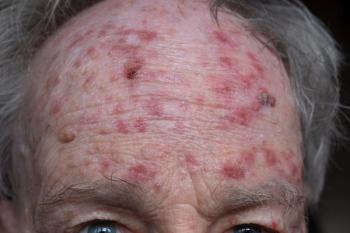
Christopher Bunick, MD, PhD, and Almirall's Johnny Im discuss new data showing that tirbanibulin 1% ointment provides consistent efficacy, while expanded coverage is poised to improve patient access in the US.
At AAD 2026, Christopher Bunick, MD, PhD, and David Cotter, MD, PhD, discuss data suggesting tirzepatide may augment ixekizumab responses in psoriatic arthritis—potentially independent of weight loss.
Christopher Bunick, MD, PhD, and Chinweike Ukomadu, MD, PhD, discuss late-breaking phase 3 findings at AAD highlighting high rates of clearance and favorable safety with once-daily oral zasocitinib.

Dermatologists tailor seborrheic dermatitis care with shared decisions, steroid-sparing options, combo therapy, and flare-ready expectations.
At AAD 2026, Christopher Bunick, MD, PhD, and Reid Waldman, MD, discuss investigational VDPHL01, extended-release oral minoxidil, for the treatment of women and men with pattern hair loss.
Christopher Bunick, MD, PhD, and Kristian Reich, MD, PhD, discuss the long-term efficacy of sonelokimab, with more than 60% of patients achieving HiSCR75 and approximately 30% reaching HiSCR100.
At AAD 2026, Christopher Bunick, MD, PhD, and Patrick Burnett, MD, PhD, discuss late-breaking data of roflumilast cream's improvements in infants with AD.
Christopher Bunick, MD, PhD, interviews medical student Sabine Obagi on the value of conference participation, mentorship, and early exposure for aspiring dermatology clinicians at AAD 2026.
Dermatologists weigh rifamylast, JAK inhibitors and antifungals for long-term seborrheic dermatitis control, balancing efficacy, safety and access.
New rifamilast 0.3% foam shows fast, sustained seborrheic dermatitis clearing with high tolerability—plus tips for long-term maintenance.
Discover how rifamylast foam, a new FDA-approved PDE4 inhibitor, offers steroid-free relief for seborrheic dermatitis—calms itch, face-safe.
Discover how FDA-approved rifamylast foam targets PDE4 to calm seborrheic dermatitis—face-safe, steroid-free relief for itch and redness.

February highlights rare genetic skin diseases, shifting dermatology from supportive care to molecularly targeted therapies.
Rethink seborrheic dermatitis care: limit facial steroids, use antifungals wisely, and watch emerging barrier-safe targeted therapies.
Early seborrheic dermatitis treatment reduces inflammation, prevents worsening, and boosts quality of life; experts explain pediatric vs adult goals and mask-triggered flares.
This episode, titled Seborrheic Dermatitis Across Skin Tones and Long-Term Disease Burden, features dermatology experts discussing the following critical questions: How might presentation of SD differ in various skin tones? What challenges do you encounter when diagnosing SD in patients with skin color? In your experience, what long-term complications arise when SD is inadequately treated or remains uncontrolled over time?
Seborrheic dermatitis varies by age, affects scalp and face, drives itching and stigma, and lowers quality of life—highlighting newer targeted treatments.

Published: September 19th 2024 | Updated: September 26th 2024

October 23rd 2024

February 9th 2025