Though convenient, SPF-infused cosmetics rarely deliver their labeled protection level in real-world use, underscoring the continued need for a dedicated broad-spectrum sunscreen as the foundation of any routine.
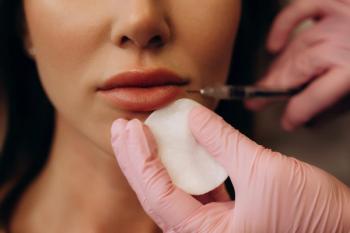
FDA reviews phase 3 results and expanded BOTOX Cosmetic use for masseter prominence and nonsurgical jawline contouring, potentially becoming the first neurotoxin approved in the US for this indication.
“This submission builds on the depth and versatility of BOTOX Cosmetic and reflects our continued investment in advancing aesthetic medicine," Darin Messina, PhD, senior vice president and head of aesthetics research and development at AbbVie, said. "At Allergan Aesthetics, our approach to innovation includes both developing new treatment options and continuing to expand the potential of established products. The pursuit of a fifth aesthetic indication demonstrates that commitment to addressing evolving patient needs.”1
The regulatory submission is supported by data from 2 phase 3 clinical trials, M21-416 and M21-417, which evaluated the efficacy and safety of onabotulinumtoxinA in adults with masseter muscle prominence. According to the company, both studies met their primary efficacy endpoints, demonstrating statistically significant improvements in the severity of masseter muscle prominence compared with placebo.
In the M21-416 study, treatment with onabotulinumtoxinA resulted in a statistically significant reduction in masseter muscle prominence severity compared with placebo (P = .0046). Similar findings were reported in the companion M21-417 trial, which also met its primary endpoint with a significant treatment effect favoring onabotulinumtoxinA (P = .0014).
Beyond investigator-assessed efficacy, the phase 3 program also evaluated patient-reported satisfaction. Across the studies, approximately twice as many patients treated with onabotulinumtoxinA reported being "very satisfied" or satisfied" with treatment compared with those receiving placebo, suggesting that the objective improvements in masseter contouring were accompanied by meaningful patient-perceived benefit.
The company also reported that the safety profile observed in the studies was consistent with the established safety experience for onabotulinumtoxinA across its currently approved indications. No new safety signals were identified during the phase 3 program.
The announcement did not include detailed trial characteristics such as enrollment, dosing, treatment schedules, or secondary endpoint data beyond the reported efficacy and satisfaction outcomes. Likewise, no timeline for a regulatory decision was disclosed in the release.
"The FDA's acceptance of this sBLA reflects how far neuromodulator science has moved beyond wrinkle reduction—masseter treatment sits at a meaningful intersection of function and aesthetics that surgeons and dermatologists are increasingly navigating together,” Waqqas Jalil, MD, board-certified plastic surgeon and founder ofAspect Plastic Surgery in Toronto. “From a surgical standpoint, patients presenting for facial contouring now often ask about nonsurgical jawline slimming first, so a formally approved indication would give clinicians a cleaner framework for patient counselling. Robust phase 3 data behind this submission should also help set realistic expectations around dosing and duration, which is where most patient dissatisfaction in this category originates."
Masseter muscle prominence is associated with hypertrophy or increased activity of the masseter muscles and can contribute to a broader or more square appearance of the lower face. Interest in nonsurgical facial contouring procedures has grown in recent years, with clinicians increasingly incorporating lower-face assessment into comprehensive aesthetic treatment planning. Although neurotoxin treatment of the masseter muscle is commonly performed in clinical practice, no product currently carries a US FDA-approved aesthetic indication for this use.
"Patients are increasingly seeking overall facial assessments with non-surgical options to address aesthetic needs for the lower face," said Steve Yoelin, MD, a coordinating clinical investigator, practitioner, and medical aesthetic trainer. "As facial assessment continues to evolve beyond individual treatment areas, this indication would further broaden the clinical utility of BOTOX Cosmetic, if approved, by providing an important new treatment option."1
If approved, the new indication would provide clinicians with an on-label treatment option specifically studied for improving the appearance of masseter muscle prominence. It would also represent the fifth aesthetic indication for onabotulinumtoxinA, making it the only neurotoxin with this many indications. It is currently approved for the temporary improvement in the appearance of moderate to severe frown lines, forehead lines, crow’s feet, and, most recently in 2024, platysma bands.2
“[OnabotulinumtoxinA] is rooted in science and innovation, and without any type of judgment or indication that it should be used for anything else, which makes its delivery ethical,” Mona Gohara, MD, board-certified dermatologist, consultant for Allergan Aesthetics, and associate clinical professor at Yale University in New Haven, Connecticut,
References
1. Allergan Aesthetics Announces U.S. FDA Acceptance of Supplemental Biologics License Application for BOTOX® Cosmetic for Masseter Muscle Prominence. News release. AbbVie. Published August 4, 2026. Accessed August 4, 2026.
2. BOTOX® Cosmetic (onabotulinumtoxinA) Receives FDA Approval for Moderate to Severe Vertical Bands Connecting the Jaw and Neck (Platysma Bands). News release. AbbVie. Published October 18, 2024. Accessed August 4, 2026.