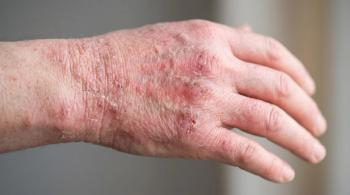
Christophe Piketty discusses 3-year ARCADIA data demonstrating sustained efficacy and long-term safety of nemolizumab in atopic dermatitis.
Christopher Bunick, MD, PhD, reviews data on investigational atopic dermatitis agents presented at EADV 2026 and biomarker findings for upadacitinib.
At
Bunick attended EADV at the end of September and described the gathering as a meeting of dermatologists from across the world. He said several late-breakers were of interest, with a number of important presentations in the atopic dermatitis session.
Bunick also highlighted a new molecule,
“The late-breaker only involved nine patients, but what a dramatic response in EASI score was seen in those 9 patients,” Bunick said.
“It’s going to be really interesting to watch how the RAC2 program develops over time,” he said.
Future trials will need to bear out the response. “We’ll see if future trials can bear out, but RAC2 is a molecule to watch,” Bunick said.
Level Up was a randomized controlled trial comparing
Inflammatory pathway improvement was more extensive with upadacitinib than with dupilumab. Barrier genes such as filaggrin and loricrin also improved earlier and more significantly with the JAK inhibitor.
“What was really fascinating was to actually see in action from this trial, the improvement in the inflammatory pathways of the JAK inhibitor, which was much more extensive than dupilumab,” Bunick said.
Bunick said the Level-Up findings speak to the difference between a mono-targeted biologic and a JAK inhibitor. Dupilumab targets IL-4 receptor alpha and controls IL-4 and IL-13 signaling, which he said limits what it can accomplish. Upadacitinib selectively targets JAK1 and affects multiple pathways, including IL-4, IL-13, IL-31, TSLP, IL-22, and interferon gamma.
Bunick said the comprehensive targeting of those cytokines was reflected in the biomarker and histology analyses of the skin barrier. He described presenting the findings at EADV as a privilege.