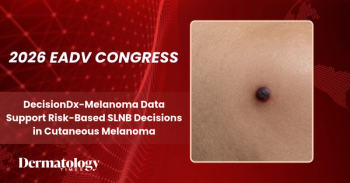
Prospective data suggest DecisionDx-Melanoma may help refine SLNB decisions and identify recurrence risk beyond conventional staging.
At Fall Clinical 2026, Todd Schlesinger, MD, explained recent exosome regulatory progress, the remibrutinib label update for symptomatic dermographism, and ongoing clinical trials at his trial center.
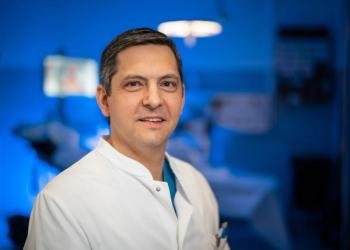
Todd Schlesinger, MD, dermatologist, clinical assistant professor at George Washington University School of Medicine and Health Sciences, and director of the Clinical Research Center of the Carolinas, recently discussed new exosome research, remibrutinib’s expanded indication, and his ongoing trial work at
Schlesinger said new methods are allowing exosomes to be isolated with greater purity. Companies are now focused on the effect of exosomes, and their contents can be better characterized. Some are entering the field with INDs aimed at hair and other indications, with the goal of injectable exosomes becoming approved drugs.
“Right now, there are no approved therapies for exosomes in the United States,” Schlesinger said. Most use worldwide is topical, as an adjunct or cosmetic product.
“I think as we go down the road here, we’ll see more of a regulatory pathway through the FDA, the EMA, and other regulatory bodies around the world,” Schlesinger said.
Remibrutinib is approved for chronic spontaneous urticaria (CSU) and most recently,
The update prompts clinicians to consider how to identify symptomatic dermographism in the clinic. Options he raised included testing, asking patients targeted questions, and eliciting dermographism on the skin in different ways.
“So it just brings a new level of option for us to treat those patients,” Schlesinger said. In CSU, he is already seeing success in patients who have failed second-generation H1 antihistamines, with relief from itching and hives.
“My trial center is currently working on HS quite a bit,” Schlesinger said. Those studies involve 2 new pathways, IL-1 and BTK. His center is also running intralesional cemiplimab studies in cutaneous squamous cell carcinoma, along with extended half-life medications for psoriasis and atopic dermatitis.
His team recently completed and published studies in patients with fragile skin, including dermatoporosis. A bruising study conducted with Glynis Ablon, MD, evaluated a Galderma topical skincare product, with reduced bruising and biomarker changes observed.
A cosmetic study of an actinic keratosis treatment used high-level field imaging and showed improvement in both the lesions and cosmetic appearance. Schlesinger said he hopes several abstracts will be accepted at AAD next year, with papers to follow.