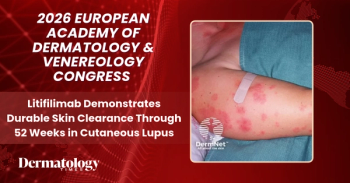
Updated phase 2 results from the AMETHYST study showed continued improvements in skin disease activity through 52 weeks, with more than one-quarter of patients achieving clear or almost clear skin.

In the August letter from the editor in chief, Christopher Bunick, MD, PhD, explains bemotrizinol’s broad-spectrum UVA/UVB benefits and simple UV safety habits for sunscreen, pools, and wounds.
Summer has a way of persuading us that “healthy” will happen automatically. The days are longer, kids are outside, vacations are on the calendar, and many of our patients are walking, gardening, swimming, and traveling. Yet summer is also the season when small decisions compound: whether sunscreen is applied in the morning, reapplied after swimming, or remembered only after erythema appears; whether a teen’s “quick dip” becomes a 3-hour UV exposure; or whether a minor abrasion becomes an infected wound after a day of water, friction, and sun.
As dermatology providers, we often talk about prevention as a long game: photoprotection habits that reduce cumulative UV damage over decades, skin cancer vigilance, and consistent skin care routines year-round. But summer also demands something more immediate: a practical, common-sense checklist that people can actually follow on the hottest, busiest days of the year.
Built around themes I find myself repeating in clinic, a summer checklist should include: (1) sunscreen as a daily health behavior, not a beach accessory; (2) smarter UV awareness, not just sun protection factor (SPF) numerology; and (3) pool and swimming habits that protect skin, wound healing, and public health.
Waiting to use sunscreen until we can “feel” the sun is not prudent; UV radiation does not announce itself with discomfort until after biological effects are well underway. Many patients are surprised to learn that incidental sun exposure while commuting, having outdoor lunches, attending kids’ sports, or running errands adds up quickly during summer months.
Thankfully, sunscreen innovation is not static. Photoprotection evolves as we learn more about UV-A’s role in photoaging and pigmentation, as patient expectations shift toward elegant textures, and as clinicians push for better tolerability so people actually apply enough product and reapply every 2 hours.
That is why the FDA’s approval of bemotrizinol as an over-the-counter sunscreen active ingredient, the first addition to the US sunscreen monograph in over 20 years, is a meaningful public health moment.1 Dermatology needed renewed momentum in sunscreen innovation, and this approval creates it. Bemotrizinol checks several boxes that matter to our patients, as follows:
One additional point worth highlighting: Bemotrizinol may also be used in hybrid formulations. For example, pairing it with mineral filters such as zinc oxide can potentially yield high-quality broad-spectrum protection with improved wearability.1
Many patients believe they are “doing it right” if they buy a high SPF, regardless of how they use it. Focusing solely on a high SPF number may create false reassurance about sun protection, especially if bad application habits are not met with behavior change.
A summer script that actually works looks like the following:
An innovative and complementary frontier to enhance skin longevity and aesthetic appearance is targeting pigmentary pathways alongside UV avoidance. Many of our patients are not only trying to prevent sunburn, they are also trying to prevent or improve unwanted pigmentary changes that make the skin look older. This includes lentigines, melasma, postinflammatory hyperpigmentation, and uneven skin tone that commonly worsens in the summer.
Emerging approaches, such as using products incorporating melasyl (eg, La Roche-Posay’s Mela B3 serum), a chemical that can bind excess melanin precursors to reduce pigment production, are potentially powerful adjuncts to UV protection. Melasyl does not replace sunscreen, but when used thoughtfully, it may help patients who are doing “the basics” yet still experience visible dyschromia. In practice, it is helpful to frame this as a layered plan: photoprotection first, and then pigment-focused topical strategies that support the patient’s specific goals and skin biology.
When I was asked recently about swimming while sick and swimming with wounds, my answers were straightforward and reflect what I’d want for my own family.3
Do not swim while sick. Beyond courtesy, there are real health risks. Swimming and activity while ill may precipitate nausea and vomiting and increase the risk for dehydration, all of which can make a person more ill. And if someone vomits in a pool, the consequences extend beyond one swimmer: It may force the closure of the pool and derail everyone’s day.
There is also the reality that illness can be transmitted through pool water. Chlorine and other pool chemicals reduce infectious risk, but they do not necessarily inactivate infectious agents instantly. That means there can be a window of time when pathogens pass to others, particularly in close quarters.
It is best to avoid swimming with an open wound, especially a deep scrape or gash. Two issues matter here, as follows:
Small cuts are different, but still require judgment. For a minor scratch or paper cut, swimming may be reasonable, with the understanding that the same risks apply on a smaller scale. Practical steps can reduce risk: Apply a petrolatum-based ointment (eg, Vaseline or Aquaphor Healing Ointment) and cover with a bandage before returning to a chlorinated pool. For very small abrasions, it is often fine to go into oceans, rivers, and lakes as well, provided patients monitor the site and seek care if signs of infection develop.
Finally, a note that intersects dermatology and pool hygiene: A quick shower before swimming can help. It removes sweat, body oils, dirt, sand, and residual products from the skin surface, and it supports the shared environment of the pool. It’s a small behavior with outsized benefits.
I offer a simple challenge to clinicians and patients alike: Treat summer as the season when you can do the most to enhance your skin’s longevity. Put sunscreen where it will be used. Encourage formulations patients will tolerate, because cosmetic elegance drives adherence. Build one predictable reapplication moment into the day. Use shade and clothing as protection multipliers. Treat pools as communal spaces where small, considerate decisions, such as staying out when sick, protecting wounds, and showering, may reduce downstream problems for everyone.
We can celebrate summer and still practice proper sun protection. In fact, that is the point. The best summers are the ones we do not spend recovering from the avoidable, and the ones in which we quietly, consistently protect skin health for decades to come.
Christopher G. Bunick, MD, PhD, is editor in chief of Dermatology Times and an associate professor of dermatology at Yale School of Medicine in New Haven, Connecticut.
References
about 1 month ago
Dermatology Times August 2026 Print Recapabout 1 month ago
The Art and the Science of Tattoosabout 2 months ago
Recognizing Advancements During Psoriasis Awareness Monthabout 2 months ago
The Emerging Role of Oral Peptide Therapeutics in Psoriasis and Beyond