Upadacitinib showed broader inflammatory effects and earlier skin barrier restoration than dupilumab in atopic dermatitis.
The investigational anti–IL-13 monoclonal antibody could change how dermatologists think about biologic dosing in moderate to severe AD.
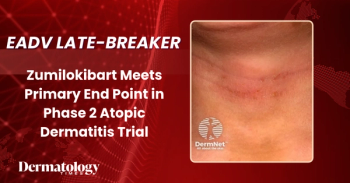
Over the past year, zumilokibart (APG777), Apogee Therapeutics' investigational anti–IL-13 monoclonal antibody, has moved from a promising phase 2 candidate to one of the most closely watched assets in atopic dermatitis (AD), culminating in AbbVie’s recent agreement to acquire Apogee for approximately $10.9 billion. Taken together, the data package built across the phase 2 APEX trial suggests a drug that could change how dermatologists think about biologic dosing in moderate to severe AD.
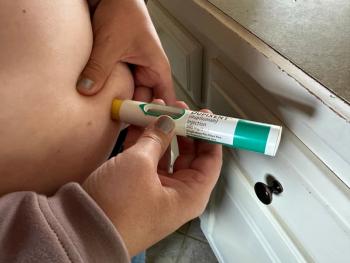
Zumilokibart is a subcutaneous, half-life-extended monoclonal antibody that selectively targets interleukin-13 (IL-13), a cytokine central to the type 2 inflammation that drives AD. It joins an existing class of approved IL-13–targeted therapies, tralokinumab (Adbry; LEO Pharma) and lebrikizumab (Ebglyss; Eli Lilly and Company), as well as dupilumab (Dupixent; Sanofi and Regeneron), which works upstream by blocking the IL-4 receptor alpha subunit shared by IL-4 and IL-13 signaling. What distinguishes zumilokibart within this landscape is its extended half-life, which is designed to sustain cytokine suppression with less frequent dosing than currently approved options.
The more unexpected finding involved the full-treated population, including patients who had not yet met response thresholds at week 16. Rather than plateauing, this group continued to show deepening improvement across lesional and itch measures through 52 weeks—a pattern investigators described as distinct from what is typically seen with existing therapies. The safety profile through 52 weeks was consistent with other IL-13–targeted agents, with noninfective conjunctivitis, upper respiratory tract infection, and nasopharyngitis as the most common treatment-emergent events.
Emma Guttman-Yassky, MD, PhD, chair of dermatology at the Icahn School of Medicine at Mount Sinai, presented the late-breaking 52-week data at the American Academy of Dermatology 2026 meeting and highlighted the significance of continued deepening responses beyond week 16, noting that this is particularly encouraging for patients who had not fully responded during the first 16 weeks of treatment.
"This can definitely be a first-line treatment. I always do shared decision-making with the patients, but anyone with moderate to severe disease who is seeking fast action and doesn't want injections all the time...this definitely will be a very good drug for them. It ticks many boxes,” Guttman-Yassky said.
Notably, 20.6% of mid-dose patients achieved a composite of very low disease activity (EASI-90 plus I-NRS 0/1). The mid dose was selected for phase 3 based on efficacy comparable to the high dose but a lower rate of noninfective conjunctivitis (10.6% vs 20.7%). Additionally, induction required only 4 injection days, compared with 9 for the current standard of care.
Christopher Bunick, MD, PhD, associate professor of dermatology at Yale School of Medicine and editor in chief of Dermatology Times, called the results potentially “best-in-AD among biologics and on par numerically with [Janus kinase] inhibitor responses,” noting that the part B findings at week 16 were highly consistent with earlier part A data. Ruth Ann Vleugels, MD, MPH, MBA, director of the AD program at Mass General Brigham and professor of dermatology at Harvard Medical School, agreed, emphasizing the significance of the robust induction efficacy along with the previous data.
"Together with part A data demonstrating that zumilokibart can be dosed every 3 to 6 months in maintenance with continuous and even enhanced efficacy, we are seeing a strong clinical profile that offers what dermatologists are looking for in clinical practice,” Vleugels said in a news release.2
That data package helped set the stage for AbbVie's announced acquisition of Apogee, under which AbbVie will acquire all outstanding shares for $135.11 per share in cash, a deal expected to close in the third quarter of 2026 pending regulatory and shareholder approvals.3 The acquisition brings zumilokibart, along with Apogee's broader pipeline—including APG273, a combination IL-13/TSLP antibody in development for asthma—into AbbVie's immunology portfolio.
“The purchase of Apogee by AbbVie is going to send shockwaves through the AD community,” Bunick told Dermatology Times at the
Phase 3 trials (ADventure 1, ADventure 2, and ADventure TCS) are planned to begin in the second half of 2026, evaluating zumilokibart as monotherapy and in combination with topical corticosteroids. Apogee is also planning phase 2 studies in eosinophilic esophagitis and asthma. A regulatory submission could target a 2029 commercial launch, pending clinical and regulatory outcomes. Overall, the phase 2 findings represent an exciting display of innovation in AD therapy, but definitive conclusions about zumilokibart's place in practice await confirmation from the ongoing phase 3 program.
References
1. Apogee Therapeutics announces positive phase 2 part A 52-week data of zumilokibart (APG777), demonstrating maintenance and deepening of responses with every 3- and 6-month dosing in moderate-to-severe atopic dermatitis. News release. Apogee Therapeutics. March 23, 2026. Accessed July 14, 2026.
2. Apogee Therapeutics announces positive 16-week part B induction dose optimization results from phase 2 APEX trial of zumilokibart in moderate-to-severe atopic dermatitis. News release. Apogee Therapeutics. May 27, 2026. Accessed July 14, 2026.
3. AbbVie to Acquire Apogee Therapeutics, Deepening Immunology Portfolio. News release. AbbVie. June 22, 2026. Accessed July 14, 2026.
about 1 month ago
Dermatology Times August 2026 Print Recapabout 2 months ago
The Art and the Science of Tattoosabout 2 months ago
From UV Filters to Pool Filters: A Summer Playbook for Healthier Skinabout 2 months ago
Recognizing Advancements During Psoriasis Awareness Monthabout 2 months ago
The Emerging Role of Oral Peptide Therapeutics in Psoriasis and Beyond