Treatment success reached 56.7% and total lesions fell 71.8% with up to 52 weeks of oral denifanstat, with no adverse event-related discontinuations.
Shanna Miranti, MPAS, PA-C, explores how fertility treatments can affect skin and hair, including acne, melasma, and hair loss, and offers guidance for patient care.
Approximately 24% to 33% of female providers will experience infertility, which is double the rate of the nonmedical professional female population.1 This can be attributed to a number of factors, including delaying childbirth until training is finished, increased stress and sleep deprivation, and the institutional stigma of putting career first. Many of those well-educated female medical professionals will turn to infertility medications to help boost ovulation and ovum release, knowing that these hyperstimulating medications, as well as the stress of fertility treatments, will often cause negative adverse effects for both skin and hair. Twenty years ago, I was one of those female medical professionals. In honor of the recent World Infertility Awareness Month and Acne Awareness Month, I would like to share my story to help the next generation of female health care providers.
My impostor syndrome moment occurred early in my career. I was a new dermatology physician assistant who was very passionate about treating acne. I spoke for multiple pharmaceutical companies, I did extensive research, and I thoroughly enjoyed helping people clear their skin. A few years into my career, I became known as a budding acne expert in my small town in Southwest Florida. Even though things were going very well in my career, my husband and I had been married for a number of years and were struggling to get pregnant. We turned to infertility treatments, including taking clomiphene, progesterone, and human chorionic gonadotropin injections, and doing intrauterine insemination.
One day, a young teenager was referred to me by her pediatrician so that I could treat her stubborn acne. I came up with a fantastic treatment plan, including multiple concomitant medications that could address the pathophysiology of her recalcitrant acne. As I was explaining the steps of this treatment plan, I could see that the teenager was being a bit disrespectful, rolling her eyes, looking at the window, and not listening to my advice. Her mother rightfully called her out and told the teenager to pay attention to the dermatology professional who was trying to help. The teenager looked directly at her mother and said, “Why should I listen to her [referring to me]… Her acne is worse than mine!”
I felt like I had been slapped in the face. This snarky, eye-rolling teenager had just called me out on my biggest vulnerability, my most embarrassing feature, and the worst part was, she was right. If I were the acne expert in town, I should have at least been able to clear up my own skin. Except for the fact that I was on fertility medication, which made me break out worse than most of the teenagers that I was seeing, and I was unable to use any of the wonderful acne medications that we had available because of pregnancy category restrictions. It was awful, but it was true.
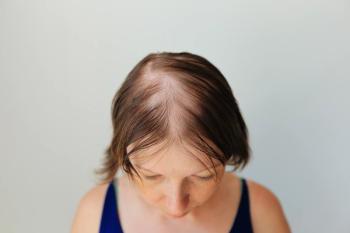
Many medications that are used to induce ovulation and hyperstimulate production can create unwanted adverse effects in female patients with acne. Hormonally induced acne vulgaris, melasma, telogen effluvium, and androgenic alopecia are some of the most common dermatologic diagnoses seen in patients receiving infertility treatments. Fertility treatments such as gonadotropins, including human chorionic gonadotropin, and clomiphene increase estrogen and progesterone, which can increase sebum production, create follicular plugging, and increase Cutibacterium acnes activity, which leads to acnegenesis. High estrogen and progesterone levels can also stimulate melanite-producing hormones, which can increase the risk of asthma and hyperpigmentation, especially in patients who have frequent UV exposure. And consequently, the rapid hormone drops in estrogen and progesterone during egg retrieval for in vitro fertilization (IVF), or during downregulation of estrogen/progesterone cycles, can trigger telogen effluvium and sometimes forms of androgenic alopecia.
Most prescription medications have strict pregnancy category restrictions, and understanding the historical FDA pregnancy categories is essential when counseling patients about medication safety during pregnancy and pre-pregnancy planning. Before 2015, the FDA classified prescription drugs into 5 pregnancy categories, labeled A, B, C, D, and X, based on data regarding fetal risk.2 Pregnancy category A indicated there were well-controlled studies done that showed no fetal risk. Category B represented studies that were done on animals showing no fetal harm, but lacked human data. The pregnancy category C included medications for which animal studies demonstrated adverse fetal events; however, the benefits of their use might outweigh the potential risk. Medications designated as category D had evidence of human fetal risk, but the potential benefits would outweigh the risk if needed for a serious clinical situation. Category X medications demonstrate significant fetal harm without any potential justification for fetal exposure.2 The FDA ultimately replaced this confusing and wordy system with the current Pregnancy and Lactation Labeling Rule, which gives providers risk summaries and clinical guidance.3
It’s important for providers to familiarize themselves with the outdated historical categories to be able to give patient counseling when contextualizing older literature or prescribing legacy medications.
Unfortunately, for women seeking fertility treatments, and of course those who are already pregnant, there are very few FDA pregnancy-approved treatment options for common adverse events such as acne vulgaris, melasma, and hair loss. It is also unlikely that pharmaceutical manufacturers will take the risk of including pregnant women in clinical trials. So, providers must use their clinical judgment to weigh the risks vs the benefits.
That teenager in my office never knew how right she was, or how much her comment would stay with me. Twenty years later, I no longer see it as an insult but as a reminder of why empathy belongs at the center of dermatologic care. Providers navigating their own fertility journeys deserve the same clinical compassion we extend to our patients. As more women in medicine delay childbearing for training and career demands, understanding the dermatologic effects of fertility treatment is not just an academic exercise; It is a professional responsibility.
Shanna Miranti, MPAS, PA-C, is a physician assistant at Riverchase Dermatology in Naples, Florida, and a Dermatology Times editorial advisory board member
References
To further discuss the importance of provider knowledge surrounding dermatologic effects of fertility treatments, I spoke with Steven Ory, MD, an obstetrician-gynecologist in Coconut Creek, Florida, and course director for the Reproductive Systems at the Herbert Wertheim College of Medicine in Florida.
Q: What are the most frequently observed dermatologic adverse effects from common infertility medications such as clomiphene citrate, gonadotropins, hCG, progesterone, and GnRH analogs?
Ory: The most common skin reaction to infertility medications would be urticaria associated with progesterone administration with IVF (specifically in preparation for an embryo transfer), usually attributed to the vehicle, and changing to a different oil base generally mitigates the problem. As many as a quarter of patients may experience this. Other dermatologic effects are rarer, but we may occasionally see androgen effects (acne and increased hirsutism) with drugs that raise LH levels, such as gonadotropins and clomiphene.
Q: When patients are trying to conceive, are there any topical dermatologic drugs that you would like your patients to discontinue, such as corticosteroids, retinoids, calcineurin inhibitors, hydroquinone, salicylic acid, or benzoyl peroxide?
Ory: These agents are typically not a concern until the patient becomes pregnant. Topical steroids specifically are not a concern. Teratogenic agents have no effect until embryogenesis begins, after 5 weeks post last menstrual period, so they should not pose a problem during infertility treatment. Other than progesterone, supplementation ends before pregnancy is established; oral NSAIDs and aspirin may hypothetically partially suppress steroidogenesis, and acetaminophen is usually preferred instead during ovarian stimulation.
Q: Are immune-mediated skin eruptions (eg, eczema, psoriasis, or urticaria) more common during hormonal fertility regimens due to estrogen/progesterone fluctuations or exogenous hormonal stimulation from the fertility medications?
Ory: Other than urticaria, as cited above, I have not seen this.
Q: What overall guidance should dermatology providers give to patients who have transitioned from fertility treatments to early pregnancy regarding discontinuation guidelines?
Ory: This is a vast topic, and while many agents, including calcineurin inhibitors, can be safely continued, many, including isoretinoin, spironolactone, and tetracyclines, cannot. As with everything in medicine, risks have to be weighed with potential benefits, and individual agents and circumstances should be assessed on a case-by-case basis. These considerations typically arise after fertility therapy is completed and are managed by obstetricians and high-risk obstetricians when needed.
Q: How can dermatology providers best coordinate with fertility specialists and obstetricians when prescribing topical or systemic medications for their newly pregnant patients?
Ory: The initial history with the reproductive endocrinology and infertility (REI) provider should uncover ongoing dermatologic therapies, and they should be addressed at that time. Patients considering initiating dermatology treatments while undergoing infertility care should alert their REI team. Ideally, these plans should be considered by both teams prior to initiating care, with clear guidance regarding which agents may be of concern and relevant recommendations offered before treatment is commenced and pregnancy occurs.
about 1 month ago
Dermatology Times August 2026 Print Recapabout 2 months ago
The Art and the Science of Tattoosabout 2 months ago
From UV Filters to Pool Filters: A Summer Playbook for Healthier Skinabout 2 months ago
Recognizing Advancements During Psoriasis Awareness Monthabout 2 months ago
The Emerging Role of Oral Peptide Therapeutics in Psoriasis and Beyond