Christophe Piketty, MD, PhD, discussed 3-year findings from the ARCADIA long-term extension study and the implications of targeting IL-31 in atopic dermatitis.
Updated phase 2 results from the AMETHYST study showed continued improvements in skin disease activity through 52 weeks, with more than one-quarter of patients achieving clear or almost clear skin.
Litifilimab demonstrated sustained and deepening improvements in skin disease activity through 52 weeks among patients with cutaneous lupus erythematosus (CLE), according to updated phase 2 results from the ongoing phase 2/3 AMETHYST study presented at the 2026 European Academy of Dermatology and Venereology (EADV) Congress in Vienna, Austria.
The 52-week findings represent the longest dataset reported to date for litifilimab in CLE. The investigational monoclonal antibody also demonstrated a rapid onset of activity among patients who crossed over from placebo to active treatment at week 24.
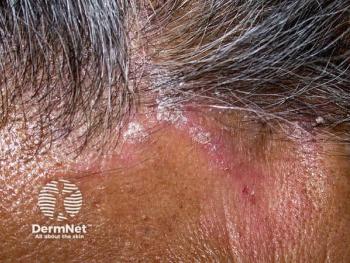
CLE is a chronic autoimmune skin disease associated with rashes, pain, pruritus, photosensitivity, dyspigmentation, hair loss, and potentially permanent scarring. Despite its substantial physical and psychosocial burden, there are currently no FDA-approved targeted therapies specifically for CLE.
The phase 2 portion of AMETHYST included 93 adults with active CLE whose disease was refractory or intolerant to standard antimalarial therapy.
Among participants who received litifilimab from study initiation, 27.2% achieved clear or almost clear skin at week 52, defined as a Cutaneous Lupus Activity Investigators' Global Assessment Revised (CLA-IGA-R) erythema score of 0 or 1. This represented an increase from 19.0% at week 24.
Improvements were also observed using the Cutaneous Lupus Erythematosus Disease Area and Severity Index Activity (CLASI-A). At week 52, 28.8% of patients achieved CLASI-70, indicating at least a 70% reduction in CLASI-A score, compared with 21.7% at week 24.
Patients initially assigned to placebo who transitioned to litifilimab at week 24 began showing improvements in skin disease activity as early as 4 weeks after initiating treatment. By week 52, 33.7% of these crossover participants achieved clear or almost clear skin.
“Access to 52-week data is critical when evaluating a treatment for a lifelong, chronic disease like cutaneous lupus erythematosus, which can cause permanent scarring and disfigurement that many patients will carry with them forever,” said Joseph F. Merola, MD, MMSc, dermatologist, rheumatologist, president of the Rheumatologic Dermatology Society, and member of the Lupus Foundation Medical and Scientific Board.
Merola noted that achieving clear or almost clear skin remains an important treatment goal in CLE and highlighted the continued increase in skin clearance observed through week 52.
Litifilimab was generally well tolerated throughout the 52-week treatment period, with no new safety signals identified.
Most adverse events were mild or moderate in severity. Serious adverse events occurred in 3.4% of participants during the extended treatment period, representing 3 of 88 patients. The most frequently reported adverse events, occurring in at least 5% of participants, were nasopharyngitis, influenza, and arthralgia.
Litifilimab, previously known as BIIB059, is an investigational monoclonal antibody designed to selectively target blood dendritic cell antigen 2 (BDCA2) receptors expressed on plasmacytoid dendritic cells. These cells play a role early in the inflammatory pathway associated with lupus, and targeting BDCA2 is intended to reduce downstream inflammation.
The therapy is administered subcutaneously and is being investigated as a potential once-monthly treatment for CLE. The FDA granted litifilimab Breakthrough Therapy Designation for CLE in January 2026.
Earlier findings from the phase 2 LILAC study, published in The New England Journal of Medicine, demonstrated that litifilimab reduced skin disease activity compared with placebo in patients with CLE, providing the basis for continued clinical development.
AMETHYST is a multicenter, randomized, double-blind, placebo-controlled phase 2/3 study evaluating litifilimab in patients with active subacute CLE and/or chronic CLE who are refractory or intolerant to antimalarial therapy.
During the controlled portion of the study, participants receive subcutaneous litifilimab or placebo every 4 weeks for 20 weeks, with an additional dose administered at week 2. All participants subsequently receive litifilimab during the extended treatment period.
The phase 3 portion of AMETHYST remains blinded, with results expected in the first half of 2027.
Litifilimab remains investigational and has not been approved by any regulatory authority. Its safety and efficacy have not yet been established.
References