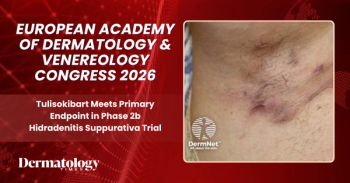
Up to 72% of tulisokibart-treated patients achieved HiSCR50 at week 16 vs 35% with placebo, the first positive phase 2 anti-TL1A data in dermatology.
Real-world EADV 2026 data suggest autonomous AI could increase dermatology capacity while maintaining high sensitivity for invasive skin cancers.
In a prospective real-world deployment involving 8,391 patients across 2 UK hospitals, an autonomous AI medical device (
The findings come amid increasing pressure on dermatology services. According to the researchers, urgent suspected skin cancer referrals in England have nearly tripled since 2009, while only approximately 6% result in an urgent skin cancer diagnosis.
The AI-supported pathway managed 8,391 patients, representing 94% of urgent suspected skin cancer referrals across the 2 participating hospitals. Overall, 86% of patients consented to autonomous decision-making.
Following an initial validation period, investigators implemented a CE-marked Class III AI medical device that analyzed clinical and dermoscopic smartphone images. The system autonomously discharged patients whose lesions were classified as benign, while higher-risk cases were referred for review by a
After exclusions, the AI independently discharged 31% of patients at one hospital and 25% at the other without clinician review. Teledermatologists subsequently discharged an additional 24% and 25% of patients at the respective sites.
Compared with standard teledermatology, the autonomous pathway reduced the proportion of patients requiring routine follow-up from 27% to 12%. Biopsy rates were also lower, at 27%, compared with 43% with conventional face-to-face care.
Overall, investigators calculated an approximately 62% gain in clinical capacity.
“We believe the greatest value of autonomous AI lies not in the technology itself, but in the specialist capacity it unlocks,” lead author Lucy Thomas, MD, consultant dermatologist at Chelsea & Westminster Hospital NHS Foundation Trust and honorary clinical lecturer at Imperial College London, said in a statement.
Thomas noted that time saved reviewing low-risk lesions could instead be directed toward patients with skin cancer requiring timely treatment and patients with severe inflammatory skin diseases who need specialist care.
Researchers also evaluated the safety of the autonomous pathway using a national dataset that included the 2 study sites.
Sensitivity exceeded 98% for invasive melanoma, squamous cell carcinoma (SCC), and basal cell carcinoma (BCC), with a specificity of 72.1%.
Six false-negative cases were discharged through the pathway, including 5 BCCs and 1 melanoma in situ. These cases were subsequently identified through post-market surveillance, and no adverse outcomes were identified during the available follow-up.
Thomas emphasized that ongoing monitoring is necessary when implementing autonomous AI systems in
“One of the key lessons for us is that deploying an AI system safely isn't a one-off exercise,” Thomas said. “You need to keep monitoring it, understand when things go wrong, learn from those cases and make sure patients themselves know what to look out for.”
The investigators framed autonomous AI as a potential method of reallocating limited dermatology resources rather than replacing specialist care.
If the findings can be replicated across larger populations and different health systems, the researchers suggested that autonomous AI could help clinicians concentrate their time on patients with greater diagnostic or treatment needs.
The study used a CE-marked AI medical device funded by Chelsea & Westminster Hospital NHS Foundation Trust and was partly supported by a grant from La Roche-Posay, part of L'Oréal Dermatological Beauty. Thomas also serves as an independent consultant and member of the Clinical Advisory Board for Skin Analytics Ltd.
References