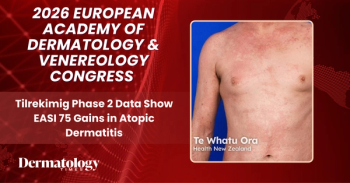
According to data presented at EADV, at week 16 of the phase 2 study, 47.8% to 62.5% of adults receiving tilrekimig achieved EASI 75 across doses, compared with 9.1% to 19.9% with placebo.
Day 2 of EADV 2026 highlighted new findings involving GLP-1–associated nail changes, long-term atopic dermatitis control, emerging therapies, alopecia, and hidradenitis suppurativa.
The second day of the 2026 European Academy of Dermatology and Venereology (EADV) Congress in Vienna, Austria, continued to showcase research with potential implications across everyday dermatology practice.
New findings explored previously underrecognized nail changes among patients using glucagon-like peptide-1 (
Here are some of the notable developments from Day 2 of EADV 2026.
As the use of GLP-1 receptor agonists continues to expand, new research presented at EADV 2026 identified a potential dermatologic consideration for clinicians.
In the first controlled study examining the association between GLP-1 receptor agonists and nail health, investigators found nail detachment was more than 4 times as common among patients using GLP-1 therapies compared with matched individuals with obesity or type 2 diabetes who were not receiving the medications.
Nail detachment was reported by 39% of GLP-1 users compared with 9% of controls. Overall, 66% of patients receiving GLP-1 receptor agonists experienced at least 1 nail disorder.
The findings add to a growing body of research examining the dermatologic effects associated with widespread GLP-1 use. Investigators noted that prospective studies will be needed to better establish when these changes develop, potential mechanisms, and whether they are reversible.
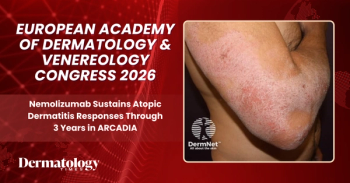
Long-term data from the
At week 152 of the open-label long-term extension study, up to 91% of patients achieved EASI-75, while up to 75% achieved EASI-90. Up to 67% achieved clear or almost clear skin based on an Investigator's Global Assessment score of 0 or 1.
Improvements also extended beyond skin clearance. Up to 88% of patients achieved clinically meaningful itch relief, and up to 92% experienced clinically meaningful improvements in dermatology-related quality of life.
The safety profile remained consistent with previous findings through 3 years of treatment, with no new safety signals identified.
The data reinforce the growing emphasis on sustained disease control in AD, particularly across outcomes including itch, sleep, and quality of life in addition to traditional measures of skin clearance.
Day 2 also featured data on ENV-294, an investigational oral Rac2 modulator being evaluated for moderate to severe AD.
The phase 1b open-label study enrolled 9 adults who received ENV-294 800 mg once daily for 28 days followed by a 14-day off-treatment period.
The early-stage program is exploring Rac2 modulation as a new therapeutic approach in inflammatory disease. Additional clinical development of ENV-294 is underway, including phase 2 studies in AD.
While larger controlled trials will be needed to establish efficacy and safety, the program reflects continued efforts to expand oral treatment options and investigate new mechanisms beyond established cytokine and JAK pathways.
Hair disease was another prominent component of the Day 2 scientific program, with dedicated sessions examining both cicatricial and noncicatricial alopecias.
Programming included updates on progressive hair loss and recent clinical advances in noncicatricial alopecia, as well as discussions of folliculitis decalvans, the emerging folliculitis decalvans–lichen planopilaris spectrum, and cicatricial and noncicatricial psoriatic alopecia.
The sessions emphasized advances in diagnosis, trichoscopy, disease classification, and management, reflecting growing attention to hair disorders as an important component of dermatologic practice.
Regulatory T cells are also emerging as a potential therapeutic target across inflammatory skin diseases.
Day 2 programming includes phase 2b data evaluating rezpegaldesleukin, an investigational regulatory T cell–inducing biologic, in both AD and severe to very severe
The REZOLVE-AD program is evaluating the durability of response with monthly and quarterly maintenance dosing in AD. Separately, the REZOLVE-AA study is examining treatment in severe to very severe alopecia areata, including the durability of response during a 24-week period after treatment discontinuation.
The program represents a different therapeutic strategy from directly blocking individual inflammatory cytokines, instead investigating whether modulation of regulatory T-cell activity can restore immune balance in inflammatory and autoimmune skin diseases.
Emerging mechanisms in HS are also part of the Day 2 program, including late-breaking data from the phase 2 LOTUS trial evaluating abdakibart.
Abdakibart is a humanized monoclonal antibody designed to selectively inhibit IL-1β, a proinflammatory cytokine implicated in HS pathogenesis.
The Day 2 late-breaking presentation is set to examine week 16 efficacy and safety findings in patients with moderate to severe HS, including outcomes across International
The study adds to continued efforts to identify therapeutic targets capable of addressing the complex inflammatory pathways underlying HS.
Day 2 of EADV 2026 illustrates the breadth of innovation occurring across dermatology, from recognizing potential cutaneous and nail effects of increasingly common systemic medications to developing therapies aimed at novel immune pathways.
As the congress continues in Vienna, additional data are expected across inflammatory skin disease, psoriasis, AD, alopecia, skin cancer, and other areas of dermatologic care.
Dermatology Times will continue providing on-site coverage, expert perspectives, and clinical trial updates throughout EADV 2026.