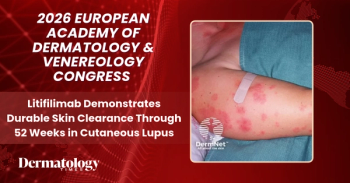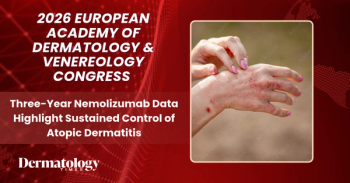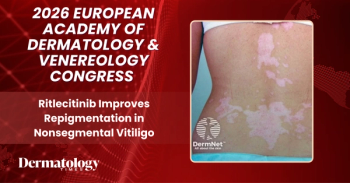
The final day of EADV 2026 explored precision medicine, molecular profiling, atopic dermatitis research, real-world evidence, and emerging approaches to individualized dermatologic care.
New research shows dermatologists continue to back daily sunscreen to prevent aging and skin cancer, debunking viral myths and spotlighting safer new filters coming to the US.
While sunscreens have long been at the center of a swirling mix of opinions and misconceptions, strong evidence supports their consistent use for patients across all Fitzpatrick skin types to help prevent both photoaging and skin cancer.
Now, new data demonstrate that dermatologists have a solid understanding of that guideline. In what we believe is the largest survey of US dermatologic health care practitioners ever conducted on the topic of sunscreen, my colleagues and I found that the majority consider the formulations necessary, safe, and a standard of care.
Published in 2025 in the Journal of Drugs in Dermatology, our survey of 723 practitioners across a host of clinical settings in 47 US states generated some key topline findings, including that 99% and 100% of dermatologic clinicians agree that sunscreen lowers the risks of skin cancer and photoaging, respectively; 92% recommend sunscreen to more than half their patients; and 98% believe that the best formulations they can suggest are the ones people will be most willing to use—typically those that offer a pleasant application experience and aesthetic.1
But our survey also uncovered the need to provide education about sunscreens, both for practitioners and for the patients they treat.
We found that clarity about the value and safety of different sunscreen formulations varied based on whether clinicians were doctors, physician assistants, or nurse practitioners, the length of time they had been practicing, and their location in rural vs suburban or urban communities. Patients’ opinions about sunscreens, along with their usage levels, also diverged based on demographic differences, from age and ethnicity to community type. Further confusing the issue, doctors told us, is the fact that influencers on social media often caution viewers about hypothetical risks that have been explored in connection with sunscreen but are not supported by evidence.
The good news is that our professional network is already set up to spread the word about the safety and importance of sunscreens. There are countless opportunities for medical schools, professional associations such as the American Academy of Dermatology (AAD), and senior doctors in practice everywhere to reiterate the facts about sunscreens to practitioners. In turn, clinicians can educate their patients with no more than a single sentence per appointment: “Always protect yourself with sunscreen and get checked for skin cancer on a regular basis.”
While such intervention might sound minimal, that message alone can change lives, serving as a crucial reminder to patients who, overlooking simple daily precautions today, can lead to expensive and distressing problems tomorrow.
Harm from the sun’s UV rays can manifest through a wide spectrum of issues, from freckles, fine lines, and broken capillaries to deeper wrinkles, discolorations, and skin laxity. Those changes have always been concerning, but they’re especially relevant today, as people are not only living longer but are more committed to intervening early to preserve their youthful appearance—particularly through daily routines.2
According to the AAD, half of adults worry about their skin aging prematurely, and 70% wish they had taken more precautions to protect it when they were younger.3 Even more worrisome is the burden of skin cancer, which is expected to affect 1 in every 5 individuals in the US within their lifetimes. As the overwhelming majority are triggered by sun exposure, these cancers are largely preventable.
In response to these concerns, the AAD issued a statement in 2025 about the importance of sun protection, recommending that people minimize skin damage by using a broad-spectrum, water-resistant sunscreen with an SPF of 30 or higher, in addition to spending time in the shade when the sun feels too intense, wearing clothing that is treated to protect against UV light, and adding a wide-brimmed hat and sunglasses.4
To keep protection constant, experts agree that sunscreens should be reapplied every couple of hours or immediately after swimming or sweating.
“While questions have been raised about certain sunscreen ingredients, it’s important to remember that sunscreen remains a vital part of skin cancer prevention,” Susan C. Taylor, MD, immediate past president of the AAD, said in the statement.4
Evidence that high-SPF sunscreen reduces the incidence of sunburn, photoaging, and several kinds of skin cancer, especially in people with light complexions, comes from a host of large randomized, controlled clinical trials.5 For instance, a large Australian trial in healthy, middle-aged people found no detectable increase in skin aging after 4.5 years of daily sunscreen use. Compared with study participants who used sunscreen on a discretionary basis, those in the daily sunscreen group demonstrated 24% less detectable skin aging between the start and end of the trial.6
Furthermore, a 2010 literature review found that UV radiation, which study authors described as a human carcinogen, was tied to about 93% of skin cancers and approximately 50% of lip cancers in Canada. The authors suggested that “appropriate clothing use, care not to sunburn, and judicious use of sunscreens could prevent at least half of these (cancers) and save approximately 450 lives per year.”7
But when it comes to choosing a sunscreen, the options can confuse our patients, which is why practices should ensure that all their practitioners recommend these filters and have nurses or technicians ready to follow up with explanations and recommendations.
In the US, there are 2 types of sunscreen formulations: organic solutions, which contain carbon-based molecules, and inorganic formulations, which don’t. While these are often referred to as chemical vs mineral formulations, respectively, those terms are misleading, since all sunscreens include chemicals.
Organic sunscreens work by absorbing UV light and releasing it as heat. These kinds of sunscreens are often pleasant to apply and wear; in our survey, health care practitioners, particularly dermatologists, perceived them as offering a superior application experience and cosmetic feel. In addition, because they absorb more thoroughly into the skin, organic sunscreens are more water-resistant.
Inorganic sunscreens, on the other hand, use ingredients such as zinc oxide and titanium dioxide to reflect the sun’s rays. Although manufacturers are endeavoring to make darker solutions by adding minerals such as iron oxide, a long-standing complaint about these formulations is that they leave a visible white residue on the skin. Historically, these filters have felt thicker and tackier, but improvements are being made.
The most crucial part of this choice, however, is to select a sunscreen that offers broad-spectrum coverage, meaning that it protects against both sunburn-causing UV-B sunlight, which sits between 280 and 315 nm, and photoaging UV-A sunlight, which ranges from 315 to 400 nm and can pass through window glass. That's key because, despite claims to the contrary earlier in our dermatologic history, both types of light have been shown to contribute to skin cancer and aging.
Although visible light, which is measurable at 400 nm and above, is not blocked by typical sunscreens, its effects on the skin are being studied.
Unfortunately, some concerns about sunscreens, which are often rehashed publicly but lack supporting evidence, are likely reducing uptake by our patients.
The first is that organic sunscreens, which are absorbed into the skin, result in the systemic introduction of product ingredients—such as oxybenzone—into the body. After funding a study confirming that mechanism about 6 years ago,8 the US Food and Drug Administration (FDA) suggested that more clinical trials be done to assess whether any meaningful risk is associated with the presence of these chemicals in blood or urine, and that process is ongoing. But the truth is that this experiment has been conducted already, every summer weekend at the beach when tens of millions of Americans use sunscreens, and we haven’t seen any evidence of these hypothetical risks.
It’s worth noting that some absorption can also occur with inorganic sunscreens, despite the fact that they largely sit on the surface of the skin. About 30 years ago, a small Australian study showed that microfine titanium dioxide from sunscreens was present at higher levels in the epidermis and dermis of patients who used inorganic sunscreens daily, compared with patients in a control group.9 Nevertheless, the FDA has deemed these ingredients safe, larger trials have never fully confirmed the study’s results, and scientists have not detected any negative health outcomes associated with that absorption.
Even among dermatologic practitioners, perceptions of the relative benefits of the 2 sunscreen types are sometimes skewed. While 97% of the practitioners who responded to our survey agreed that inorganic filters are efficacious, 89% perceived chemical filters as meeting that bar. Meanwhile, 97% of practitioners perceived inorganic filters as safe for daily use, vs 78% who put organic sunscreens in that category.
Those perceptions varied by role, with dermatologists and physician assistants rating the 2 sunscreen types fairly equally, whereas nurse practitioners rated organic filters a bit more positively. Overall, 52% of practitioners said they recommend inorganic sunscreens to their patients as a top choice, 43% consider the 2 filter types equal, and 5% recommend only organic formulations.
These findings suggest that perceptions about the safety of the 2 formulation types are influencing the prescribing patterns of clinicians. Those within our field who have most closely studied the issue can help reshape the narrative—first by reiterating the benefits of sunscreen use in general and then by sharing balanced scientific data about filter types.
There is also some misinformation circulating about whether organic sunscreens might damage coral reefs, many of which are endangered. While studies have shown that the ingredients in organic sunscreens bleach reefs when present at high levels, their designs did not mirror the much lower concentrations of the chemicals that are actually present in oceans.10
Of course, fears can run rampant when social media influencers make claims about the hypothetical dangers of sunscreens,11 and, unfortunately, that trend may be contributing to an unwillingness to use sunscreen among some younger adults.12
A survey conducted by public-opinion polling firm Ipsos found that about 14% of adults under 35 believe that using daily sunscreen causes more harm to the skin than sunlight, and about 23% are convinced that drinking water prevents sunburn.13 Furthermore, in a recent survey by the AAD, a whopping 16 million adults, mainly those who are younger, reported having reduced or stopped their sunscreen use due to claims they’d encountered online.3
Respondents to our survey agreed that a trend exists, with 87% reporting that some of their patients—fortunately, less than half—have been influenced by misinformation about sunscreens. The most common sources of that information were social media, influencers, and online search engines.
Most clinicians said they felt equipped to address those concerns by providing education about the efficacy and safety of sunscreens. That’s an important responsibility across our field, as bolstering confidence in filters will result in more of our patients being protected against the ravages of photoaging and skin cancers.
Although dermatologic health care practitioners and leading organizations such as the AAD and FDA routinely share strong, evidence-based support for sunscreen use, only 57% of Americans report that they use the products.3 That’s why it’s so essential for practitioners to discuss the facts with their colleagues, who, in turn, can counsel patients.
There is also an exciting development on the horizon, bringing a new sunscreen option to the US for the first time since 1999 and potentially boosting patient uptake. In June 2026, the FDA approved bemotrizinol (BEMT), a filter used in the European Union, Australia, Japan, and many other countries, as a safe and effective active ingredient in over-the-counter sunscreens.14 BEMT, an organic filter, would be a great addition to our sunscreen toolbox because it provides broad-spectrum coverage, boasts long-lasting photostability, and confers limited risk of systemic absorption.15
The FDA’s recent addition highlights the promise of the US’ SAFE Sunscreen Standards Act, which was signed into law in November 2025. The legislation, which aligns American and international testing standards, seems likely to widen the array of effective sunscreen options available in the US.
That’s exciting, because variety is a crucial element in boosting the use of sunscreens; for instance, 94% of our survey respondents said that offering a host of vehicles, from lotions, gels, and creams to sprays, powders, sticks, and foams, is essential. The bottom line is that we must strive to offer something for everyone.
No matter which type they choose, our goal should be to ensure that our patients use sunscreen every day. Only then can we know we’ve done our best to prevent the devastation that can result from unprotected UV exposure from the sun.
Darrell Rigel, MD, MS, is a board-certified dermatologist specializing in skin cancers and prevention. He is a clinical professor at New York University and an adjunct professor at the University of Texas Southwestern and practices at Cooper Clinic Dermatology in Dallas, Texas. He consults for the New York Yankees as team dermatologist and for government and industry. In addition to being the codeveloper of the “ABCDEs of Early Melanoma Detection” tool, he is a past president of the American Academy of Dermatology, the American Society for Dermatologic Surgery, and the American Dermatological Association.
References
1. Burshtein J, Sylianteg G, Rhoden J, et al. Perceptions and recommendations for sunscreen: a cross-sectional survey of United States dermatology healthcare providers. Journal of Drugs in Dermatology. 2025;24(11):1113.
2. Anti-aging products market (2026-2033). Grand View Research. Accessed May 2, 2026.
3. Misinformation puts over 16 million Americans at an increased risk for skin cancer. American Academy of Dermatology Association. May 1, 2026. Accessed May 2, 2026.
4. American Academy of Dermatology Statement on the Importance of Sun Protection. American Academy of Dermatology Association. May 20, 2025. Accessed May 2, 2026.
5. National Academies of Sciences, Engineering, and Medicine. Review of Fate, Exposure, and Effects of Sunscreens in Aquatic Environments and Implications for Sunscreen Usage and Human Health. National Academies Press (US); 2022.
6. Hughes MCB, Williams GM, Baker P, Green AC. Sunscreen and prevention of skin aging: a randomized trial. Ann Intern Med. 2013;158(11).
7. Gallagher RP, Lee TK, Bajdik CD, Borugian M. Ultraviolet radiation. Chronic Dis Can. 2010;29(suppl 1):51-68.
8. Matta MK, Florian J, Zusterzeel R, et al. Effect of sunscreen application on plasma concentration of sunscreen active ingredients: a randomized clinical trial. JAMA. 2020;323(3):256-267.
9. Tan MH, Commens CA, Burnett L, Snitch PJ. A pilot study on the percutaneous absorption of microfine titanium dioxide from sunscreens. Australas J Dermatol. 1996;37(4):185-187.
10. Olson D. The truth about corals and sunscreen. Smithsonian. September 2022. Accessed May 2, 2026.
11. Godoy M. Some TikTok influencers are maligning sunscreen. here’s what to know about the claims. Georgia Public Broadcasting. June 17, 2024. Accessed May 2, 2026.
12. Weiss BD. Should your patients avoid sunscreen? Am Fam Physician. 2024;110(6):566-567.
13. Survey finds young adults more likely to believe myths about sun protection and skin cancer prevention. News release. Orlando Health. May 1, 2024. Accessed May 2, 2026.
14. FDA expands sunscreen options for the first time in 20 years. News release. FDA. June 9, 2026. Accessed June 9, 2026.
15. Bemotrizinol: mechanism of action, pharmacokinetics and application. Chemical Book. September 13, 2023. Accessed May 2, 2026.
about 1 month ago
Dermatology Times August 2026 Print Recapabout 2 months ago
The Art and the Science of Tattoosabout 2 months ago
From UV Filters to Pool Filters: A Summer Playbook for Healthier Skinabout 2 months ago
Recognizing Advancements During Psoriasis Awareness Monthabout 2 months ago
The Emerging Role of Oral Peptide Therapeutics in Psoriasis and Beyond