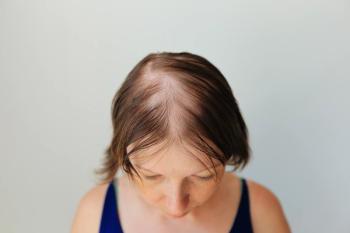
This week’s review highlights pediatric oral minoxidil guidance, alopecia areata imaging, inherited skin disorder growth patterns, total-body photography, and radiofrequency microneedling for rosacea.
Whitney Tolpinrud, MD, discusses the evolution of personalized prescription skin care, patient expectations in the digital age, and clinical trends.
Personalized skin care has increasingly moved beyond over-the-counter routines and standardized prescriptions, with teledermatology platforms offering clinicians new opportunities to tailor treatment to individual patient needs.
In a recent interview with Dermatology Times, Whitney Tolpinrud, MD, board-certified dermatologist and chief dermatologist at Curology, discussed the evolution of personalized prescription dermatology, the role of patient education in virtual care, and some of the changing clinical presentations she and her colleagues are observing in practice.
Curology launched in 2014 with a model centered on combining multiple prescription active ingredients into a single customized formula. According to Tolpinrud, the goal was both to simplify patients’ routines and allow treatment to be adjusted according to individual needs.
“In the beginning, we just had the one custom formula bottle, and that was it,” Tolpinrud told Dermatology Times.
Although the platform initially focused on acne, its treatment offerings have since expanded to address additional concerns, including signs of skin aging,
A central component of the model, Tolpinrud explained, is the ability to customize not only the ingredients within a
For example, tretinoin strength can be adjusted according to an individual patient's needs and tolerance rather than relying solely on commercially available concentrations. Tolpinrud said this flexibility can help clinicians individualize therapy for patients who may require a gentler introduction to a retinoid or a different treatment intensity.
“It makes sense that not everybody just gets one prescription that’s the same,” she said. “We can actually put multiple different prescription active ingredients [together] and then customize the percentage.”
Greater access to skin care information through social media, the internet, and artificial intelligence has also changed what patients expect from treatment, according to Tolpinrud.
One of the most common challenges she encounters is the expectation that prescription therapy will produce almost immediate improvement.
“We hear a lot, ‘I’ve been using my formula for 2 days, and my acne isn’t better,’” Tolpinrud said. “People have the expectation now: ‘I want it fixed now.’”
That expectation makes patient education a critical component of care. Providers must explain that improvement in chronic dermatologic conditions often takes time and reinforce the importance of treatment adherence, expected timelines, and appropriate follow-up.
“We see ourselves in our medical practice as educators,” Tolpinrud said.
She noted that
Tolpinrud said the model can facilitate more detailed conversations while allowing patients to connect with clinicians from home or wherever they may be.
Tolpinrud also highlighted an increase in patients presenting with Pityrosporum folliculitis, an acne-like follicular eruption associated with Malassezia yeast.
She noted that these presentations may occur around the hairline and lateral cheeks and can be mistaken for traditional acne. In her practice, Tolpinrud said she has observed more of these cases alongside hot weather, sweating, and sun exposure.
“With the heat and the sun exposure and all the sweating that we’re getting from all these hot summers, in our clinical practice we’re just seeing a lot of
Recognizing these acne mimickers can be important when individualizing treatment, particularly when a patient does not respond as expected to a conventional acne regimen.
Tolpinrud said her practice has incorporated ingredients such as zinc alongside traditional acne therapies, including
For Tolpinrud, the growth of personalized prescription dermatology reflects a broader shift in what patients expect from medical care.
As consumers gain greater access to health and skin care information, she believes patients will increasingly expect treatment to account for their individual skin concerns, tolerability, and therapeutic goals rather than relying on a one-size-fits-all approach.
The custom compounded prescriptions and personalizing medical care for people is really incredible, the future is now — Whitney Tolpinrud, MD
References