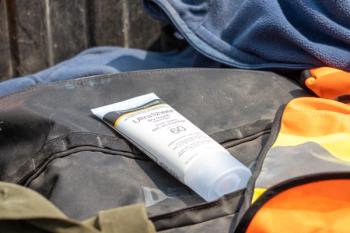
An HS toolbox with wound care, symptom relief, and personal care supplies can help patients stay prepared for unexpected flares.
Firas G. Hougeir, MD, and clinician attendees discussed how to use real-world patient scenarios to determine optimal timing for biologic initiation for patients with moderate to severe HS.
Despite advances in understanding its immunopathogenesis, hidradenitis suppurativa (HS) is a physically and mentally challenging disease, particularly in patients with moderate to severe activity and significant quality-of-life impairment. During a recent Dermatology Times
Hougeir, a dermatologist and Mohs surgeon at Southeast Dermatology Specialists in Georgia, opened the discussion with a review of disease burden and assessment tools. Although Hurley staging remains widely used, attendees emphasized its limitations in capturing dynamic inflammatory activity. Consensus favored incorporating more responsive measures, such as the International Hidradenitis Suppurativa Severity Score System (IHS4) and Hidradenitis Suppurativa Clinical Response (HiSCR), to guide both baseline severity assessment and longitudinal treatment response. Clinicians noted that pain, drainage, and psychosocial impairment often drive treatment escalation as much as lesion counts.
The first case involved a 27-year-old woman with axillary HS characterized by inflammatory nodules, draining tunnels, and early scarring, with substantial impact on work and social functioning. Despite multiple prior therapies—including topical antibiotics, oral doxycycline, clindamycin/rifampin, metformin, and hormonal therapy—disease control remained inadequate.
Attendees broadly agreed this presentation aligned with moderate HS, even in the absence of extensive anatomic involvement. Importantly, their discussion highlighted a shift away from positioning biologics as a “last-resort” option. Several clinicians supported initiating biologic therapy earlier in the disease course for patients demonstrating treatment refractoriness, progressive scarring, or meaningful quality-of-life impairment. Earlier intervention was viewed as a potential strategy to alter disease trajectory rather than simply manage flares.
When selecting among FDA-approved biologics, patient-specific factors—including comorbidities, prior treatment exposure, dosing preferences, and reproductive considerations—were emphasized. Experience with both tumor necrosis factor (TNF) inhibition and interleukin (IL)-17 blockade informed discussion, with growing familiarity cited for secukinumab (Cosentyx; Novartis) and bimekizumab (Bimzelx; UCB) following phase 3 trial results.
The second case featured a 35-year-old man with a 6-year history of moderate HS and monthly flares despite intermittent antibiotics and corticosteroids. After initiating biologic therapy, discussion shifted toward setting expectations for chronic disease control. Attendees mentioned the importance of early patient education regarding the relapsing nature of HS, the time required to achieve maximal biologic response, and the distinction between improvement and complete clearance.
Long-term efficacy and safety data for adalimumab (Humira; AbbVie), secukinumab, and bimekizumab were reviewed, with panelists noting increasing confidence in sustained HiSCR responses beyond one year. Strategies for managing secondary loss of response—including dose optimization, adherence reinforcement, and switching mechanisms of action—were also discussed.
The final case involved a 42-year-old woman presenting with a new painful axillary lesion without active drainage. While managed acutely with intralesional corticosteroids, the case prompted broader discussion about the “window of opportunity” in HS. Several clinicians noted that recurrent inflammatory activity, even in seemingly limited disease, may warrant systemic escalation to prevent progression to sinus tract formation and irreversible scarring.
Bimekizumab generated particular interest during the closing discussion, with clinicians debating its role as a first-line versus subsequent biologic option. Dual IL-17A and IL-17F inhibition, dosing considerations, and emerging quality-of-life data from the BE HEARD trials (
Across cases, the roundtable reinforced key practice tips for HS management: earlier recognition of moderate disease, greater reliance on dynamic severity measures, and more proactive use of biologic therapy to achieve durable disease control. As treatment strategies for HS continue to change, individualized treatment strategies that are grounded in both clinical phenotype and patient-reported burden are necessary or optimizing outcomes in HS.