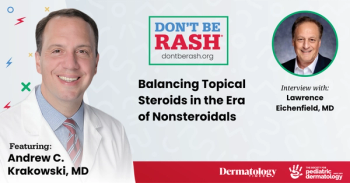
On this episode of Don’t Be Rash, host Andrew C. Krakowski, MD, welcomes Lawrence Eichenfield, MD, pediatric dermatologist, to discuss topical corticosteroid potency, dosing, and where they fit alongside nonsteroidal agents.

Kaitlyn Bader is the assistant managing editor of Dermatology Times® and joined the MJH Life Sciences team in June 2022. She oversees the content production of Dermatology Times, from digital and print to videos and podcasts, as well as live coverage of dermatology conferences. Prior to health care news, Kaitlyn worked in digital marketing. She enjoys cooking, reading, and tending to her houseplants.
You can reach her at kbader@mjhlifesciences.com.
On this episode of Don’t Be Rash, host Andrew C. Krakowski, MD, welcomes Lawrence Eichenfield, MD, pediatric dermatologist, to discuss topical corticosteroid potency, dosing, and where they fit alongside nonsteroidal agents.
Christopher Bunick, MD, PhD, reviews data on investigational atopic dermatitis agents presented at EADV 2026 and biomarker findings for upadacitinib.
At Fall Clinical 2026, Todd Schlesinger, MD, explained recent exosome regulatory progress, the remibrutinib label update for symptomatic dermographism, and ongoing clinical trials at his trial center.

In a survey of 301 employed adults, overall work impairment attributable to CHE was 31.8%, and quality of life worsened in step with self-reported disease severity.
Along with her Fall Clinical 2026 sessions, Glynis Ablon, MD, discusses combining energy devices with PRP and exosomes, early extended release minoxidil results, and topical stem cell research.
Todd Schlesinger, MD, highlighted the new photodynamic therapy indication for superficial basal cell carcinoma, immunotherapy options for cutaneous squamous cell carcinoma, and sequential actinic keratosis therapy at Fall Clinical 2026.

Two claims analyses of hidradenitis suppurativa showed similar symptom prevalence in males and females and lower dermatologist access among rural patients than urban patients.
At Fall Clinical 2026, Aaron Farberg, MD, reviewed gene expression profiling in atopic dermatitis and melanoma, and the Ameluz plus PDT approval for superficial basal cell carcinoma.
At Fall Clinical 2026, Neal Bhatia, MD, discussed cycle therapy for actinic keratosis, red light photodynamic therapy for superficial basal cell carcinoma, and clinical research pitfalls
Day 3 of Fall Clinical 2026 featured roflumilast data in genital psoriasis, long-term JAK inhibitor safety in atopic dermatitis, and expert insights on setting expectations in HS, treating advanced cSCC, and screening aesthetic patients.

In a retrospective study of 393 patients, 51.9% had at least 1 abnormal LFT during follow-up, but only 1.1% had elevations above 3 times the upper limit of normal.

At Fall Clinical 2026, Christopher Bunick, MD, PhD, discussed topical and oral acne management, including tetracycline selection and micronized isotretinoin.

At Fall Clinical 2026, Glynis Ablon, MD, recommends body dysmorphic disorder screening and systematic documentation in aesthetics, plus early combination therapy for multifactorial alopecia.
At Fall Clinical 2026, Shannon Trotter, DO, reviews locally advanced and metastatic cutaneous squamous cell carcinoma, immune checkpoint inhibitors, and proposed Medicare cuts affecting skin cancer care.
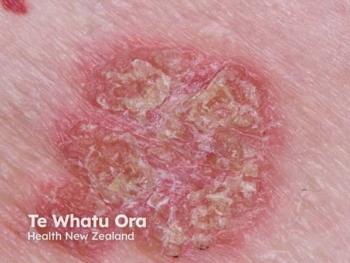
Patients with plaque psoriasis treated with roflumilast cream or foam reported greater improvements in sexual function and relationships vs vehicle, including those with genital involvement at baseline.
Christopher Bunick, MD, PhD, presented long-term safety data for JAK inhibitors upadacitinib and abrocitinib in atopic dermatitis at Fall Clinical 2026.
The second day of Fall Clinical 2026 brought new psoriasis data on ixekizumab plus tirzepatide and 2-year icotrokinra results, along with 3-year nemolizumab findings, upadacitinib switch data, and expert guidance on choosing a biologic in atopic dermatitis.
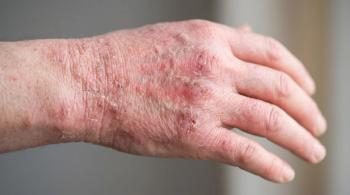
No skin lesion flares were observed through 16 weeks after switching from dupilumab to upadacitinib; itch flares occurred in 3.6% to 4.8% of patients with baseline WP-NRS scores of 6 or lower.
Shannon Trotter, DO, discusses augmented intelligence in skin cancer detection, the approval of remibrutinib for symptomatic dermatographism, and her patient education podcast.

The 4-day CME meeting in Las Vegas offers up to 24.25 credits and sessions on inflammatory skin disease, skin cancer, pediatric dermatology, aesthetics, and more.
Tenesha Wallace Hood, MA, of the National Eczema Association (NEA), reviews how state-level data from the NEA's State of AD 2026 National Indicator Report can inform access to atopic dermatitis care.
The approval of the oral BTKi rests on a phase 3 result of 29.3% complete response from hives vs 14.0% with placebo at week 12.

Tenesha Wallace Hood, MA, of the National Eczema Association (NEA), discusses diagnosed prevalence of AD and care access findings from the NEA's State of AD 2026 report.
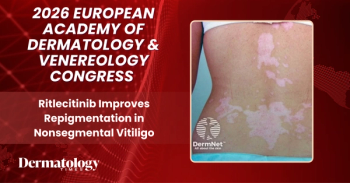
In TRANQUILLO 2, 21.86% of patients taking ritlecitinib 100 mg achieved F-VASI75 at week 52 vs 2.40% with placebo, according to data presented at EADV 2026.
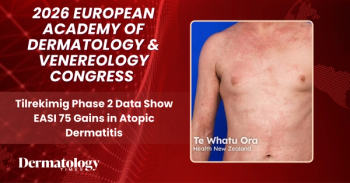
According to data presented at EADV, at week 16 of the phase 2 study, 47.8% to 62.5% of adults receiving tilrekimig achieved EASI 75 across doses, compared with 9.1% to 19.9% with placebo.

AbbVie reports F-VASI 75 of 55.1% in Viti-Up-1 and 47.4% in Viti-Up-2 at week 76 among patients continuing upadacitinib, with numerically higher responses alongside NB-UVB.
A new report from the National Eczema Association (NEA) found systemic corticosteroids were filled more often than dupilumab, and 13% of Americans live in counties without a dermatology or allergy/immunology practitioner.
On this episode of Don't Be Rash, Andrew Krakowski, MD, spoke with Sheilagh Maguiness, MD, about the FDA's approval of bemotrizinol and what the new sunscreen filter means for pediatric patients.
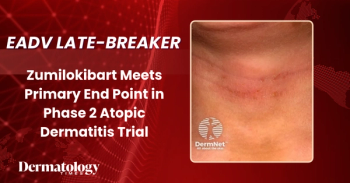
Presented as a late breaker at EADV 2026, mid-dose zumilokibart achieved EASI-75 in 65.9% of adults with atopic dermatitis vs 23.4% with placebo at week 16.

The FDA approved therapies for melanoma, dermatomyositis, superficial basal cell carcinoma, and adolescent alopecia areata, while TYK2 inhibitors and rare disease filings advanced toward 2027 decisions.
November 20th 2025

October 23rd 2024