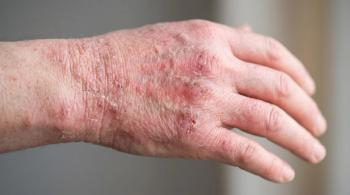
In a survey of 301 employed adults, overall work impairment attributable to CHE was 31.8%, and quality of life worsened in step with self-reported disease severity.
David Oberlin, MD, FAAD, said the true value of AAD lies in clinicians returning to practice and applying new knowledge to patient care.
“I know the second that I leave this conference, that's when the real work starts,” David Oberlin, MD, FAAD, said in an interview at the 2026
Oberlin, a dermatologist with Forefront Dermatology in Grand Rapids, Michigan, shared a common sentiment at AAD: taking practical tips back to patients and practices. Throughout this year’s meeting, Dermatology Times interviewed numerous clinicians who provided in-depth explanations to their colleagues of the data presented.
In
Outside of AD, HS, and PsO, there were also important highlights on vitiligo, rare diseases, and nonmelanoma skin cancers.
In vitiligo, late-breaking data highlighted upadacitinib for nonsegmental vitiligo from the phase 3 Viti-Up Study 1 and Study 2 trials (NCT06118411). The trials evaluated upadacitinib 15 mg in 614 adults and adolescents 12 years and older. Patients were randomly assigned 2:1 to receive upadacitinib or placebo for a 48-week double-blind period, followed by a 112-week open-label extension. The trials' co–primary end points—a 50% reduction in total body depigmentation and a 75% reduction in facial depigmentation at week 48—were met with statistical significance in both studies.1
For rare diseases, results from the phase 3 VALOR trial (NCT05437263) demonstrated that 30 mg once daily of brepocitinib, a first-in-class oral TYK2/JAK1 inhibitor, produced statistically significant and clinically meaningful improvements across muscle disease, skin disease, physical function, and corticosteroid tapering over 52 weeks in adults with dermatomyositis.2
For indolent systemic mastocytosis (ISM), patients treated with avapritinib showed continued improvement through 4 years in overall symptoms, all symptom domains (skin, gastrointestinal, neurocognitive), and most severe symptom per the ISM Symptom Assessment Form, and quality of life per the Mastocytosis Quality of Life Questionnaire.3 “It's a really exciting drug because approximately 95% of adults with ISM have the [KIT] D816V mutation, so it's a good opportunity to treat most of our patients with a really selective drug,” said Lauren Madigan, MD, assistant professor of dermatology at the University of Utah.
In nonmelanoma skin cancers, Todd Schlesinger, MD, a dermatologist, Mohs surgeon, and clinical trialist at Epiphany Dermatology in Charleston, South Carolina, reminded clinicians that accurate identification of high-risk nonmelanoma skin cancer hinges on understanding both established staging systems and individual tumor characteristics. “You need to understand what the risk factors are,” he said, noting that clinicians should be familiar with both the American Joint Committee on Cancer’s Cancer Staging Manual, 8th edition, and the Brigham and Women’s Hospital staging systems.4
Mary C. Spellman, MD, a dermatologist and researcher at Catawba Research in Charlotte, North Carolina, presented findings on PH-762, an investigational small interfering RNA designed to target the PDCD1 gene and modulate PD-1/PD-L1 signaling directly within the tumor microenvironment of patients with cutaneous carcinomas. Spellman described the approach as a way to “restore and augment immune balance to treat the tumor cells,” enabling the immune system to more effectively clear malignancy.5
Outside of interviews with presenters at AAD, Christopher Bunick, MD, PhD, Dermatology Times’ editor in chief and an associate professor of dermatology at Yale School of Medicine in New Haven, Connecticut, led discussions with industry experts to learn more about their perspectives on data readouts and pipeline updates.
Patrick Burnett, MD, PhD, dermatologist and chief medical officer of Arcutis Biotherapeutics, reviewed late-breaking roflumilast cream data showing that among patients aged 3 to less than 24 months who completed the phase 2 INTEGUMENT-INFANT study (NCT06998056; n = 96), 34.4% achieved validated Investigator Global Assessment for Atopic Dermatitis success, defined as a score of clear (0) or almost clear (1) with a 2-grade or greater improvement from baseline.6
Kristian Reich, MD, PhD, a dermatologist and the founder and chief scientific officer of MoonLake Immunotherapeutics, discussed the phase 3 VELA-1 (NCT06411899) and VELA-2 (NCT06411379) trials. In these trials, 62% of patients with HS treated with sonelokimab achieved a 75% reduction in abscess and inflammatory nodule count (HS Clinical Response 75), and up to 32% of patients achieved HS Clinical Response 100 at week 40.7
Reid Waldman, MD, cofounder and CEO of Veradermics, highlighted investigational extended-release oral minoxidil (VDPHL01) as a pharmacokinetically optimized approach to a well-established therapeutic pathway in men and women with androgenetic alopecia.8
Chinweike Ukomadu, MD, PhD, senior vice president and head of the gastrointestinal and inflammation therapeutic area unit at Takeda Pharmaceuticals, outlined data on zasocitinib, in which approximately 70% of patients achieved clear or nearly clear skin (static Physician Global Assessment 0/1), with a comparable proportion reaching a 90% reduction in the Psoriasis Area and Severity Index score.9
Johnny Im, head of US marketing at Almirall, spoke about the addition of tirbanibulin to several CVS Caremark commercial formularies, including Standard Control, Advanced Control, and Performance Standard plans. This expansion increases potential access to approximately 26 million commercially insured patients in the US.10
References
5 months ago
Dermatology Times May 2026 Print Recap5 months ago
Phages in Dermatology: What Is Their Role?