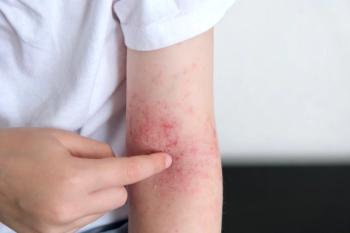
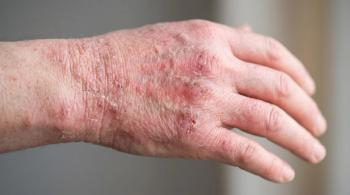
In a survey of 301 employed adults, overall work impairment attributable to CHE was 31.8%, and quality of life worsened in step with self-reported disease severity.
During the late-breaking research session at the 2026 AAD Annual Meeting 2026, Mary Spellman, MD, shared successful news about intratumoral PH762 for cutaneous carcinomas.
Early clinical data on a novel intratumoral immunotherapy suggested the potential to balance efficacy with improved safety in patients with cutaneous carcinomas, Mary C. Spellman, MD, said at the 2026 American Academy of Dermatology Annual Meeting in Denver, Colorado.1
Spellman, a dermatologist working in collaboration with industry, presented findings on
Localized Mechanism Aims to Reduce Systemic Toxicity
Checkpoint inhibitors
PH762 was designed to address that limitation through localized delivery. Administered intratumorally, the agent remains largely confined to the peritumoral environment. “The hypothesis is that we should not see these sorts of side effects and should be able to treat the tumors much more safely,” Spellman told Dermatology Times, referencing the immune-mediated toxicities seen with systemic checkpoint blockade.
This localized approach reflects a broader trend in oncology toward maintaining efficacy while minimizing systemic immune activation, particularly in older or comorbid patients who may not tolerate traditional immunotherapy.
Phase 1 Data Show Favorable Safety Profile
In the first-in-human study, investigators evaluated a wide dose range, escalating approximately 20-fold across cohorts. Despite this escalation, PH762 demonstrated a consistent safety profile, Spellman reported.
Across all dose levels, there were no dose-limiting toxicities, no serious adverse events, and notably, no immune-related adverse events. This absence of immune-mediated toxicity is particularly notable given the mechanism of action targeting PD-1 signaling, a pathway typically associated with systemic immune activation when inhibited.
The clean safety profile supports continued investigation and provides a rationale for advancing into studies more focused on efficacy.
Encouraging Efficacy Signals, With Important Caveats
Among the 22 patients included in the study, 20 had squamous cell carcinomas. Pathologic response was observed in 65% of these patients, encompassing complete, major, and partial responses. Notably, 45% of patients achieved a complete pathologic response.
“These results were quite impressive across this array of doses and lesional sizes and patients,” Spellman said.
Tumor burden assessments provided additional, though more complex, efficacy data. Approximately 15% of lesions demonstrated complete response based on size reduction measurements. However, Spellman cautioned that this endpoint may be less reliable in this setting. Prior biopsies, repeated injections, and associated inflammation or scarring can confound clinical measurements of tumor size.
As a result, pathologic response may represent a more dependable indicator of treatment effect in early-phase studies of intratumoral therapies.
Next Steps: Dual Endpoints and Continued Evaluation
Looking ahead, both pathologic response and tumor burden are expected to remain key endpoints as PH762 advances through clinical development. Ongoing evaluation of safety will also remain central, Spellman said, particularly as larger and more diverse patient populations are studied.
The early data position PH762 as a potentially differentiated approach within the PD-1 space, offering localized immune modulation with a favorable tolerability profile. Still, as with any phase 1 study, the findings require confirmation in larger trials designed to more rigorously assess durability, comparative efficacy, and real-world applicability.
For dermatologists, the takeaway is straightforward: intratumoral immunotherapy may represent a meaningful evolution in the management of squamous cell carcinomas, but the usual caution applies.
Reference
1. Spellman MC. PD-1 Directed Intratumoral Immunotherapy: Results of an Escalating Dose Study of INTASYL PH-762 for Cutaneous Carcinomas. Presented at the 2026 American Academy of Dermatology Annual Meeting; March 27-31, 2026; Denver, Colorado.