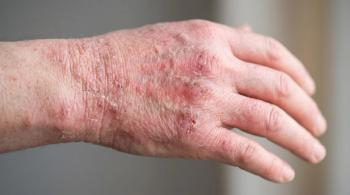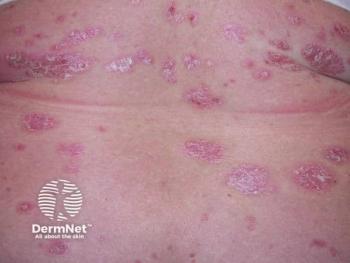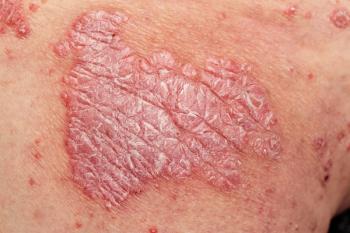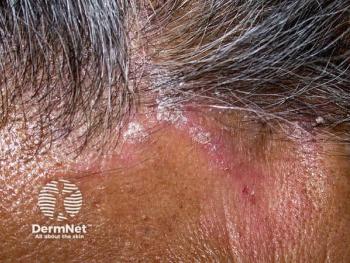
At 2 years, 70% of patients on oral icotrokinra for scalp, genital, or hand/foot psoriasis had clear or almost clear skin, with no new safety signals.
Oral therapies at AAD 2026 are closing the efficacy gap with biologics, with two TYK2 inhibitors and an oral IL-23 peptide each delivering clearance rates once thought possible only with injectables.
For years, the trade-off in psoriasis therapeutics has been binary: Choose injectables for superior skin clearance or oral agents for convenience. That dichotomy may be collapsing. Late-breaking presentations at the
Two next-generation TYK2 inhibitors emerged as standouts: envudeucitinib (ESK-001; Alumis) and zasocitinib (TAK-279; Takeda Pharmaceuticals). Both compounds achieved remarkably similar efficacy profiles.1,2
Envudeucitinib data, presented in a late-breaking abstract from the ONWARD trials (
Zasocitinib followed a similar trajectory. Across the LATITUDE trials (
What distinguished both compounds was the temporal dissociation between symptom relief and skin clearance. Patients experienced meaningful reductions in pruritus as early as week 2 with envudeucitinib, with quality-of-life gains emerging by week 12, before peak skin clearance.1 As Andrew Blauvelt, MD, MBA, an investigator in the ONWARD trials, told Dermatology Times, “The DLQI [Dermatology Life Quality Index score] actually significantly starts to improve at week 2, prior to any real significant changes in skin. So the DLQI seems to be paralleling the itch response in that first month of treatment.” This early symptomatic relief may prove as clinically meaningful as the eventual aesthetic clearance. Rapid onset also emerged as a competitive advantage; both agents showed separation from placebo by week 4, offering speed to benefit that mirrors biologic therapies more closely than older oral options.
Safety profiles remained consistent with the TYK2 class: no new signals, no tuberculosis reactivation, and no cardiovascular events. Adverse events were predominantly mild upper respiratory and infectious processes, expected with any systemic immunosuppressive therapy. Notably, envudeucitinib did not cause lipid elevations, a historical concern with Janus kinase inhibitors.
Icotrokinra (Icotyde; Janssen Biotech, Inc) took a mechanistically different approach: an oral peptide that targets the IL-23 receptor and achieves systemic bioavailability despite the challenges of gastrointestinal delivery.3
The ICONIC-LEAD program (
Perhaps the most novel finding came from an injectable combination study: tirzepatide (a glucagon-like peptide-1/gastric inhibitory polypeptide agonist) paired with ixekizumab (an IL-17A inhibitor) in psoriatic arthritis.4 The temporal dissociation between weight loss and albumin-to-creatinine improvement, with patients showing better inflammatory responses even before clinically meaningful weight reduction, suggests that GLP-1 receptor agonists may exert direct immunomodulatory effects independent of adiposity reduction. This signals an emerging interest in cardiometabolic pathways as therapeutic targets, opening a new avenue for integrated systemic disease management, particularly in patients with comorbid metabolic dysfunction or psoriatic arthritis with inadequate IL-17 response.
The 3 oral options—2 TYK2 inhibitors and 1 IL-23 peptide—confirm that the historical efficacy gap between oral and biologic therapies has closed. Clinicians can now reliably offer once-daily oral regimens that deliver 70% or greater clear or nearly clear skin, with durable responses and manageable safety profiles. Meanwhile, the emerging interest in metabolic-immune combinations signals a parallel shift: Systemic inflammation management may increasingly extend beyond traditional immune pathways alone.
The competitive implications are substantial. Patient choice expands dramatically, convenience may favor orals, and the injectable-dominated treatment paradigm shifts. Yet key questions remain: How will these agents perform as switch therapies in biologic-experienced populations? Will head-to-head comparative data differentiate the TYK2 contenders?
Regulatory timelines indicate FDA submissions for both TYK2 inhibitors in late 2026, potentially reshaping treatment algorithms within 12 to 18 months. Clinicians view this pipeline as signaling that the future of psoriasis treatment will include oral therapies that match or exceed the efficacy of injectable biologics while expanding patient choice.
References
1. Alumis’ envudeucitinib delivers early and robust improvements in skin clearance, quality of life, and psoriasis symptoms in two phase 3 trials, underscoring its potential as a leading oral therapy for plaque psoriasis. News release. Alumis Inc. March 28, 2026. Accessed April 13, 2026. https://investors.alumis.com/news-releases/news-release-details/alumis-envudeucitinib-delivers-early-and-robust-improvements
2. Takeda’s zasocitinib delivered rapid and durable skin clearance in a convenient once-daily pill, affirming promise to reshape psoriasis care. Abstract presented at: AAD 2026; March 27-31, 2026; Denver, CO.
3. Icotyde (icotrokinra) one-year results confirm lasting skin clearance and favorable safety profile in once‑daily pill for plaque psoriasis. News release. Johnson & Johnson. March 28, 2026. Accessed April 13, 2026. https://www.investor.jnj.com/investor-news/news-details/2026/ICOTYDE-icotrokinra-one-year-results-confirm-lasting-skin-clearance-and-favorable-safety-profile-in-oncedaily-pill-for-plaque-psoriasis/default.aspx
4. Phase 3b data presented at AAD annual meeting show Lilly’s Taltz (ixekizumab) plus Zepbound (tirzepatide) delivered superior efficacy for adults with psoriatic arthritis and obesity. News release. Eli Lilly and Company. March 28, 2026. Accessed April 13, 2026. https://investor.lilly.com/news-releases/news-release-details/phase-3b-data-presented-aad-annual-meeting-show-lillys-taltz
4 months ago
Dermatology Times May 2026 Print Recap5 months ago
Phages in Dermatology: What Is Their Role?