The FDA approved therapies for melanoma, dermatomyositis, superficial basal cell carcinoma, and adolescent alopecia areata, while TYK2 inhibitors and rare disease filings advanced toward 2027 decisions.
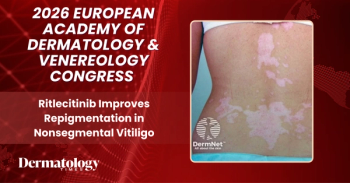
Teva Pharmaceuticals will advance TEV-'408 into phase 2b after encouraging phase 1b vitiligo data showed repigmentation, favorable safety, and quarterly dosing potential.
Teva Pharmaceutical Industries
The advancement follows encouraging interim results from an ongoing phase 1b, open-label study in adults with active or stable NSV, in which TEV-'408 demonstrated early improvements in repigmentation, was well tolerated, and showed no safety signals to date.
TEV-'408 is designed to inhibit IL-15, a cytokine increasingly recognized as a central driver of vitiligo pathogenesis. Unlike currently available therapies that require more frequent administration, the investigational antibody is being developed as a quarterly (every 12 weeks) subcutaneous injection, potentially reducing treatment burden for patients requiring systemic therapy.1
The study enrolled adults with active or stable NSV; approximately two-thirds had disease affecting more than 10% of body surface area (BSA), a population with relatively limited treatment options. At week 24, investigators reported encouraging efficacy across both facial and total body disease measures.
Among evaluable participants at week 24, TEV-'408 demonstrated improvements across multiple clinician- and patient-reported outcomes, including the following:
Improvements were most pronounced in facial disease, an outcome that is often prioritized by patients because of its cosmetic and psychosocial impact.
Importantly, approximately 66% of enrolled patients had vitiligo affecting more than 10% BSA at baseline—a patient population for whom treatment options remain particularly limited.12
“Positive data for any advanced therapy for vitiligo should be celebrated, given historically limited treatment options in this disease space. Topical and oral JAK [Janus kinase] inhibition has been a key first step in the development of highly effective therapy, and an anti-IL15 monoclonal antibody might represent our next major leap forward. Given that every patient may not be an optimal candidate for a JAK inhibitor based on safety, tolerability, preference, or even efficacy, having multiple options with alternate modes of action is critical. The availability of an effective biologic therapy like TEV-'408 is especially exciting in this context, given the possibility for a safe and infrequently dosed drug,” Raj Chovatiya, MD, PhD, MSCI, associate professor at Rosalind Franklin University Chicago Medical School and founder and director of the Center for Medical Dermatology and Immunology Research in Chicago, told Dermatology Times.
One of the distinguishing features of TEV-'408 is its prolonged half-life, which supports administration once every 12 weeks.
Current vitiligo treatment options often require daily topical therapy or more frequent systemic administration. A quarterly injectable biologic could offer a more convenient option for patients with extensive disease while potentially improving
"TEV-'408 exemplifies the type of innovative, Teva-discovered program we are prioritizing as we continue to advance and strengthen our immunology pipeline," Richard Francis, president and CEO of Teva, said in a news release.
The phase 2b study is expected to further evaluate TEV-'408 in a larger population of patients with NSV following the encouraging phase 1b findings.1
IL-15 is believed to play a central role in maintaining tissue-resident memory T cells, which contribute to the persistent autoimmune destruction of melanocytes and may help explain why vitiligo often recurs after treatment discontinuation.
By blocking IL-15 signaling, TEV-'408 aims to interrupt the autoimmune process responsible for depigmentation rather than simply stimulating repigmentation.2
"Vitiligo can affect far more than the skin. It can shape how people see themselves, how they show up in the world, and the confidence they carry every day," said Eric Hughes, MD, PhD, executive vice president of global research and development and chief medical officer at Teva.1 "These encouraging data strengthen our confidence in the IL-15 pathway and reflect the depth of Teva's scientific expertise."
The ongoing phase 1b study enrolled adults with active or stable NSV who received TEV-'408 as 2 subcutaneous injections at baseline and week 12, with efficacy assessed at week 24 using the VASI. Patients will continue to be followed through week 80.
Teva expects to initiate the phase 2b study in the fourth quarter of 2026. Beyond vitiligo, TEV-'408 is also being evaluated in a phase 2a study for celiac disease and received FDA fast track designation for that indication in 2025.
If successful, TEV-'408 could expand treatment options for patients with extensive NSV by offering a potential systemic therapy with convenient quarterly dosing.
References
about 1 month ago
Dermatology Times August 2026 Print Recapabout 2 months ago
How Molecular Tools Are Reshaping Risk Stratification in Cutaneous SCCabout 2 months ago
The Art and the Science of Tattoosabout 2 months ago
From UV Filters to Pool Filters: A Summer Playbook for Healthier Skinabout 2 months ago
Recognizing Advancements During Psoriasis Awareness Month