The FDA clearance allows Edesa to expand an ongoing placebo-controlled study of the CXCL10 antibody EB06 to US sites, with topline data expected in the fourth quarter of 2027.
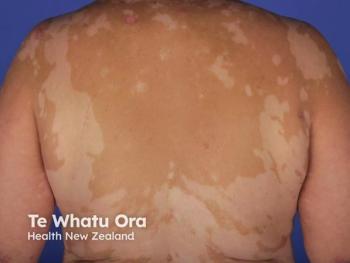
Oral therapies may provide more widespread and effective repigmentation, especially in extensive nonsegmental vitiligo.
For decades, vitiligo management centered on topical therapies and phototherapy, often with modest and variable repigmentation outcomes. The introduction of targeted small molecules, most notably Janus kinase (JAK) inhibitors, has moved the field toward systemic oral therapies that promise deeper and broader repigmentation, especially in extensive nonsegmental vitiligo (NSV). Although topical JAK inhibition remains an important option for localized disease, emerging clinical data suggest systemic orals may redefine treatment standards by targeting the underlying immune dysregulation driving melanocyte destruction.
“It’s an exciting time to be treating vitiligo, and certainly we’re on the cusp of having a wealth of oral systemic therapies to supplement our topical therapies,” George Martin, MD, said in a recent interview with Dermatology Times.
Topical agents such as ruxolitinib cream (Opzelura; Incyte) have delivered clinically meaningful repigmentation in patients with NSV. In the pivotal phase 3 TRuE-V1 (NCT04052425) and TRuE-V2 (NCT04057573) trials, approximately 30% of patients treated with ruxolitinib cream achieved greater than or equal to 75% improvement in the facial Vitiligo Area Scoring Index (F-VASI75) at week 24 compared with approximately 7% to 11% with vehicle, meeting the primary end point in both studies. At 52 weeks, just over 50% of patients receiving continuous ruxolitinib cream from day 1 achieved F‑VASI75, and approximately 30% achieved greater than or equal to 90% improvement, with meaningful improvements observed across facial and total body repigmentation measures.¹
Safety data from the TRuE-V program indicate that ruxolitinib cream was generally well tolerated, with the most common adverse events being application‑site acne, pruritus, and nasopharyngitis; serious treatment‑related adverse events were infrequent in these studies.1 Still, clinicians report that broader body surface area repigmentation remains challenging with topical approaches alone.
AbbVie’s oral selective JAK1 inhibitor upadacitinib (Rinvoq) is the first systemic oral in vitiligo to yield positive phase 3 pivotal data. In 2 replicate phase 3 studies of adults and adolescents with NSV, once‑daily upadacitinib 15 mg met both co–primary end points at week 48:
Key secondary end points also favored upadacitinib, with F‑VASI50 achieved by 48.1% and 43.4% of treated patients vs 12.7% and 12.9% on placebo at 48 weeks.
The safety profile observed in the vitiligo trials was generally consistent with upadacitinib’s established profile in other immune‑mediated diseases, with the most common treatment‑emergent adverse events being upper respiratory tract infections, acne, and nasopharyngitis; no new safety signals emerged.2
Ritlecitinib, an oral JAK3/TEC family kinase inhibitor, also shows promise in vitiligo. In a large, randomized phase 2b trial, ritlecitinib produced dose‑dependent repigmentation, with the 50 mg daily group achieving significant percent changes from baseline in F‑VASI at 24 weeks compared with placebo (eg, −21.2 vs 2.1; P < .001).3 An extension period to 48 weeks confirmed continued repigmentation with ritlecitinib without clear dose-dependent safety concerns.⁴
Povorcitinib, an oral selective JAK1 inhibitor, demonstrated statistically significant repigmentation in a phase 2b, dose‑ranging, placebo‑controlled trial in adults with extensive NSV (mean baseline T-VASI, approximately 25.5%). At week 24, all povorcitinib dose groups (15 mg, 45 mg, and 75 mg once daily) showed greater mean percent improvements in T-VASI from baseline (–19.1%, –17.8%, and –15.7%, respectively) compared with 2.3% with placebo (P < .01 for each). Importantly, repigmentation continued to improve through week 52, with mean T‑VASI percentage changes from baseline ranging from approximately –40% to –43% across doses, supporting the durability of the response with ongoing therapy.5
Other systemic orals are under exploration. Deucravacitinib (a tyrosine kinase 2 inhibitor) and baricitinib (a JAK1/2 inhibitor) are still in early stages for vitiligo, and combinations with narrowband UV-B phototherapy are being investigated for potential synergistic effects.6,7
Beyond JAKs, pipeline agents such as afamelanotide (MC1R agonist implants combined with phototherapy) are in phase 3 and may complement systemic immunomodulation by directly stimulating melanogenesis, though full data are not yet available.8
For clinicians, these systemic oral therapies signal a shift toward more effective options for patients with extensive or refractory vitiligo. The numeric outcomes from phase 3 trials—particularly T‑VASI50 and F‑VASI75 response rates—suggest that systemic orals can achieve repigmentation levels comparable to those seen with some topical JAK inhibitors.
Understanding the nuances of immune modulation, patient selection, and long‑term safety remains critical. As these agents move toward regulatory decisions in 2026 to 2027, clinicians will need to balance efficacy with risk profiles, insurance coverage considerations, and patient preferences.
References
6 months ago
Dermatology Times April 2026 Print Recap6 months ago
New Data Are Springing Into Dermatology