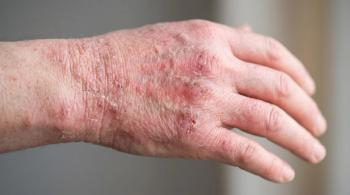
SYX-5219 improved disease severity and itch in a Phase 1b trial of adults with moderate to severe atopic dermatitis.
A new gene expression profiling (GEP) test may transform how clinicians select systemic treatments for moderate to severe atopic dermatitis (AD).
“We all have had a patient with moderate to severe atopic dermatitis [AD]—the one who has tried everything. They have rotated through topical therapies, phototherapy, and perhaps 1 or 2 systemic agents. The patient improved temporarily on a biologic, only to flare again months later. Or maybe they never reached satisfactory control at all,” Aaron Farberg, MD, wrote in an exclusive Dermatology Times feature.1
As Farberg noted, the pattern is familiar to dermatology clinicians: Select a therapy, hope it works, and wait to see how the patient responds.
That pattern may now be changing. A recent prospective, multicenter clinical validation study published in the
AD affects approximately 26 million people in the US, with about 40% of those 12 years and older having moderate to severe disease.4,5 Among these patients, more than half report inadequate disease control, and more than 60% describe their itch as severe or unbearable.4 Many have exhausted topical options and are ready to initiate or switch to systemic therapy.
Until recently, that decision—whether to begin with a Th2-targeted biologic or a Janus kinase inhibitor (JAKi) that acts across multiple inflammatory pathways—has been guided largely by clinical judgment and trial and error. Approximately 40% of patients who initiate a Th2-targeted biologic eventually need to add another therapy or switch, delaying meaningful relief for patients already struggling with itch, flares, sleep disruption, and psychosocial burden.6
“For years, systemic treatment decisions in AD have relied on clinical assessment and experience. Yet the disease is heterogeneous and biologically complex, driven by multiple immune pathways that vary from patient to patient. Until now, we haven’t had an objective way to identify which pathways are most active or which therapy class may be most effective,” wrote Farberg, a double board-certified dermatologist and Mohs surgeon; chief medical officer at Bare Dermatology in Dallas, Texas; and an investigator in the clinical research that led to the development of AdvanceAD-Tx.1
Mark G. Lebwohl, MD, a senior study author3 and the dean for clinical therapeutics and professor and chairman emeritus of the Kimberly and Eric J. Waldman Department of Dermatology at the Icahn School of Medicine at Mount Sinai in New York, New York, echoed the clinical frustration that has long accompanied this guesswork. “We end up seeing a tremendous number of patients with eczema,” he said in a Dermatology Times interview. “The first-line treatment, often for severe disease, used to be medicines that were dangerous—systemic steroids, methotrexate, cyclosporine. Now, suddenly, we have biologics...but they don’t work for close to a third of patients.”
AdvanceAD-Tx analyzes lesional skin scrapings without the need for biopsy to measure the expression of 487 genes across 12 inflammatory and cutaneous biology pathways. Using RNA sequencing data from 192 patients for algorithm development and an independent validation cohort of 110 patients with AD aged 12 years or older, the test classifies patients into 1 of 2 molecular profiles: a JAKi responder profile (30.4%) or a Th2 molecular profile (69.6%). The profiles stratify patients according to the likelihood of response to JAKi therapy vs Th2-targeted treatments—the 2 predominant systemic therapeutic classes.2,3
The test’s practicality is a point Lebwohl emphasized from firsthand experience. “The test is easy to do. You can use a curette [and] get scales in a medium that they send to you,” he said. “The company has been extremely nice; they don’t bill patients for the test. They are trying to get insurance company coverage for it.” He noted that the test has the potential to save both patients and insurers the cost and burden of cycling through ineffective therapies: “You’re going right to the treatment that’s going to work.”
The development of AdvanceAD-Tx was grounded in data from IDENTITY, a prospective, multicenter validation study conducted across 49 US clinical sites and sponsored by Castle Biosciences. The study enrolled patients with AD, including those new to systemic therapy and those considering a switch.3
Patients with a JAKi responder profile who received JAKi therapy demonstrated significantly better outcomes than those treated with Th2-targeted therapies. Specifically, 45.5% of these patients achieved at least a 90% improvement in the Eczema Area and Severity Index (EASI 90) by 3 months vs only 8.3% on Th2-targeted therapies (P = .021). They reached EASI 90 3.8 times faster (P = .049) and exhibited higher rates of complete lesion clearance (validated Investigator Global Assessment for AD score of 0), itch-free status, and increased flare-free survival. Conversely, patients with a Th2 molecular profile showed no significant differences in clinical outcome between treatment classes, suggesting broad immunomodulatory effects of JAKi on Th2-driven disease, but with no clear superiority over Th2 biologics in this subset.3
For clinicians managing patients in the JAKi responder profile, the test offers a path to earlier, more confident initiation of JAKi therapy, a class whose boxed warnings have contributed to second-line positioning in current labeling. Lebwohl addressed this concern directly, contextualizing the safety data for his patients. “I actually show them data on major adverse cardiovascular events and compare it [with] data for nonsteroidal anti-inflammatory drugs like ibuprofen,” he said. “The hazard ratios—the risks of major adverse cardiovascular events—are probably lower with JAK inhibitors than they are for many of the over-the-counter nonsteroidal anti-inflammatory drugs.”
He noted that infections remain a real consideration with JAKi use, but that, in his clinical experience, the incidence of clotting events, cardiovascular events, and cancers in treated patients has not mirrored the boxed warning language. “When we had to use drugs like methotrexate, cyclosporine, azathioprine, [and] certainly systemic steroids, all of us knew those got our patients in trouble,” he said. “These are much safer.”
For patients with a Th2 molecular profile, the test also carries clinical utility—not by favoring one class but by enabling shared decision-making. Outcomes are similar across both therapeutic classes in this subset, allowing clinicians to weigh safety profile, dosing preference, and cost alongside molecular data rather than guessing at biology.3
Lebwohl described a practical scenario in which this matters: patients who achieve partial control on a biologic but continue to experience flares in response to environmental triggers—cold/dry air, steam heat, sweating—and whose dose must be escalated or augmented off-label. “Those are the patients in whom this test is really useful,” he said. “We could have avoided all of those months of, ‘Oh, doc, I’m not doing so well.’”
The 487-GEP test enables clinicians to identify patients likely to be “super responders” to JAKi therapy, facilitating more targeted treatment selection that could minimize ineffective therapy trials and improve patient quality of life. The noninvasive sampling method and familiarity with scraping techniques support clinical implementation without requiring a biopsy or significant workflow disruption.2
Limitations include the restriction of validation to patients 12 years and older and the exclusion of emerging AD therapies not yet incorporated into the test’s algorithm.3 Nonetheless, the prospective design and multicenter validation lend substantive support to a precision medicine approach in AD.
“We’ve never had a biomarker that identified which treatment would work best for [AD],” Lebwohl said. “The test is really practice-changing. It lets us identify the patients who are going to need the JAK inhibitor without having to go through those months of getting a little bit better, but not better enough.”
Farberg framed the advance in broader terms: “Now we have the potential to move beyond the old system of picking and adjusting therapies by identifying the underlying immune pathways that drive AD to guide treatment more precisely. For our patients, it means faster relief and fewer setbacks. For dermatologists, it means greater confidence in knowing we are treating not only what we see on the surface but also the biology beneath it. That’s the promise of molecular insight, and it marks an exciting new era for care in AD.”1
References
1. Farberg AS. Precision medicine arrives in atopic dermatitis: guiding systemic treatment decisions through gene expression profiling. Dermatology Times. February 10, 2026. Accessed March 10, 2026.
2. Prospective validation study in JAAD demonstrates Castle Biosciences’ AdvanceAD-Tx test identifies patients more likely to achieve faster and deeper responses with JAK inhibitor therapy in moderate-to-severe atopic dermatitis. News release. Castle Biosciences. February 19, 2026. Accessed March 10, 2026.
3. Silverberg JI, Eichenfield LF, Armstrong AW, et al. The 487-gene expression profile test guides systemic therapy selection to improve outcomes for patients with atopic dermatitis: results from a prospective trial. J Am Acad Dermatol. Published online February 16, 2026. doi:10.1016/j.jaad.2026.02.034
4. Eczema facts. National Eczema Association. Accessed March 10, 2026.
5. Chiesa Fuxench ZC, Block JK, Boguniewicz M, et al. Atopic dermatitis in America study: a cross-sectional study examining the prevalence and disease burden of atopic dermatitis in the US adult population. J Invest Dermatol. 2019;139(3):583-590. doi:10.1016/j.jid.2018.08.028
6. Schlosser AR, Nijman L, Schappin R, Nijsten TEC, Hijnen D. Long-term outcomes of new systemic agents in atopic dermatitis: drug survival analyses and treatment patterns in daily practice. Acta Derm Venereol. 2025;105:adv41504. doi:10.2340/actadv.v105.41504
6 months ago
Dermatology Times April 2026 Print Recap6 months ago
New Data Are Springing Into Dermatology