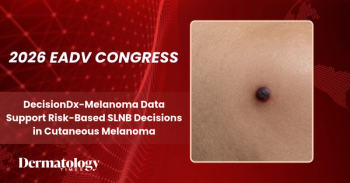
Prospective data suggest DecisionDx-Melanoma may help refine SLNB decisions and identify recurrence risk beyond conventional staging.

Joshua Arbesman, MD, explains how to promote smarter sun habits, educate on melanoma-risk timelines, ease guilt, and answer sunscreen fears fueled by social media.
In a recent interview with Dermatology Times, Joshua Arbesman, MD, a dermatologist at Cleveland Clinic who specializes in patients with inherited cancer predisposition and melanoma, discusses key considerations for melanoma prevention counseling, including photoprotection, patient anxiety, and navigating misinformation.
In a recent webinar with the
“There is a tremendous amount of guilt in the melanoma community and melanoma patients in particular about their previous sun exposure and that they gave themselves melanoma,” he noted. “And so I think that guilt can weigh on them and can be unhealthy in a different way.”
Arbesman suggests that clinicians provide context about the complex factors contributing to melanoma risk and reassure patients that an isolated episode of sun exposure does not mean they have immediately increased their likelihood of developing another melanoma. He always encourages patients to continue participating in outdoor activities while being “smart in the sun,” including avoiding sunburn, wearing protective clothing, and using sunscreen where appropriate.
Arbesman also highlighted the importance of explaining the long-term nature of melanoma risk. Patients may incorrectly assume that recent sun exposure will immediately result in melanoma or that avoiding sun exposure during a particular summer eliminates their risk of developing skin cancer later that year. Instead, the effects of UV exposure relevant to melanoma can manifest over much longer periods, potentially decades after exposure.
The discussion also addresses growing patient concerns about sunscreen, particularly those influenced by social media. Arbesman recommends that clinicians avoid presenting sunscreen and sun protection in overly simplistic or absolute terms. Instead, physicians should acknowledge that research has raised questions about certain sunscreen ingredients and systemic absorption while explaining what is known and what remains uncertain. He argues that acknowledging legitimate questions can help maintain trust rather than dismissing patients’ concerns. For patients who remain uncomfortable using sunscreen, Arbesman recommends emphasizing options such as sun-protective clothing.