Face taping promises smoother skin and fewer wrinkles without injectables, but evidence suggests any visible benefits are largely temporary.
At the 2026 Winter Clinical Miami meeting, dermatology leaders emphasized that thriving careers require skills beyond clinical expertise.
At the
For more conference coverage from Dermatology Times,
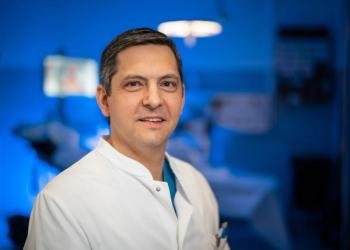
For early-career dermatologists, the transition from residency to independent practice represents one of the steepest learning curves. Harrison Nguyen, MD, MBA, MPH, FAAD, managing director of Harrison Dermatology and Research Group, visiting professor at Baylor College of Medicine, and clinical assistant professor at the University of Houston College of Medicine, stressed that residency should be viewed not as the culmination of training but as the starting point of accelerated professional development and continuous growth.
“There's a tremendous period after residency where you'll continue to learn. And for me, I think I actually learned more [in] my first year as an attending than during my time in residency,” he told Dermatology Times. “That’s the time you’re taking care of patients and making decisions, both good and bad.”
A key concept Nguyen shared was building a “personal board of directors”—a trusted network of mentors and advisers who provide guidance across clinical decision-making, leadership development, and personal life transitions. Much like a corporate advisory board, this group can offer perspective, accountability, and strategic counsel during pivotal career moments.
During a mentoring session focused on the first 5 years in practice, Michael Lewitt, MD, a partner at Illinois Dermatology Institute and a principal investigator with DeNova Research in Chicago, Illinois, shared pragmatic advice on employment contracts, compensation structures, and professional relationships.
His most emphatic recommendation was simple: Ensure that all promises are documented in writing. Verbal assurances regarding staffing, resources, or patient volume carry little value unless explicitly detailed in the employment contract itself. Lewitt also advised early-career physicians to work with health care attorneys who are familiar with dermatology and local regulatory environments.
Beyond contracts, Lewitt emphasized relationship building as a cornerstone of successful practice. Personally contacting patients with biopsy-confirmed malignancies and communicating regularly with referring providers helps build trust and strengthen referral networks. At the same time, structured clinic scheduling and templated appointment slots can prevent inefficiencies and burnout as patient volume grows.
Although operational efficiency supports practice growth, long-term professional identity often depends on differentiation. Dawn Merritt, DO, a board-certified dermatologist and the CEO and founder of Oakview Dermatology, encouraged dermatologists to develop a recognizable niche that reflects the intersection of personal interest, market demand, and cultivated expertise.
In an increasingly competitive landscape—including dermatologists, advanced practice providers, med spas, and nondermatologist competitors—having a defined area of expertise can strengthen referral patterns and professional reputation. Merritt emphasized that niches need not limit physicians to narrow practice scopes; rather, they provide a recognizable focus within a broader clinical foundation. Importantly, niches evolve over time. Physicians should remain open to adapting their focus as interests, opportunities, and needs change.
Industry relationships can offer physicians opportunities to influence therapeutic development and expand professional perspectives, but they also require careful ethical boundaries. Gary Goldenberg, MD, cofounder of Goldenberg Dermatology in New York, New York, discussed both the benefits and risks of collaboration with pharmaceutical companies.
Participation in advisory boards, consulting, and research initiatives can enable dermatologists to shape clinical trial design and contribute to the development of new therapies. These collaborations also provide exposure to market strategy, scientific communication, and cross-specialty dialogue, which is particularly relevant for systemic therapies shared with rheumatology and gastroenterology.
However, Goldenberg cautioned that conflicts of interest represent a major risk. Physicians must remain transparent about financial relationships and maintain independence in prescribing decisions. Time commitments, travel obligations, and potential reputational risks must also be considered carefully when engaging with industry.
To further a career in research, Mona Shahriari, MD, FAAD, associate clinical professor of dermatology at Yale School of Medicine and associate director of clinical trials at CCD Research, outlined a practical framework for dermatologists interested in developing clinical trial programs.
Drawing on her experience building a research unit from a single coordinator and exam room into a robust clinical trials division, Shahriari emphasized that success depends less on size than on organization and strategic planning. Her first recommendation was simple: Know your numbers. Shahriari also encouraged physicians to start lean and scale intentionally. A research program can begin with minimal infrastructure—a principal investigator, a clinical trials coordinator, access to lab services, and a dedicated exam room. Sponsors often prioritize responsiveness, protocol adherence, and patient retention.
“Everybody wants that flashy, fancy phase 2 or phase 3 trial with novel methods of action. But the reality is registry studies…phase 4 studies as well...those lower complexity protocols are a better place for you to start,” she said. “When you're first starting out, the first couple of trials are for you to build your reputation, strengthen that clinical trial center, and optimize the workflows.”
Know of a meeting you think we should cover? Connect with us on social media or email our team at
6 months ago
Dermatology Times April 2026 Print Recap7 months ago
New Data Are Springing Into Dermatology