Prospective data suggest DecisionDx-Melanoma may help refine SLNB decisions and identify recurrence risk beyond conventional staging.
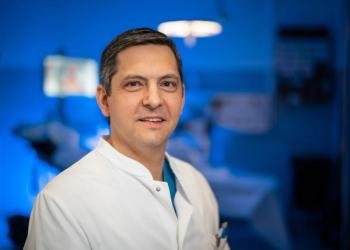
Konika Patel Schallen, MD, senior vice president and medical director of global clinical operations at Candela Medical, discussed epigenetic changes linked to laser skin resurfacing in a recent Dermatology Times interview.
Konika Patel Schallen, MD, practicing physician in Jacksonville, Florida, and senior vice president and medical director of global clinical operations at
Her study compared treated and untreated sides of patients' faces using quantitative VISIA imaging to track brown spot counts. The cosmetic improvements closely paralleled underlying molecular changes.2
The treated side showed nearly 40% improvement in brown spot counts at the 1-month follow-up compared with the untreated side, Schallen said. Epigenetic data collected at the same time point showed the most pronounced changes among the cosmetic-related markers evaluated in the study.12
"It was very reassuring that what we see in clinical practice played out on a molecular level," - Konika Schallen, Md,
She said the body continued responding well beyond this early window, with changes still emerging through the 6-month follow-up that affected cellular behavior associated with aging and skin health.
The molecular changes continued to evolve after the peak cosmetic response, intensifying through the 3-month follow-up before stabilizing at 6 months, suggesting the laser initiated a gradual remodeling process rather than an immediate epigenetic shift.2
The study evaluated DNA methylation across skin cells at CpG sites, grouping affected loci into 3 categories: cosmetic, aging, and skin health or skin cancer biology. Laser treatment modulated methylation at specific genes, including FGFR3, HOXB4, and UBE2I, among others. According to Schallen, these genes regulate keratinocyte differentiation and regeneration of the basal layer of the epidermis and have also been implicated in pathways involved in basal and squamous cell carcinoma biology.2
"The laser is modulating DNA methylation at very specific sites, such as FGFR3, HOXB4, UBE2I and so on. And those are all genes that are tied to keratinocyte differentiation," Schallen said.
Schallen said several of these loci have previously been implicated in pathways involved in basal and squamous cell carcinoma biology. The methylation shifts moved in a direction associated with healthier cell regulation and reduced keratinocyte differentiation. She said additional research is needed to better understand the biologic significance of these findings.
Schallen emphasized that the findings remain correlational.
"This is an early study. This is a correlation that we are looking forward to additional work that can prove causation," she said. "We haven't proved that this is skin cancer prevention."
Schallen noted that clinicians have long observed fewer basal and squamous cell carcinomas among patients receiving certain energy-based treatments, particularly non-ablative fractional laser procedures such as the 1940-nm laser. While the current study does not establish that laser treatment prevents skin cancer, Schallen said the molecular findings may provide a possible biologic explanation by demonstrating durable DNA methylation changes in genes involved in keratinocyte differentiation that persisted throughout the 6-month follow-up.2
References: