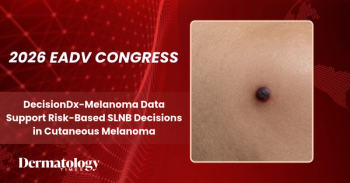
Prospective data suggest DecisionDx-Melanoma may help refine SLNB decisions and identify recurrence risk beyond conventional staging.

Kathleen Suozzi, MD, details how she debunks sunscreen myths, explains absorption and SPF, urges year‑round UV habits, and previews new filter bemotrizinol, when counseling her own patients.
As public awareness of sun protection continues to evolve, misconceptions surrounding sunscreen remain one of the greatest challenges facing dermatologists, according to
Among the most common misconceptions she encounters is the false claim that sunscreen itself causes
Another frequent misconception is that sun protection offers little benefit later in life because cumulative damage has already occurred. Suozzi counters that while past UV exposure cannot be erased, consistent photoprotection can significantly reduce the development of future skin cancers and limit additional photodamage.
Beyond sunscreen alone, Suozzi encourages patients to adopt a comprehensive approach to UV protection. She recommends broad-brimmed hats rather than baseball caps for more complete facial coverage and encourages the use of ultraviolet protection factor (UPF) clothing. When selecting sunscreen, she advises patients that the “best” product is ultimately the one they will use consistently. Individual preferences—including skin tone, cosmetic elegance, and acne tendency—should guide product selection to improve long-term adherence.
Suozzi also educates patients on appropriate SPF selection, noting that protection increases nonlinearly. While SPF 30 provides approximately 97% UVB protection compared with roughly 93% to 95% for SPF 15, higher SPFs offer only incremental gains while sometimes producing thicker, less cosmetically acceptable formulations that discourage routine use. She generally recommends SPF 30 or higher and emphasizes daily application throughout the year to establish consistent habits and account for cumulative incidental sun exposure.
“Even in the winter…commuting, driving to work, gardening, daily activities of daily life all add up,” she tells patients.
Looking ahead, Suozzi identified the
"Going back to that concern about bloodstream absorption, because it's a larger molecule, the risk of absorption is lower too. So it's kind of hitting all the things that we look for in an ideal sunscreen," she said.
Suozzi also pointed to advances beyond prevention, including growing interest in energy-based devices that may reduce nonmelanoma skin cancer risk by improving overall skin health. In parallel, immunotherapy continues to transform skin cancer management. She highlighted the expanding role of PD-1 inhibitors for advanced squamous cell carcinoma and ongoing investigations into neoadjuvant and intralesional immunotherapies, developments she believes may ultimately reduce reliance on surgery and further expand treatment options for patients with skin cancer.
Missed Part 1 of the conversation?