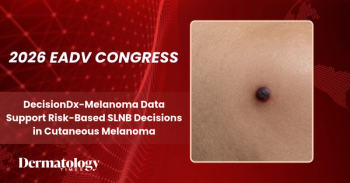
Prospective data suggest DecisionDx-Melanoma may help refine SLNB decisions and identify recurrence risk beyond conventional staging.

Kathleen Suozzi, MD, explains how UV damage shows up, why actinic keratoses matter, and which field therapies and lasers help cut skin cancer risk.
As ultraviolet (UV) exposure reaches its annual peak, Kathleen Suozzi, MD, associate professor of dermatology at
Although public awareness surrounding sunscreen and sun safety has improved—particularly among younger generations—Suozzi noted that many patients still underutilize proven protective measures. By the time many individuals seek dermatologic care for concerns related to prior sun exposure, significant cumulative damage has already occurred. She stressed that educating children and young adults about lifelong UV protection is essential, as much of the damage that contributes to
When evaluating patients, Suozzi looks for both cosmetic signs of photodamage and lesions that signal increased skin cancer risk. Among the most important findings are
In addition to AKs, Suozzi evaluates broader manifestations of chronic sun exposure, including dyspigmentation, solar lentigines, loss of elasticity, and solar elastosis—the characteristic thickened, cobblestone-like texture caused by UV-induced collagen degeneration. While these cosmetic changes are not themselves precancerous, they serve as visible markers of cumulative UV exposure and help inform an individual's overall risk profile.
Suozzi emphasized that prevention extends beyond daily photoprotection to include proactive treatment of chronically sun-damaged skin. She highlighted the growing role of field-directed therapies, including topical chemotherapy with fluorouracil-based regimens, newer combination approaches incorporating calcipotriene to shorten treatment duration, and photodynamic therapy, all of which target widespread precancerous changes rather than isolated lesions.
She also pointed to emerging research examining the skin as an interconnected biological system rather than focusing solely on epidermal mutations. Increasing evidence suggests that resurfacing laser treatments may not only improve cosmetic photodamage but also promote a healthier dermal environment that could potentially reduce future nonmelanoma skin cancer risk. As research continues, Suozzi said investigators are exploring how interactions among the epidermis, dermis, immune system, collagen, and vascular structures contribute to carcinogenesis, potentially opening the door to more comprehensive preventive strategies that address the entire skin ecosystem rather than individual mutations alone.