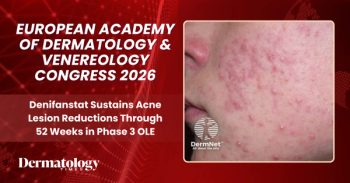
Treatment success reached 56.7% and total lesions fell 71.8% with up to 52 weeks of oral denifanstat, with no adverse event-related discontinuations.
A 30-day trial finds multi-step, barrier-friendly skin care routine cuts acne lesions, oil and redness while boosting hydration in acne-prone skin.
A 30-day clinical study suggests that a multi-step dermocosmetic regimen incorporating salicylic acid, prebiotics, niacinamide, zinc PCA, and barrier-supportive ingredients may improve both clinical signs of acne and skin hydration in patients with acne-prone skin.1 The investigators reported significant reductions in acne lesions, sebum production, erythema, and pore visibility while maintaining good overall tolerability, supporting the potential role of barrier-conscious skin care in the management of mild to moderate disease.
Acne is driven by multiple pathogenic factors, including excess sebum production, follicular hyperkeratinization, Cutibacterium acnes colonization, microbiome dysbiosis, and inflammation. Although topical therapies such as retinoids, benzoyl peroxide, antibiotics, azelaic acid, and salicylic acid are widely used, many are associated with skin irritation, barrier disruption, and, in the case of antibiotics, concerns about antimicrobial resistance.2 The investigators designed the study to evaluate whether a sequential regimen targeting multiple pathways could improve acne while preserving skin barrier function.
The prospective study enrolled 20 participants with acne-prone skin, including 15 women and 5 men with a mean age of 28.2 years. Participants used an 8-product skin care regimen for 30 days that included a facial wash, facial scrub, corrective cream, sheet mask, toner, facial wipes, and corrective concealer products. The formulations combined salicylic acid with niacinamide, zinc PCA, prebiotic ingredients including inulin and alpha-glucan oligosaccharide, and barrier-supportive agents such as panthenol and allantoin. Clinical evaluations, instrumental skin measurements, and patient-reported assessments were performed at baseline and after 30 days.
Dermatologist assessments demonstrated significant improvements across all evaluated clinical parameters. Mean pore visibility scores declined from 2.2 to 1.9 (p < 0.05), while seborrhea scores decreased from 2.2 to 1.6 (p < 0.01). Erythema also improved significantly, falling from 1.8 to 1.1 (p < 0.01), and dryness scores declined from 0.7 to 0.3 (p < 0.05).
Acne lesion counts also decreased during the treatment period. Total non-inflammatory lesions, including open and closed comedones, fell from a mean of 9.8 to 8.6 lesions (p < 0.05). Inflammatory lesions, consisting of papules and pustules, decreased from 7.7 to 5.8 lesions (p < 0.05). The investigators noted statistically significant reductions in both inflammatory and non-inflammatory acne lesions after 30 days of treatment.
Instrumental measurements supported the clinical findings. Skin hydration, measured with a Corneometer, increased from a mean value of 53.1 to 56.4 corneometric units, representing a 6.2% improvement (p<0.01). At the same time, Sebumeter measurements demonstrated a 9.1% reduction in facial sebum levels, decreasing from 146.9 to 133.5 µg/cm² (p<0.05).
Participants also reported favorable experiences with the regimen. Approximately 95% rated the overall treatment as either very good or fairly good. The facial scrub and cleanser each received 95% positive ratings for cleansing efficacy, while the scrub achieved a 100% rating for dermopurifying performance. The toner provided a mattifying effect for 90% of participants, and 90% reported that the corrective cream left their skin hydrated without feeling greasy. Similarly, 90% reported softer, more hydrated skin after using the sheet mask, and 85% felt that the concealer and corrector made blemishes less noticeable.
Overall tolerability was favorable, although treatment-related irritation was reported. A participant experienced severe redness, burning, and desquamation after using the scrub and cleanser, while 5 additional patients reported mild to moderate dryness and peeling associated with the scrub, toner, facial wipes, or cleanser.
The investigators attributed the observed improvements to the complementary mechanisms of the regimen's active ingredients. Salicylic acid likely contributed to comedolysis and reductions in inflammatory lesions, while niacinamide and zinc PCA may have helped regulate sebum production. The inclusion of prebiotic ingredients was intended to support microbiome balance, and panthenol and allantoin were included to improve barrier function and reduce irritation.
The researchers acknowledged several limitations, including the small sample size, absence of a control group, and short 30-day follow-up. They also noted that objective assessments of transepidermal water loss and skin microbiome composition were not performed. Despite these limitations, they concluded that the multi-targeted dermocosmetic regimen may offer an effective approach for improving mild to moderate acne while helping preserve skin barrier function.
References
1. Armanious YM, Neaz OS, Abdelghany AH, et al. Efficacy and Tolerability of a Multi-Targeted Anti-Acne Regimen Incorporating Salicylic Acid, Prebiotics, and Zinc PCA: A 30-Day Clinical Trial. Journal of Cosmetic Dermatology 25, no. 7 (2026): e71034, doi:10.1111/jocd.71034.
2. Althwanay A, AlEdani EM, Kaur H, et al. Efficacy of Topical Treatments in the Management of Mild-to-Moderate Acne Vulgaris: A Systematic Review. Cureus. 2024;16(4):e57909. Published 2024 Apr 9. doi:10.7759/cureus.57909