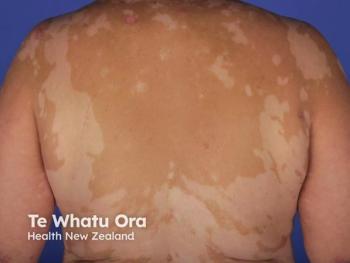
The FDA clearance allows Edesa to expand an ongoing placebo-controlled study of the CXCL10 antibody EB06 to US sites, with topline data expected in the fourth quarter of 2027.
Forte Biosciences' FB102 shows significant facial repigmentation in a phase 1b vitiligo trial, with gains continuing 12 weeks post-treatment and mild adverse effects.
The investigational anti-CD122 monoclonal antibody is designed to modulate both interleukin (IL)-2- and IL-15-dependent pathogenic T-cell biology while preserving regulatory T cells. “This may enable broader immune pathway modulation than IL-15 blockade alone and may avoid the regulatory T-cell modulation that can occur with overly potent CD122 inhibition,” Paul Wagner, PhD, Chairman and CEO of Forte Biosciences, said in the press release.1
The phase 1b trial enrolled 43 patients with vitiligo, randomly assigning 32 participants to FB102 and 11 to placebo in a 3:1 ratio. Two FB102 dosing cohorts were included, and the primary endpoint was the mean percentage improvement from baseline in Facial Vitiligo Area Scoring Index (FVASI), assessed by central review. In the protocol-defined efficacy-evaluable population, FB102 achieved a 29.6% mean improvement in FVASI from baseline at week 24, compared with 7.9% for placebo, representing a placebo-adjusted benefit of 21.7% (P = .020).
Clinical improvement emerged before treatment concluded. Statistically significant differences between FB102 and placebo were observed by day 64 (P = .023) and continued through week 24, despite treatment ending after the initial 12-week dosing period. Investigators also reported continued gains following completion of therapy. Patients receiving FB102 experienced an additional 8-percentage-point improvement in mean FVASI between weeks 12 and 24, suggesting that repigmentation continued even after dosing stopped.
The treatment effect appeared greater among patients with more extensive facial disease at baseline. In participants with baseline FVASI scores of at least 0.75, FB102 produced a mean FVASI improvement of 43.2% at week 24, compared with 0.5% in the placebo group. This translated to a placebo-adjusted benefit of 42.7% (P = .006). Within this subgroup, 58.8% of FB102-treated patients achieved at least a 50% improvement in FVASI (FVASI50), while 23.5% achieved at least a 75% improvement (FVASI75).
Across the overall efficacy-evaluable population, 34.4% of FB102-treated participants achieved FVASI50 and 12.5% achieved FVASI75 by week 24. The company noted that 1 placebo-treated participant also achieved an FVASI75 response. Additionally, approximately 84% of FB102-treated participants demonstrated improvement from baseline through week 24, while none experienced worsening during the study period. In contrast, 27% (3 of 11) of placebo-treated participants experienced disease progression over 24 weeks.
Additional analyses from the intent-to-treat population showed a mean 29.6% FVASI improvement with FB102 compared with a mean 16.2% deterioration among placebo-treated participants, corresponding to a placebo-adjusted treatment benefit of 45.8% (P = .005). Overall, results were consistent across both FB102 dosing cohorts. Cohort A achieved a 28.8% mean FVASI improvement compared with placebo (P = .040), while Cohort B demonstrated a 30.4% improvement (P = .027).
Safety findings remained favorable. All adverse events reported during the study were mild to moderate, with FB102 comparing favorably with placebo. Forte stated that these findings, together with previously reported phase 1b data in celiac disease, continue to support the investigational therapy's safety profile.2
“With statistically significant placebo-controlled activity now demonstrated in vitiligo, and the prior phase 1b activity demonstrated in celiac disease, we look forward to the imminent readout from our ongoing phase 2 celiac disease trial as the next important clinical catalyst for FB102,” Wagner said. “Data from this phase 1b vitiligo study and from the previously reported
References
1. FB102 Achieves Statistically Significant Improvement in Vitiligo at Week 24 After Completion of 12-Week Treatment Period. News release. Business Wire. Published July 9, 2026. Accessed July 9, 2026.
2. Forte Biosciences Announces Positive Data in FB102 Celiac Disease Phase 1B Study. News release. Forte Biosciences Inc. Published June 23, 2025. Accessed July 9, 2026.