


Opinion|Videos|October 27, 2026
Improving Early Identification and Escalation of HS
Closing the series, the panel offers concrete advice for recognizing HS earlier and building the confidence to escalate therapy before patients reach advanced, disabling disease.
Advertisement
Episodes in this series
"Improving Early Identification and Escalation of HS" closes the series with the panel's advice for colleagues managing HS.
Asked what single change would most improve identification and escalation of uncontrolled HS, Dr. Bush urges clinicians not to be apprehensive about treating the disease or using its medications, framing willingness to engage as the real fix. Reflecting on both patient cases, she imagines how differently their lives would have unfolded had today's options existed four or eight years earlier. She advises developing a personal rhythm for HS visits rather than trying to address everything in one appointment, and knowing the available medications well enough to discuss them with confidence, which she believes reduces apprehension for both provider and patient. Chao offers a two-part answer. For identification, he watches for boils anywhere on the body, the follicular tetrad of pilonidal cysts, scalp cysts, dissecting cellulitis, and severe truncal acne, and even a single inflammatory nodule in the axilla or groin, treating any of these as a reason to monitor closely and ask patients directly about symptoms in sensitive areas. For escalation, he favors a gradual approach: starting with an antibiotic and a topical, asking patients to research the condition and treatment options at home, and building toward a biologic conversation over subsequent visits rather than raising it immediately at diagnosis. Dr. Bush adds that she watches for HS during routine skin checks, sometimes finding it in patients who have had symptoms for decades without a diagnosis, and looks specifically for double comedones and nodular abscesses, asking whether patients have sought urgent care before. She keeps her door open for quick follow-up so patients get diagnosed and treated rather than cycling repeatedly through urgent care visits. Chao closes by thanking Dr. Bush and the audience, encouraging viewers to apply the strategies discussed in their own practices going forward.
Thank you for watching this Dermatology Times Case-Based Peer Perspectives series on hidradenitis suppurativa. Please subscribe to our eNewsletter for information on upcoming video series.
Advertisement
Related to this article
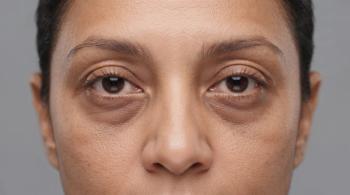
LRM will evaluate injectable rhPDGF-BB as a regenerative approach to infraorbital hollowing in a randomized phase 2b trial.
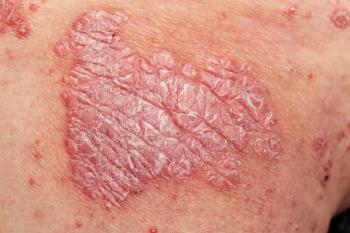
ORKA-001 achieved PASI 100 in 61% of high-dose patients at week 16 in the phase 2b EVERLAST-B trial of moderate-to-severe psoriasis.

Put your dermatology expertise to the test with Dermatology Times’ interactive quiz series.

Stratman discusses individualized eczema care, expanding treatment options, and the potential of precision medicine to guide therapy.

Face taping promises smoother skin and fewer wrinkles without injectables, but evidence suggests any visible benefits are largely temporary.

Explore trending plant oils in skincare and haircare, plus 2026’s hottest actives like ectoin and hypochlorous acid—balancing glow, barrier repair, and irritation risks.

Houston dermatology clinicians compared severity scoring, JAK inhibitor safety data, and psychosocial counseling strategies across 3 alopecia areata patient cases.

Preview the trial data dermatology NPs and PAs will dissect in small-group sessions on AD, psoriasis, and type 2 disease at Horizons in Advanced Practice.
Advertisement
Advertisement
Trending on Dermatology Times
1
ORKA-001 Achieves 61% Complete Skin Clearance in Psoriasis
2
FDA Accepts IND for Injectable rhPDGF-BB in Under-Eye Hollowing
3
Type 2 Inflammation, Growth Curve, and HS Guidance for Advanced Practice
4
Beyond Dry Skin: Rethinking Common Eczema Misconceptions
5