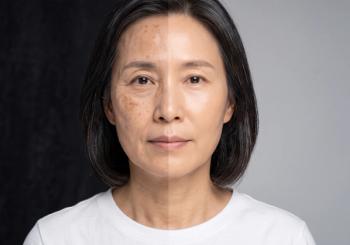
Botulinum toxin reduces dynamic wrinkles by inhibiting acetylcholine release at the neuromuscular junction, resulting in temporary weakening of targeted facial muscles. Face tape does not alter neuromuscular signaling. Once the tape is removed, normal muscle contraction resumes.
There is also no established mechanism showing that overnight taping permanently “retrains” facial muscles or meaningfully stimulates collagen remodeling.
The more plausible effect is much simpler: while the tape is present, the skin is held in a position that limits folding. Once that mechanical support disappears, so does much of the effect.
📊 POLL: What do you tell patients who ask about face taping for wrinkles?
The Evidence
What the Evidence Does NOT Support:
- Face taping does NOT provide sustained wrinkle reduction. Limited clinical evidence suggests adhesive patches may temporarily reduce the appearance of skin roughness after removal, but observed effects appear to last minutes to hours rather than produce long-term improvement.
- Face taping CANNOT be assumed to “train” facial muscles to move less over time. There is currently insufficient evidence demonstrating that repeated taping produces lasting changes in facial muscle activity once the tape is removed.
- Face tape is NOT equivalent to injectable botulinum toxin. Tape mechanically restricts skin movement while it is in place, whereas botulinum toxin acts at the neuromuscular junction to temporarily reduce contraction of targeted facial muscles.
- Nightly face taping has NOT been shown to prevent facial aging or permanently stop wrinkles from forming. Facial aging involves multiple factors—including repetitive movement, collagen and elastin changes, UV exposure, and changes in skin structure—that temporary mechanical immobilization does not address.
- Face taping is NOT risk-free simply because it is noninvasive. Repeated adhesive application and removal may cause skin irritation or barrier disruption and can trigger irritant or allergic contact dermatitis in susceptible patients.
Clinical evidence evaluating facial taping or adhesive wrinkle patches is limited, and the available studies suggest that any benefit is modest and temporary.
A prospective study published in 2009 evaluated topical adhesive pads applied to the forehead and glabella nightly for 4 weeks. Thirty participants were enrolled, with 26 completing follow-up and using the pads for an average of approximately 7.4 hours per night.
Two independent facial plastic surgeons, blinded to whether photographs were taken before or after treatment, evaluated wrinkle severity. Neither evaluator found statistically significant improvement in forehead or glabellar rhytides after treatment.
Participants themselves reported a modest improvement in glabellar wrinkles, but the investigators noted that subjective self-assessment could be affected by bias.1
A later placebo-controlled study involving 39 participants examined adhesive pads applied to the crow’s-feet area.
After a single 30-minute application, researchers found significant reductions in several measures of skin surface roughness 15 minutes after the patches were removed. After participants wore the pads nightly for 4 weeks, wrinkle roughness also remained improved for up to approximately 60 minutes after removal.
However, investigators found no significant improvement in measured skin elasticity. Patient self-assessments suggested that visible improvement after several weeks of use may last approximately 2 hours.2
Those findings are important because they suggest that face taping is not necessarily incapable of changing how wrinkles look. Adhesive patches may temporarily flatten superficial lines and reduce visible skin roughness.
But the studies do not demonstrate permanent wrinkle reduction, prevention of wrinkle formation, long-term changes in muscle activity, or remodeling of the underlying skin.
That is a much smaller effect than what is often implied by social media claims.
The evidence also differs substantially from that supporting botulinum toxin. Injectable botulinum toxin has been extensively studied for dynamic facial rhytides and produces wrinkle reduction by directly decreasing contraction of targeted facial muscles.
Face tape simply does not act through the same pathway.
The Verdict
Is this a myth? Mostly!
Face taping can temporarily make wrinkles look smoother.
That part is not entirely myth.
Small clinical studies suggest that adhesive pads can reduce visible skin roughness shortly after removal, particularly in areas such as the crow’s feet. The problem is duration: the measured effects appear to last minutes to hours, not weeks or months.
There is little evidence supporting the broader claims that nightly taping can retrain facial muscles, permanently prevent wrinkles, stimulate collagen, or produce results comparable with injectable neuromodulators.
The tape works mechanically while it is applied. It does not inhibit acetylcholine release, weaken the facial muscles, or address the broader biologic changes involved in skin aging.
There are also potential downsides to repeated adhesive use. Regular application and removal can irritate sensitive skin, disrupt the stratum corneum, and trigger irritant or allergic contact dermatitis in susceptible patients. Adhesive products may also worsen acne or cause erythema, particularly if they are worn for prolonged periods or are not designed for facial use.
So, while face taping may offer a temporary smoothing effect before an event or after waking, it should not be framed as a long-term wrinkle treatment.
The myth is not that tape can change the appearance of a wrinkle. It is that repeatedly taping the face will meaningfully change how the skin ages.
The Script
If a patient asks whether sleeping in face tape can prevent wrinkles, here are some important points to hit:
- Separate temporary smoothing from wrinkle treatment: Adhesive patches can temporarily flatten superficial lines, but available studies suggest that the effect lasts only a short period after the tape is removed.
- Explain the mechanism: Face tape physically restricts movement while it is being worn. It does not relax facial muscles through the neuromuscular pathway targeted by botulinum toxin.
- Push back on “muscle retraining” claims: There is currently little clinical evidence showing that nightly taping permanently changes facial muscle activity or prevents dynamic wrinkles from becoming static.
- Discuss skin irritation: Repeated adhesive use can irritate the skin barrier or trigger irritant or allergic contact dermatitis, particularly in patients with sensitive skin.
- Set realistic expectations: Patients who enjoy wrinkle patches and tolerate them well may notice short-lived cosmetic smoothing, but they should not expect the sustained wrinkle reduction associated with established topical or procedural treatments.
- Keep prevention in perspective: Daily photoprotection and evidence-based therapies for photoaging remain more important for long-term wrinkle prevention than mechanically taping the skin overnight.
Social Media Mythbusters is intended for dermatology clinicians. Evidence summaries reflect available literature at the time of publication and do not constitute clinical guidelines.
References
- Alam M, White LE, Martin N, Witherspoon J, Yoo S, West DP. A prospective evaluation of the efficacy of topical adhesive pads for the reduction of facial rhytids. Arch Facial Plast Surg. 2009;11(4):252-256.
- Mazzarello V, Ferrari M, Bulla A, Piu G, Montella A. Antiwrinkle effect of topical adhesive pads on crow’s feet: how long does the effect last for? J Cosmet Dermatol. 2018;17(3):484-490. doi:10.1111/jocd.12395