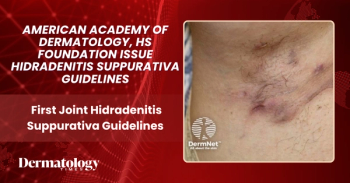
The joint AAD-HSF guideline issues 37 recommendations, including strong support for adalimumab, bimekizumab, infliximab, and secukinumab.
Lutikizumab significantly improved HiSCR75 response, pain, and disease flares in adults and adolescents with moderate to severe HS.
The investigational dual-variable-domain interleukin (IL)-1α/IL-1β antagonist achieved a significantly higher
According to AbbVie, INTREPID is the first phase 3 study including adults and adolescents with HS to demonstrate a statistically significant HiSCR75 response at week 16 as its primary end point.
Lutikizumab also demonstrated significant improvements across several patient-relevant secondary outcomes, including HS-associated skin pain and disease flares.
At week 8, 26.2% of patients receiving lutikizumab achieved NRS3, defined as at least a 3-point reduction from baseline in HS-related skin pain, compared with 15.0% receiving placebo (P<.0001). Improvements were observed as early as week 1.
Additionally, 36.0% of patients treated with lutikizumab achieved NRS30 at week 8, compared with 22.8% of patients receiving placebo (P<.0001). NRS30 was defined as at least a 30% reduction and a minimum 2-unit reduction from baseline in HS-related skin pain.
Treatment was also associated with fewer HS flares during the first 16 weeks. Flares occurred in 18.4% of patients receiving lutikizumab compared with 28.1% receiving placebo (P<.0001).
Significant improvements were additionally reported in quality-of-life measures, including the
“Elevated levels of IL-1α lutand IL-1β have been identified in HS lesions, supporting the mechanistic rationale for evaluating lutikizumab in HS,” said Kori Wallace, MD, vice president and global head of immunology clinical development at AbbVie, in the announcement.
Wallace noted that the findings were particularly encouraging given the improvements observed in both HiSCR75 and patient-relevant outcomes such as skin pain and disease flares.
Lutikizumab was generally well tolerated, with no new safety signals identified.
Overall treatment-emergent adverse event rates were similar between the lutikizumab and placebo groups. Any adverse event occurred in 53.4% and 53.7% of patients, respectively, while serious adverse events occurred in 3.0% and 2.9%. Adverse events leading to treatment discontinuation occurred in 1.7% of patients receiving lutikizumab and 1.9% receiving placebo.
The most frequently reported treatment-emergent adverse events associated with lutikizumab, occurring in at least 3% of patients, included nasopharyngitis, upper respiratory tract infections, headache, fatigue, and injection-site reactions.
No suicidal ideation was reported in either treatment group. There were no deaths among patients receiving lutikizumab, while 1 death occurred in the placebo group.
INTREPID is a phase 3, multicenter, randomized, double-blind, placebo-controlled study evaluating lutikizumab in adults and adolescents with
The study consists of 3 treatment periods. The placebo-controlled first period extends through week 16, followed by a blinded lutikizumab treatment period through week 52 and a 156-week long-term extension in which all participants receive lutikizumab.
Lutikizumab simultaneously inhibits IL-1α and IL-1β, both of which have been found at elevated levels in HS lesions. The agent remains investigational and has not been approved by regulatory authorities.
Additional INTREPID findings, including results from a 36-week blinded extension, are expected in 2027. AbbVie stated that the data are expected to support regulatory submissions for lutikizumab in HS in the second half of 2027.
“These are also the first Phase 3 data evaluating the effect of targeting both IL-1α and IL-1β on this disease,” said