Benjamin Ungar, MD, moderated a recent Dermatology Times Case-Based Roundtable event on how to define severity, choose among JAK inhibitors, and monitor patients with alopecia areata.
Tina Bhutani-Jacques, MD, explored how disease location, prior treatment response, and patient preference shape topical treatment decisions across 3 plaque psoriasis cases.
Tina Bhutani-Jacques, MD, a board-certified dermatologist practicing in San Francisco, California, recently led a Dermatology Times Case-Based Peer Perspectives discussion focused on the evolving role of nonsteroidal topical therapies in plaque psoriasis. Across 3 patient cases, Bhutani-Jacques explored how disease location, treatment history, vehicle preference, and patient concerns can influence the choice between corticosteroids, newer nonsteroidal agents, and systemic therapy.
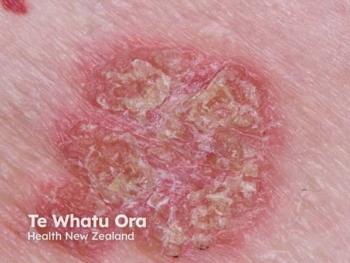
The first case involved a 48-year-old man with an 8-year history of chronic plaque psoriasis and 7% body surface area (BSA) involvement. His disease had recently extended into the axillae and groin, where he experienced erythema, scaling, and pruritus. Although he had intermittently used topical corticosteroids, he was concerned about their long-term use in sensitive areas. Calcitriol cream controlled his trunk disease but caused burning and stinging when applied to intertriginous areas.
Bhutani-Jacques recommended roflumilast cream 0.3% (Zoryve; Arcutis Biotherapeutics) for use across both the trunk and intertriginous areas. She explained that thinner skin in intertriginous sites is more susceptible to adverse effects such as atrophy and folliculitis, making sustained corticosteroid use less desirable.
“I think it increases the confidence these medications are safe,” Bhutani-Jacques said of the availability of nonsteroidal options approved for younger patients. “If they are now approved in children, we know they should be very safe to be used in adults as well.”
The case also highlighted the challenge of reengaging patients who have already cycled through multiple unsuccessful topical therapies. Bhutani-Jacques said clinicians may need to explain how newer agents differ from older options rather than allowing previous failures to discourage another topical trial.
“Just like the technology on our phones gets better every year, so does the technology in our medications,” she said.
Bhutani-Jacques typically reevaluates patients within 3 to 6 months. If tolerability remains an issue or disease does not improve, she begins discussing whether systemic treatment is warranted.
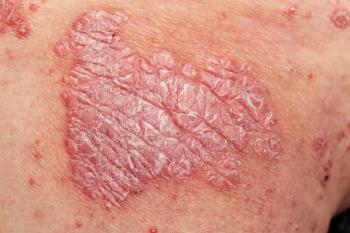
The second case centered on a 45-year-old woman with scalp and trunk psoriasis affecting 12% BSA. She had cycled through topical corticosteroids, medicated shampoos, and greasy scalp formulations that she found difficult to use consistently.
Bhutani-Jacques said prescribing separate products for different body areas can create confusion and undermine adherence. Therefore, she initiated roflumilast foam 0.3%, which could be used on both the patient's scalp and body.
“It's really nice when we can try to come up with one treatment option the patient can use anywhere on their body,” Bhutani-Jacques said. “Until very recently, that was quite hard to do.”
Her treatment history also prompted a broader discussion about what clinicians mean when they describe a topical therapy as having “failed.” Bhutani-Jacques said she asks whether the problem was a lack of efficacy, an unpleasant vehicle, forgetfulness, or another barrier before choosing the next treatment. Understanding why a patient stopped a previous medication can help avoid repeating the same problem with a new prescription.
The patient's 12% BSA involvement and scalp disease also placed systemic therapy within consideration. Bhutani-Jacques noted that scalp involvement represents a high-impact site, making BSA alone an incomplete measure of whether topical treatment remains appropriate.
She generally sees patients again at 3 and 6 months after initiating therapy. Once the disease is controlled, follow-up can eventually be extended to annual visits.
The final case involved a 34-year-old man with psoriasis affecting approximately 2% BSA on his elbows and knees. Despite his limited disease, he was adamant about avoiding corticosteroids because of concerns about skin thinning.
Bhutani-Jacques used the case to discuss a shift away from categorizing psoriasis simply as mild, moderate, or severe. Instead, she described the International Psoriasis Council framework for determining whether a patient is a candidate for topical or systemic therapy, considering factors including BSA greater than 10%; involvement of high-impact sites, such as the scalp, palms, soles, or genitals; and inadequate response to topical treatment.
Because this patient's disease was localized and he preferred to avoid corticosteroids, Bhutani-Jacques selected tapinarof cream 1% (Vtama; Organon).
“In a patient with more localized body surface area, I think it's very reasonable to go straight to using a topical nonsteroidal therapy,” she said.
The case also raised the question of what to do once topical treatment clears the disease. Bhutani-Jacques described 2 approaches: discontinuing treatment after clearance or continuing intermittent application a few days each week as proactive maintenance.
“This can actually prolong the periods of clear disease, prolong the periods between flare-ups, and maybe even prevent some of those flare-ups from happening,” she said.
Bhutani-Jacques closed by encouraging clinicians to reconsider topical therapy even among patients who have become discouraged by previous treatment failures. With newer nonsteroidal options and systemic therapies available, she said psoriasis management has moved beyond relying on long-term corticosteroid use.
about 22 hours ago
Skin Longevity Needs Evidence, Not Hype