


Opinion|Videos|October 20, 2026
Efficacy and Safety Data for Emerging Oral HS Agents
New trial data on povorcitinib, upadacitinib, and remibrutinib show meaningful HiSCR responses and reassuring cardiovascular safety. The panel discusses how to present this evidence to patients.
Advertisement
Episodes in this series
This episode, "Efficacy and Safety Data for Emerging Oral HS Agents," has Chao presenting the latest trial results for povorcitinib, upadacitinib, and remibrutinib.
Chao reviews povorcitinib's pivotal STOP-HS1 and STOP-HS2 trials, the two FDA-required parallel studies. HiSCR50 response at week 12 was similar between the 45 mg and 75 mg arms, with both showing a significant delta over placebo. On the secondary endpoint, HiSCR75 at week 12 was achieved by 21-28% of patients on povorcitinib versus 13-16% on placebo, climbing to 57% by week 54. Skin pain and flare control also favored povorcitinib over placebo at week 12 in STOP-HS2. On safety, serious adverse events occurred in 1-2% of povorcitinib patients versus 2-3% on placebo through week 12, rising to 5-6% by week 54 across doses; common adverse events included acne, headache, nasopharyngitis, and upper respiratory infections. Notably, there were no MACE or venous thromboembolic events at week 12, and fewer than 1% by week 54, which Chao stresses matters given class-wide JAK inhibitor warnings from the oral surveillance trial. For upadacitinib, earlier-phase data showed a HiSCR50 of 38.3% at week 12 against an in-trial placebo response of 23.8%, with mostly mild-to-moderate adverse events including headache, dizziness, and urinary tract infections. Remibrutinib data showed a HiSCR50 of 72.7% at week 16 for the 25 mg arm, notably higher than the 48.5% seen with the 100 mg arm, against a placebo response near 35%; adverse events were mild-to-moderate, most commonly upper respiratory infections. Dr. Bush highlights that povorcitinib's JAK1 selectivity likely explains its favorable cardiac safety profile, calling the absence of MACE events reassuring. She draws a parallel to psoriasis, where efficacy goals climbed from HiSCR50 to HiSCR75, predicting HS trials will eventually target HiSCR100. Chao stresses that prescribing a JAK inhibitor requires an unhurried conversation explaining the oral surveillance trial's context so patients are not blindsided by internet warnings later.
In "Where Oral Therapies Fit in the HS Treatment Algorithm," the panel considers where these oral agents might fit if approved.
Advertisement
Related to this article

A retrospective claims analysis of 2897 matched pairs found hazard ratios of 0.48 to 0.67 for new atopic disease with dupilumab vs systemic corticosteroids in children.
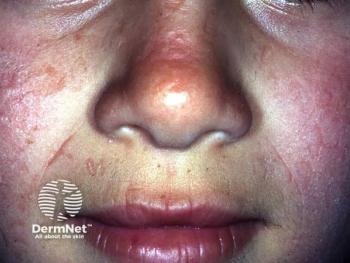
Disc Medicine reports the phase 3 APOLLO trial met all primary and secondary end points, with whole-blood PPIX reduced 41.4% vs placebo and an NDA resubmission planned by end of 2026.

Castor oil has become a popular social media remedy for thicker, longer hair, but evidence supporting its ability to stimulate hair growth remains limited.
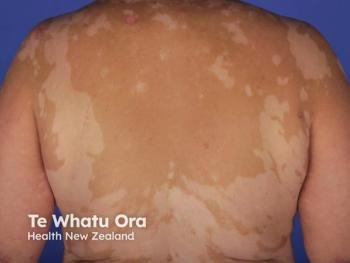
The FDA clearance allows Edesa to expand an ongoing placebo-controlled study of the CXCL10 antibody EB06 to US sites, with topline data expected in the fourth quarter of 2027.

The novel oral helicase-primase inhibitor demonstrated significantly higher rates of complete lesion healing compared with investigator’s choice treatment in the phase 3 PRIOH-1 trial.
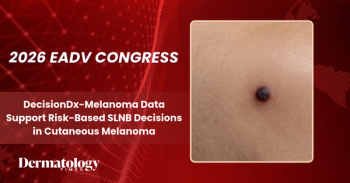
Prospective data suggest DecisionDx-Melanoma may help refine SLNB decisions and identify recurrence risk beyond conventional staging.

Falk G. Bechara, MD, discusses long-term tunnel control, structural damage, and the evolving role of biologics and surgery in HS care.
Galderma has agreed to acquire ZO Skin Health for $1.5 billion, adding the physician-dispensed skincare brand to a portfolio that already includes Cetaphil and Alastin.
Advertisement
Advertisement
Trending on Dermatology Times
1
Dupilumab Associated With Lower Atopic March Risk in Pediatric Atopic Dermatitis
2
Bitopertin Meets All End Points in Phase 3 APOLLO Trial for EPP
3
Social Media Mythbusters: Can Castor Oil Really Grow Hair?
4
GLP-1 Candidacy and Prescribing Considerations in Psoriasis
5