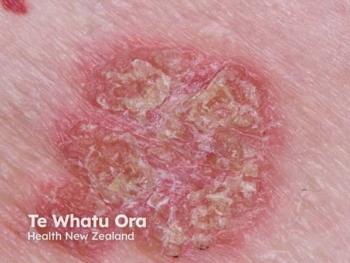
Tina Bhutani-Jacques, MD, explored how disease location, prior treatment response, and patient preference shape topical treatment decisions across 3 plaque psoriasis cases.
ORKA-001 achieved PASI 100 in 61% of high-dose patients at week 16 in the phase 2b EVERLAST-B trial of moderate-to-severe psoriasis.
EVERLAST-B is a randomized, double-blind, placebo-controlled phase 2b trial evaluating the safety, efficacy, and pharmacokinetics of ORKA-001. The study enrolled 187 patients across 36 sites in the United States, Canada, and Europe, with participants randomized 1:1:1:1 to receive ORKA-001 at 37.5 mg at week 0, 300 mg at weeks 0 and 4, 600 mg at weeks 0 and 4, or placebo.1
At week 16, 61% of patients receiving the 600-mg regimen achieved a 100% improvement in Psoriasis Area and Severity Index (PASI 100), the trial’s primary end point, compared with 0% of patients receiving placebo (P < .0001).1
Complete skin clearance increased in a dose-dependent manner. PASI 100 was achieved by 43% of patients receiving the 37.5-mg dose, 44% receiving the 300-mg regimen, and 61% receiving the 600-mg regimen, compared with 0% in the placebo group.1
Responses across key secondary end points were also highest with the 600-mg regimen. At week 16, 86% of patients in this group achieved PASI 90, and 86% achieved an Investigator’s Global Assessment (IGA) score of 0 or 1. By comparison, PASI 90 response rates were 70% and 85% in the low- and mid-dose groups, respectively, while IGA 0/1 rates were 74% and 85%. No placebo-treated patients achieved either end point.1
The findings closely align with results previously reported from the
“These results suggest ORKA-001 is likely to be the
Gelfand added that the possibility of maintaining these responses with 1 or 2 doses annually could potentially combine skin clearance, treatment convenience, and safety for patients with moderate-to-severe psoriasis.2
ORKA-001 continued to demonstrate a safety and tolerability profile consistent with the IL-23p19 class. Through week 16, 49% of all ORKA-001-treated patients experienced at least 1 treatment-emergent adverse event (TEAE), compared with 43% of patients receiving placebo.1
In the 600-mg group, 39% of patients experienced at least 1 TEAE. The only TEAEs occurring in at least 5% of ORKA-001-treated patients were upper respiratory tract infection and headache. No dose-dependent trends in adverse events were observed, and no injection-site reactions occurred among ORKA-001-treated patients.1
No serious or severe TEAEs occurred in the 600-mg group. Across the ORKA-001 groups, serious TEAEs were reported in 2% of patients, and none were considered treatment related.1
Beyond induction efficacy, EVERLAST-B is designed to evaluate whether the extended half-life of ORKA-001 can support substantially
At week 28, patients treated with ORKA-001 who have achieved PASI 100 will be rerandomized to either 600 mg ORKA-001 once yearly or placebo. Patients who have not achieved PASI 100 will receive ORKA-001 300 mg every 6 months. The study will continue through week 100 to evaluate
The potential for once- or twice-yearly administration could represent an important differentiating feature if the efficacy and durability observed in the EVERLAST program are maintained in longer-term and phase 3 studies.
Based on results from the EVERLAST clinical program, Oruka plans to discuss phase 3 development with regulatory authorities. Pending those discussions, the company expects to
Additional data will further clarify the durability of response. Oruka expects to report 52-week EVERLAST-A results in December 2026, followed by 52-week EVERLAST-B results in the second half of 2027.1
References